USA/GLOBAL: +1-949-461-9292
EUROPE: +39-011-3052-794
CONTACT US
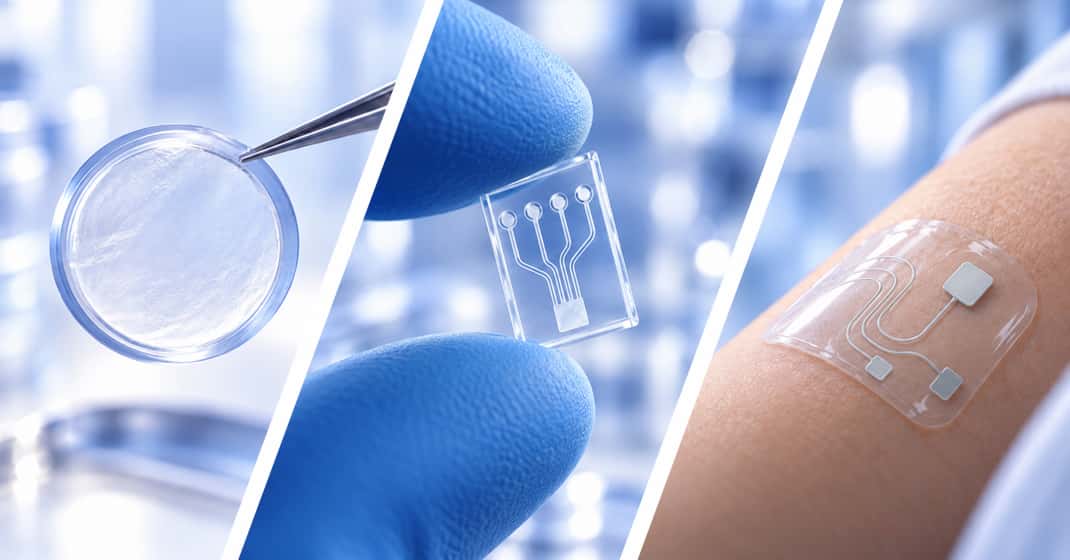
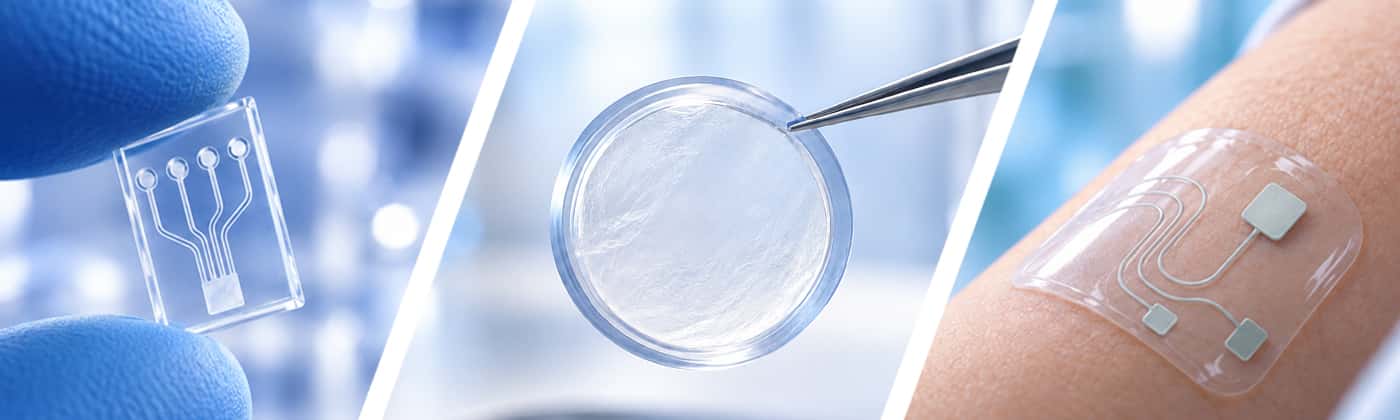
Soft and transparent materials including a biomedical membrane, microfluidic device, and wearable sensor for non-contact profilometry applications

Application Note | Non-Contact 3D Profilometry

Non-Contact Profilometry of Soft and Transparent Materials

Comprehensive Characterization of Challenging Surfaces Without Contact, Deformation, or Sample Preparation

Examples of soft and transparent material applications for non-contact profilometry, including biomedical membranes, microfluidics, and wearable sensors

Research & Experimental Testing

Craig Leising

Visual Design & Editorial

Andrew Shore

Introduction

Soft, transparent, and easily deformable materials are increasingly important across advanced applications including flexible bioelectronics, wearable sensors, biomedical interfaces, microfluidic devices, and other polymer-based technologies. Characterizing these materials can be difficult because the measurement method itself may influence the surface or fail to capture it reliably.

Contact-based techniques can deform, scratch, or move soft materials during measurement, while transparent or absorptive surfaces can present additional challenges for some optical techniques. Non-contact profilometry avoids physical interaction with the sample while enabling quantitative surface characterization across challenging material types.

In this study, an extremely soft and translucent petroleum-jelly-based material was selected as a demanding proof-of-concept sample. Using the NANOVEA ST400 Profilometer, the surface was characterized without physical contact or sample preparation to demonstrate the broader capability of non-contact profilometry for delicate and difficult-to-measure materials.

The Advantage of Non-Contact Profilometry for Challenging Materials

Soft materials can be difficult to measure accurately because physical contact may alter the surface during the measurement itself. Films, gels, and other compliant materials can deform, scratch, or move under a contacting probe, potentially changing the geometry being characterized.

Transparent and absorptive surfaces can introduce additional measurement challenges for some optical techniques, including effects associated with light transmission, absorption, and internal reflections. NANOVEA Non-Contact Profilometers use axial chromatism to determine surface height without physically contacting the sample.

This combination enables quantitative characterization of challenging surfaces while minimizing measurement influence. Depending on the application, measurements can include surface roughness, flatness, 3D topography, surface area, profile geometry, and other dimensional characteristics without requiring sample preparation.
Measurement Objective

The objective of this study was to demonstrate non-contact surface characterization on an extremely soft and translucent material, representing the type of measurement challenge encountered when a surface may be altered by physical contact or prove difficult for some optical techniques.

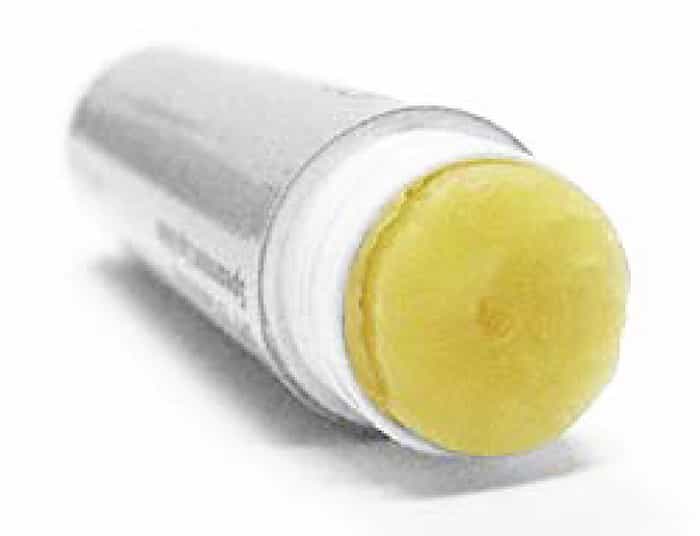
A petroleum-jelly-based lip balm was selected as a deliberately challenging proof-of-concept sample because of its softness and translucency. The sample was measured using the NANOVEA ST400 Profilometer without physical contact or sample preparation.

The resulting measurement was used to obtain 3D topography, 2D profile data, surface roughness, flatness, and 3D surface area, demonstrating the range of quantitative surface information that can be obtained from a delicate material using non-contact profilometry.

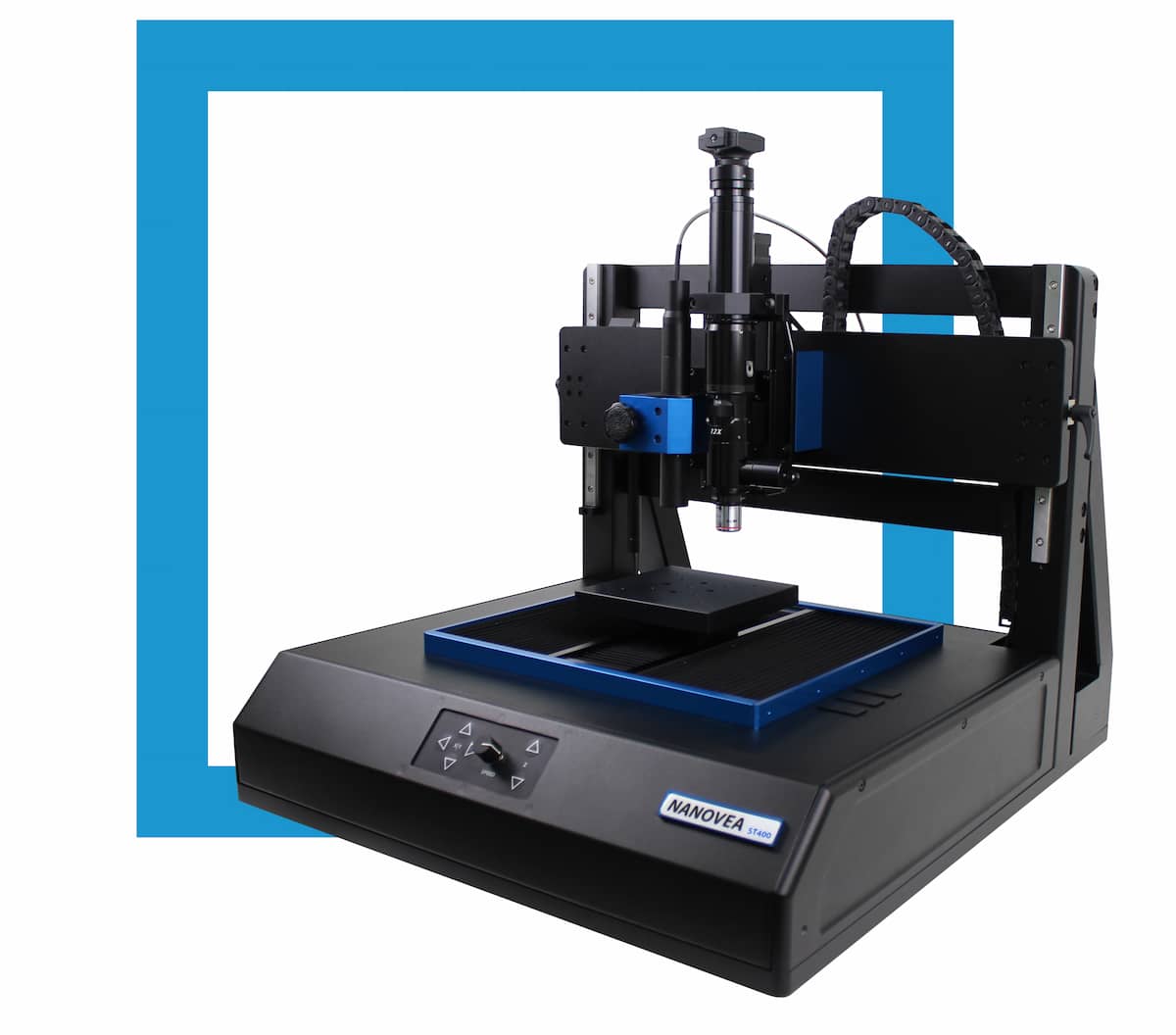
NANOVEA ST400 Non-Contact

Optical Profilometer

Optical Profilometry Results

Soft transparent petroleum-jelly-based lip balm sample used for non-contact profilometry

Soft, translucent petroleum-jelly-based sample used for non-contact profilometry.

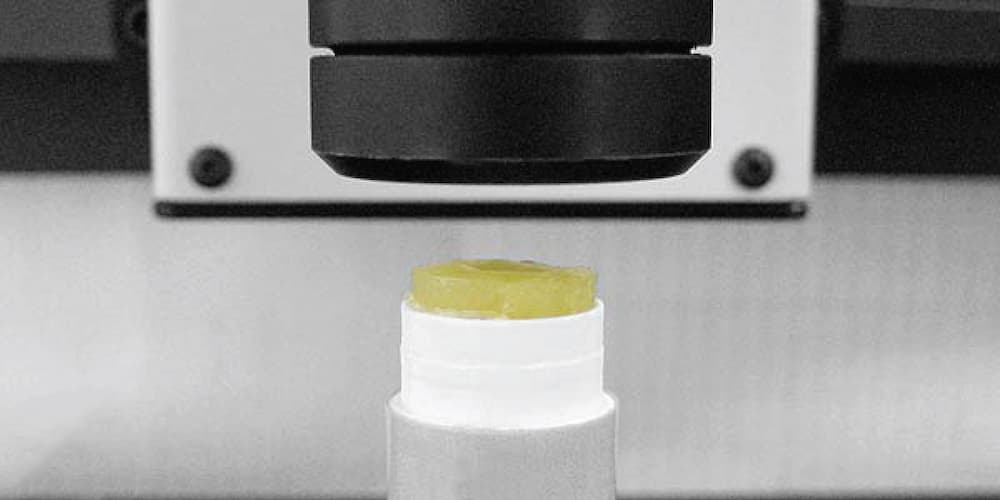
Soft transparent petroleum-jelly-based sample positioned under the NANOVEA ST400 profilometer for non-contact surface measurement

The sample being scanned by the NANOVEA ST400 for non-contact surface measurement.

3D Profile Measurement

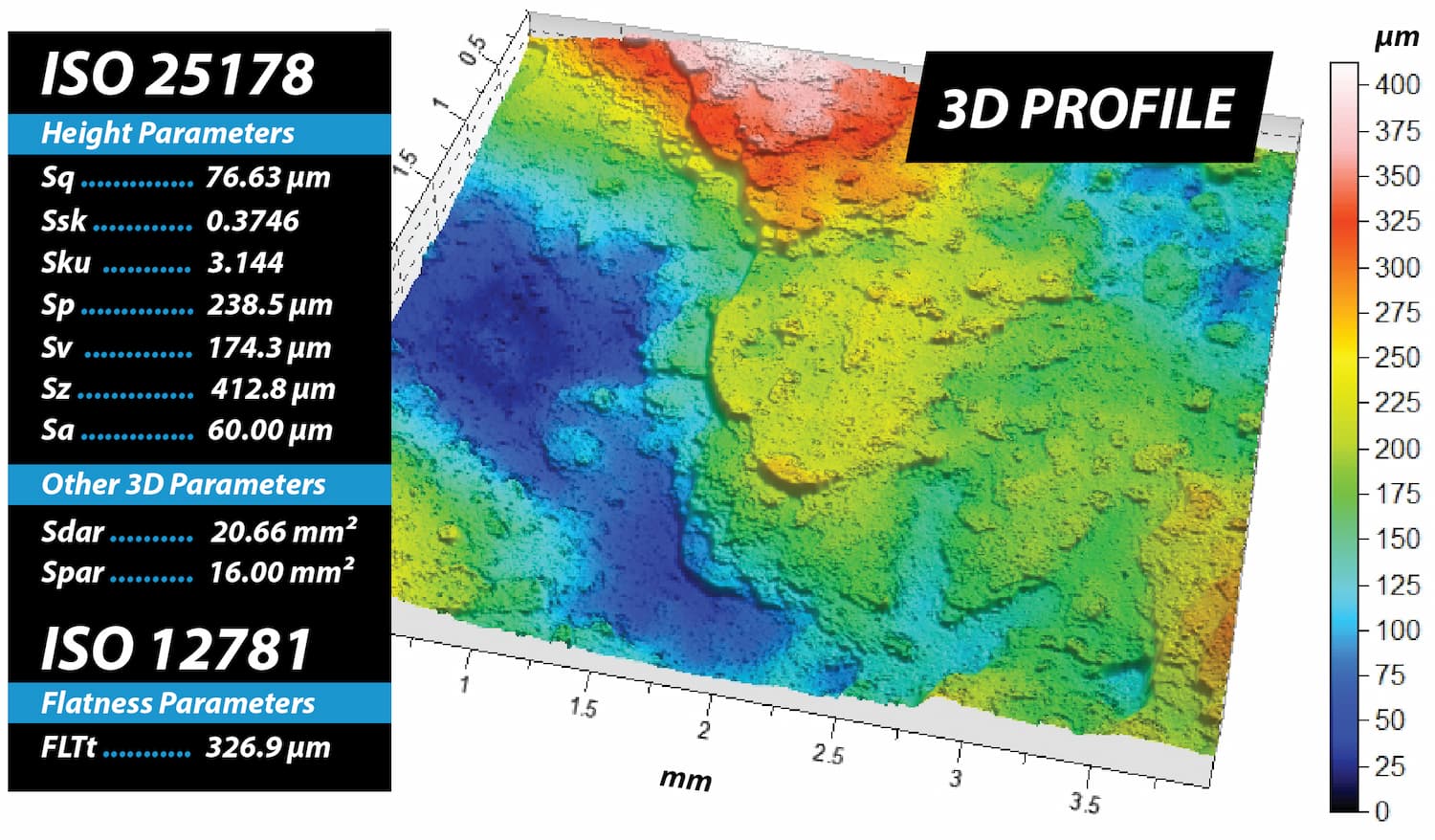
The NANOVEA ST400 captured the 3D surface of the extremely soft and translucent sample without physically contacting the material. The resulting topography was used to evaluate multiple aspects of the surface, including ISO 25178 surface parameters, 3D surface area, and flatness corresponding to ISO 12781. A 2D cross-section was also extracted from the measurement to provide additional profile detail.

Obtaining these measurements from such a soft and translucent surface demonstrates the value of non-contact profilometry for materials that could otherwise be altered by a contacting probe or present challenges for some optical techniques. Quantitative surface geometry can be acquired while preserving the condition of the measured surface.

3D non-contact profilometry measurement of a soft transparent petroleum-jelly-based sample with ISO 25178 surface parameters

3D surface profile of the soft, transparent sample with ISO 25178 surface parameters and flatness analysis.

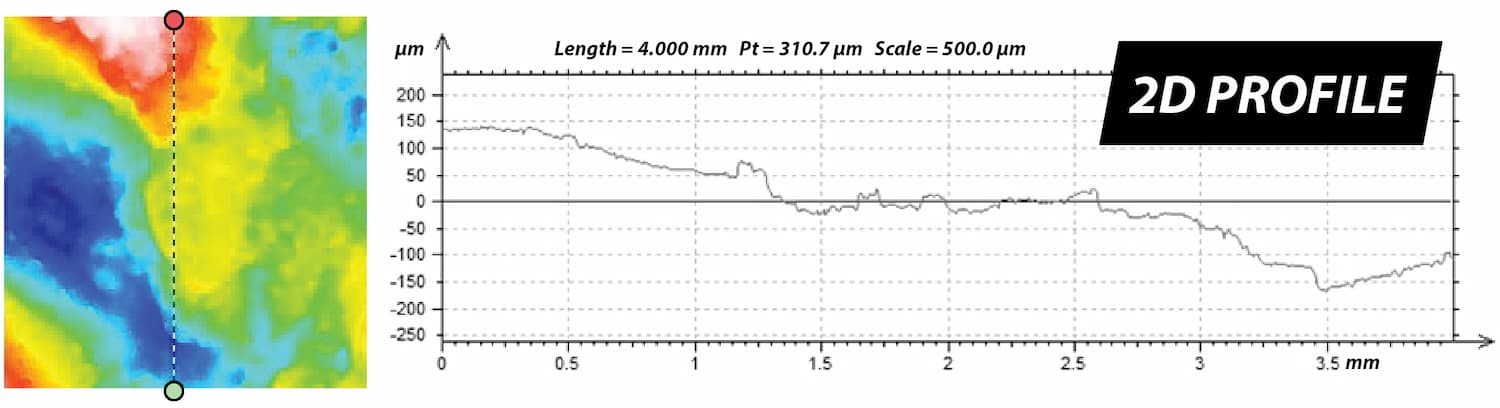
2D Profile Measurement

2D profile extracted from non-contact profilometry of a soft transparent petroleum-jelly-based sample

2D profile extracted from the non-contact 3D surface measurement across a 4 mm section of the sample.

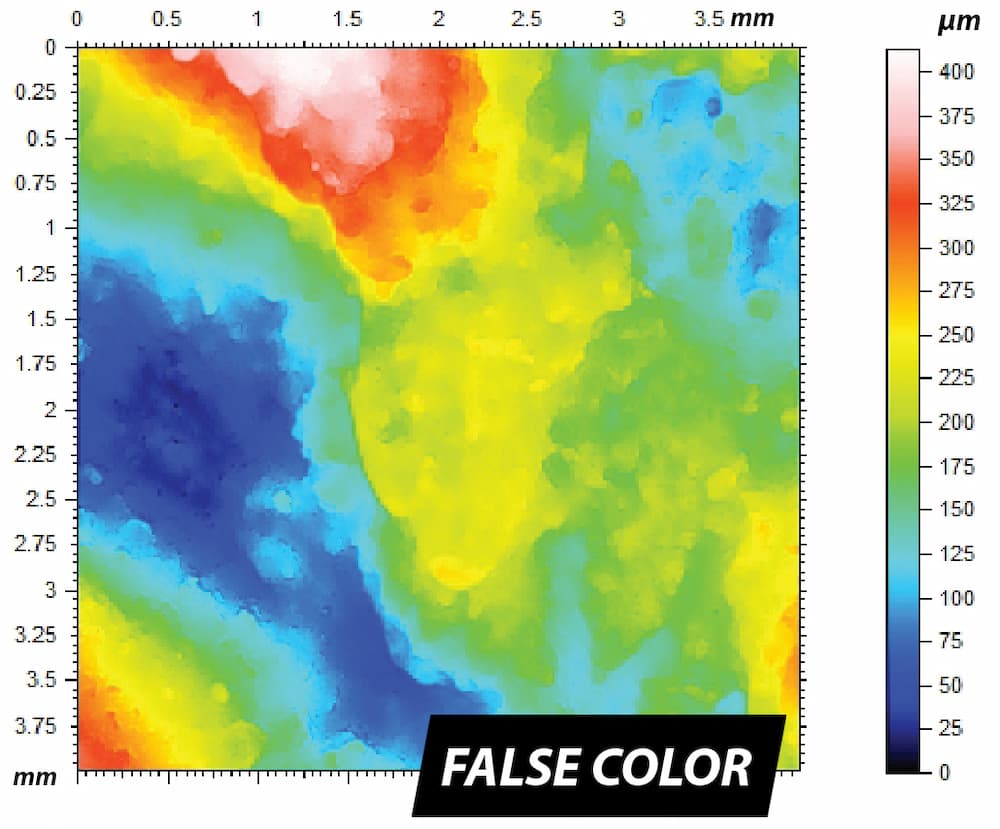
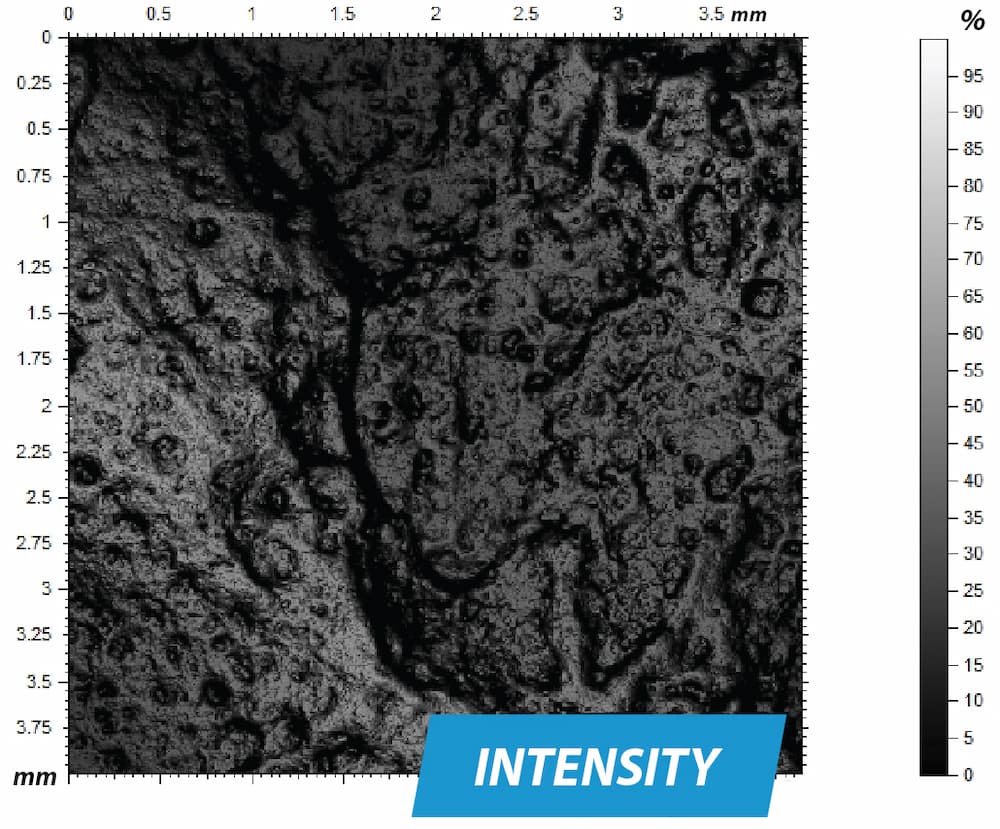
An intensity/contrast image was also acquired simultaneously with the 3D surface measurement, providing complementary visual information alongside the measured topography.

False-color height map from non-contact profilometry of a soft transparent petroleum-jelly-based sample

False-color height map showing surface height variation across the soft, translucent sample.

Intensity image acquired during non-contact profilometry of a soft transparent petroleum-jelly-based sample

Intensity image acquired simultaneously with the 3D surface measurement.

Conclusion

This study demonstrates how non-contact profilometry can characterize surfaces that combine two particularly difficult measurement conditions: extreme softness and translucency. Using the NANOVEA ST400, quantitative 3D surface data were acquired without physically contacting or preparing the sample.

A petroleum-jelly-based lip balm was selected as a deliberately challenging proof-of-concept material rather than as the end application itself. Its soft, translucent surface provided a practical demonstration of the ability to obtain surface roughness, flatness, 3D surface area, profile geometry, and complementary intensity data while minimizing the influence of the measurement process on the surface.

This capability is relevant wherever delicate, compliant, transparent, or absorptive materials must be characterized without deformation or surface damage. As soft polymers, gels, transparent elastomers, and related materials continue to appear in areas such as biomedical interfaces, wearable technologies, microfluidics, and advanced polymer systems, non-contact surface measurement provides a useful approach for evaluating their surface geometry and topography.

Frequently Asked Questions About Non-Contact Profilometry

Why is non-contact profilometry useful for soft materials?

Soft materials can deform, scratch, or move when touched by a contacting probe. Non-contact profilometry measures the surface optically, reducing the risk that the measurement itself alters the geometry being characterized.

Can non-contact profilometry measure transparent materials?

Yes, depending on the optical technology and material. NANOVEA profilometers use axial chromatism to determine surface height and can characterize transparent, opaque, specular, diffusive, polished, and rough surfaces without physical contact.

Can soft and transparent surfaces be measured without sample preparation?

In this study, the soft and transparent petroleum-jelly-based sample was measured without sample preparation. Avoiding coatings or other surface modification can be especially valuable when the original surface condition needs to be preserved.

What can be measured with non-contact 3D profilometry?

Non-contact 3D profilometry can provide quantitative measurements including surface roughness, 3D topography, flatness, surface area, 2D profiles, and other dimensional characteristics, depending on the measurement objective and surface geometry.

What types of materials benefit from non-contact surface measurement?

Non-contact measurement is especially useful for materials that are soft, delicate, transparent, semi-transparent, easily scratched, or otherwise difficult to probe physically. It can also be useful when maintaining the original surface condition is important.

How is non-contact profilometry different from contact profilometry?

Contact profilometry uses a physical stylus that moves across the surface. Non-contact profilometry acquires surface height optically, eliminating probe-to-sample contact and reducing the possibility of contact-induced deformation, scratching, or movement on sensitive materials.

Have a question? NANOVEA Experts are here to help!