USA/GLOBAL: +1-949-461-9292
EUROPE: +39-011-3052-794
CONTACT US
Cracked smartphone screen illustrating the importance of scratch resistance testing for screen protectors.

Scratch Resistance Testing of Phone Screen Protectors

Scratch Resistance Testing of Phone Screen Protectors

Prepared by

Stacey Pereira, Jocelyn Esparza, and Pierre Leroux

Understanding Scratch Resistance in Phone Screen Protectors

Protective coatings on phone screens play a critical role in scratch resistance, adhesion strength, and long-term durability. Over time, scratches, micro-cracks, and coating delamination can reduce optical clarity and reliability — especially in high-use environments. To evaluate how different screen protectors resist mechanical damage, instrumented scratch testing provides quantifiable insight into coating failure mechanisms, including adhesion, cohesion, and fracture behavior.

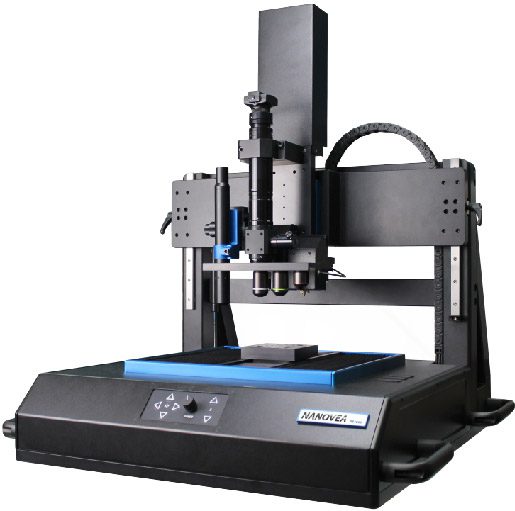
In this study, NANOVEA PB1000 Mechanical Tester is used to compare TPU vs. tempered-glass screen protectors under controlled progressive loading. Using precise acoustic emission detection, we identify critical failure loads and characterize how each material responds to increasing mechanical stress.

Why Scratch Resistance Testing Matters for Screen Protectors

Many users assume that thicker or harder protectors automatically perform better, but real durability depends on how the material behaves under progressive load, surface deformation, and localized stress. Instrumented scratch testing allows engineers to measure coating adhesion, cohesive strength, surface wear resistance, and the exact loads at which failures initiate or propagate.

By analyzing crack initiation points, delamination behavior, and failure modes, manufacturers can validate screen-protector performance for R&D, quality control, or comparative benchmarking. Nano- and micro-scratch testing offer repeatable, data-driven insight into real-world durability far beyond traditional hardness ratings.

Scratch Testing Objective:
Measuring Failure Loads in Screen Protectors

The objective of this study is to demonstrate how the NANOVEA PB1000 Mechanical Tester performs repeatable, standardized scratch resistance testing on both polymeric and glass screen protectors. By progressively increasing the applied load, the system detects critical loads for cohesive and adhesive failure, captures acoustic emission signals, and correlates these events with scratch depth, friction force, and surface deformation.

This methodology provides a complete mechanical profile of each protective coating, allowing manufacturers and R&D teams to evaluate material formulations, coating adhesion strength, surface durability, and optimal coating thickness for improved product performance. These scratch evaluations are part of NANOVEA’s broader suite of mechanical testing solutions used to characterize coatings, films, and substrates across R&D, quality control, and production environments.

NANOVEA PB1000 Large-Platform
Mechanical Tester

Scratch Test Parameters and Instrument Setup

The scratch resistance evaluation of TPU and tempered-glass screen protectors was conducted under controlled conditions to ensure repeatability and accurate failure-load detection. The following parameters define the progressive-load scratch testing setup used on the NANOVEA PB1000 Mechanical Tester.

LOAD TYPE PROGRESSIVE
INITIAL LOAD 0.1 N
FINAL LOAD 12 N
SLIDING SPEED 3.025 mm/min
SLIDING DISTANCE 3 mm
INDENTER GEOMETRY ROCKWELL (120° CONE)
INDENTER MATERIAL (TIP) DIAMOND
INDENTER TIP RADIUS 50 µm
ATMOSPHERE AIR
TEMPERATURE 24 °C (ROOM TEMP)

TABLE 1: Test parameters used for scratch testing

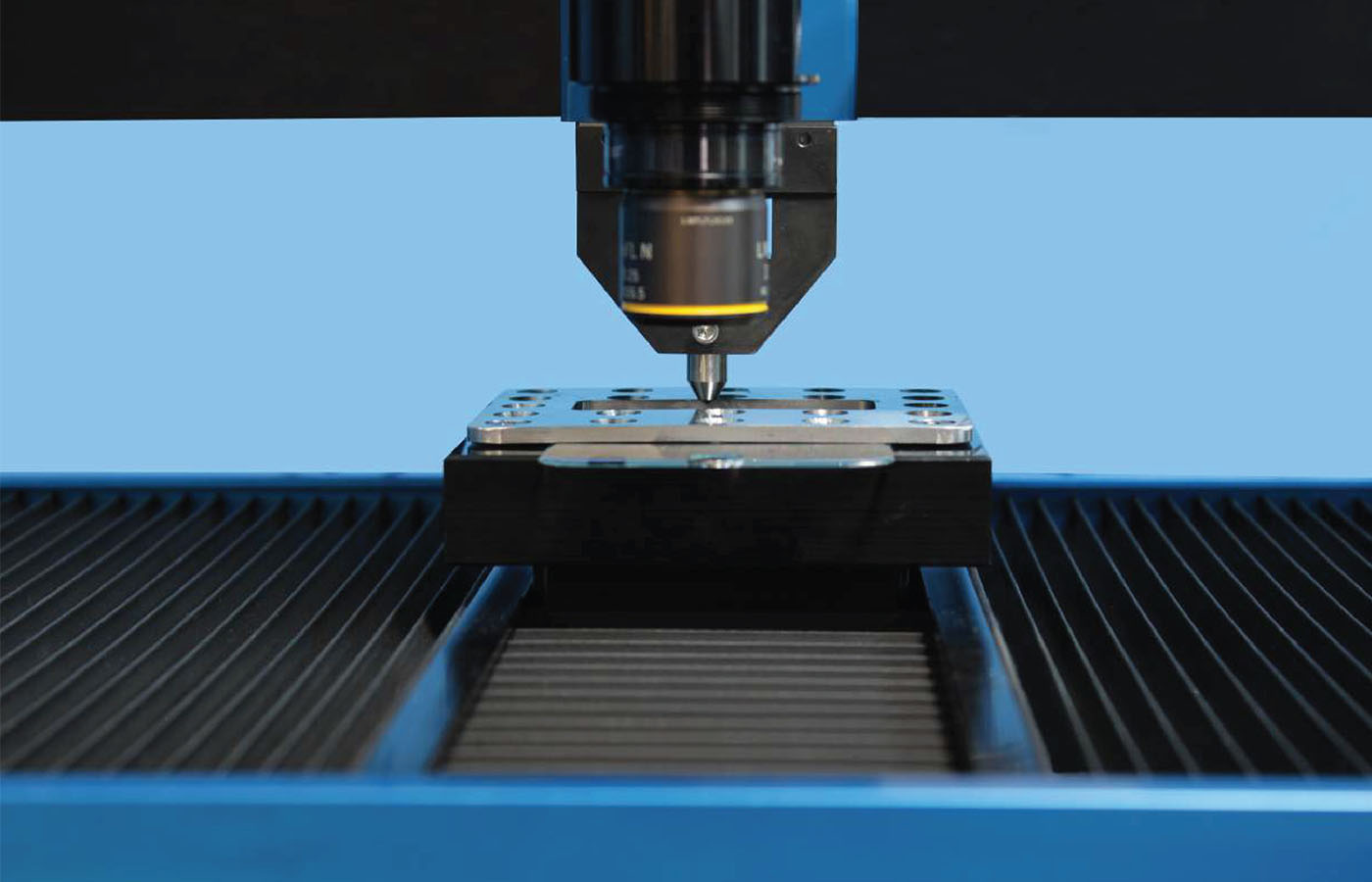
Screen protector sample undergoing scratch test on NANOVEA PB1000 mechanical tester

Screen protector sample mounted on the NANOVEA PB1000 Mechanical Tester during progressive-load scratch measurement.

Screen Protector Samples Used for Scratch Resistance Testing

Two commercially available screen protector materials were selected to compare differences in scratch resistance, failure behavior, and mechanical durability. Both samples were mounted securely on the NANOVEA PB1000 Mechanical Tester and evaluated under identical progressive-load conditions to ensure a consistent and unbiased comparison.

The TPU screen protector represents a flexible polymeric film with high elasticity but lower abrasion resistance, while the tempered-glass protector represents a rigid, brittle material designed for high hardness and enhanced impact protection. Testing both materials under the same load profile allows a clear assessment of how material composition, elasticity, and hardness influence scratch failure modes.

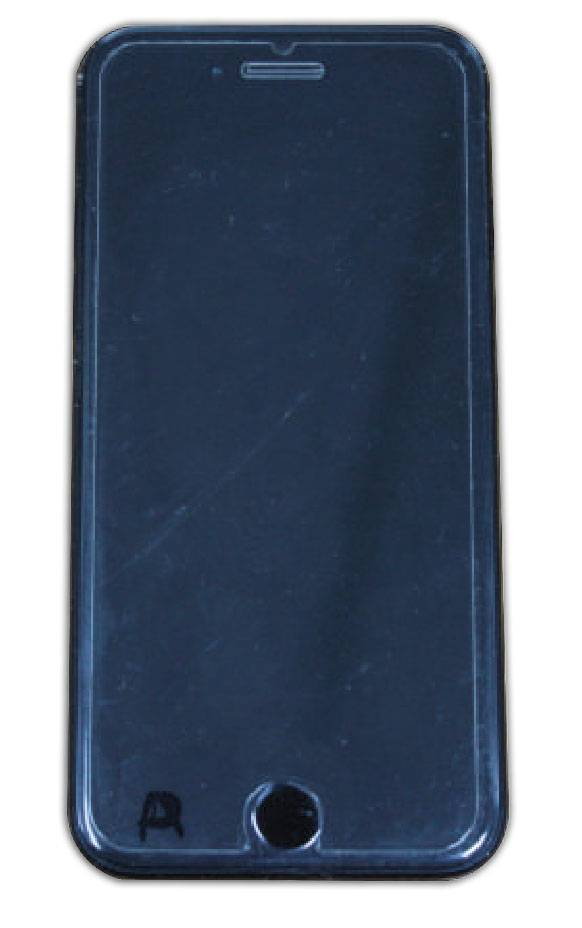
TPU Screen Protector

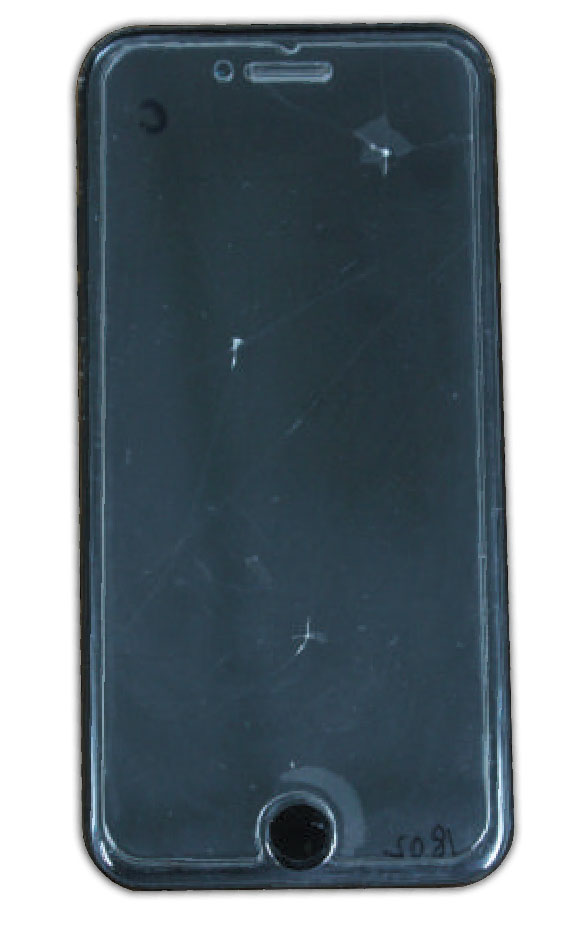
Tempered Glass

FIGURE 1: TPU and tempered-glass screen protectors prepared for scratch resistance testing.

Scratch Test Results: Failure Modes in TPU vs. Tempered Glass Screen Protectors

TYPE OF SCREEN PROTECTORCRITICAL LOAD #1 (N)CRITICAL LOAD #2 (N)
TPUn/a2.004 ± 0.063
TEMPERED GLASS3.608 ± 0.2817.44 ± 0.995

TABLE 2: Summary of critical loads for each screen protector sample.

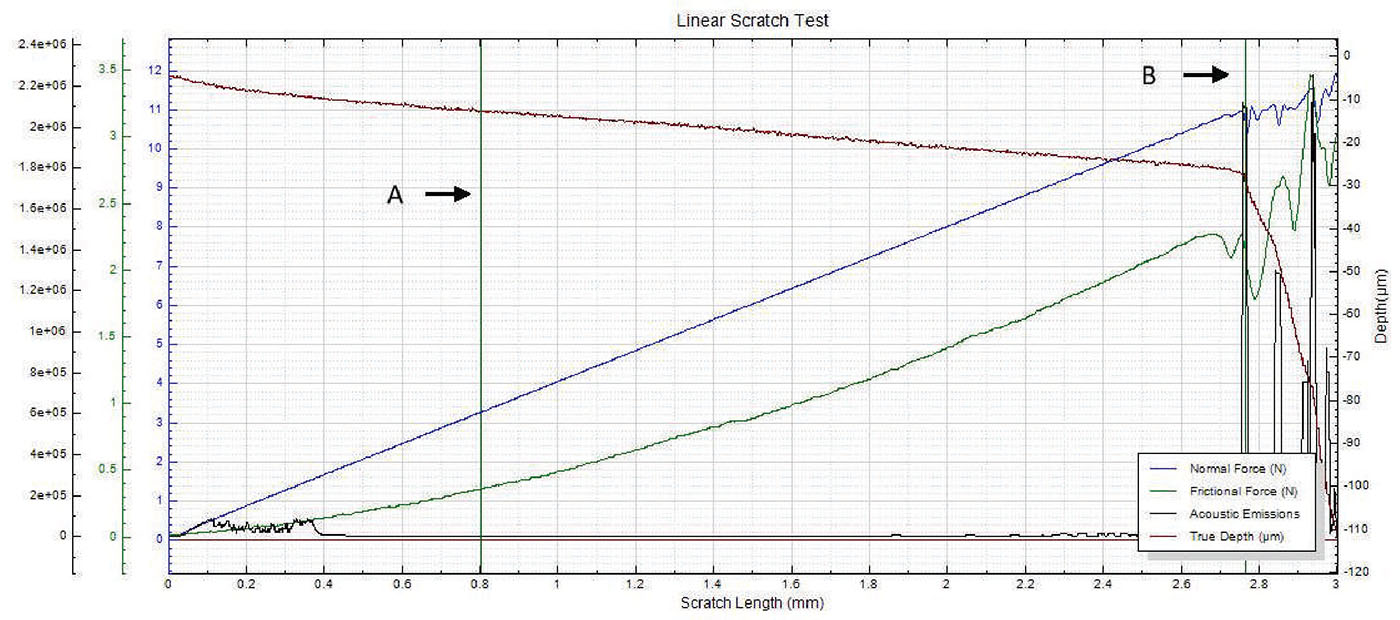
Because TPU and tempered-glass screen protectors have fundamentally different mechanical properties, each sample exhibited distinct failure modes and critical load thresholds during progressive-load scratch testing. Table 2 summarizes the measured critical loads for each material.

Critical Load #1 represents the first observable point of cohesive failure under optical microscopy, such as crack initiation or radial fracture.

Critical Load #2 corresponds to the first major event detected through acoustic emission (AE) monitoring, typically representing a larger structural failure or penetration event.

TPU Screen Protector — Flexible Polymer Behavior

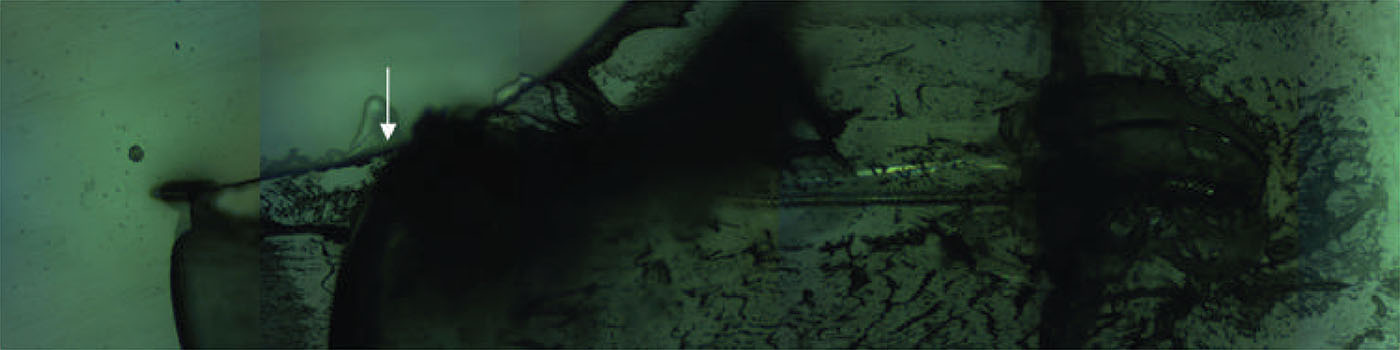
The TPU screen protector exhibited only one significant critical event (Critical Load #2). This load corresponds to the point along the scratch track where the film began to lift, peel, or delaminate from the phone screen surface.

Once Critical Load #2 (≈2.00 N) was exceeded, the indenter penetrated sufficiently to cause a visible scratch directly on the phone screen for the remainder of the test. No separate Critical Load #1 event was detectable, consistent with the material’s high elasticity and lower cohesive strength.

Tempered Glass Screen Protector — Brittle Failure Behavior

The tempered-glass screen protector showed two distinct critical loads, characteristic of brittle materials:

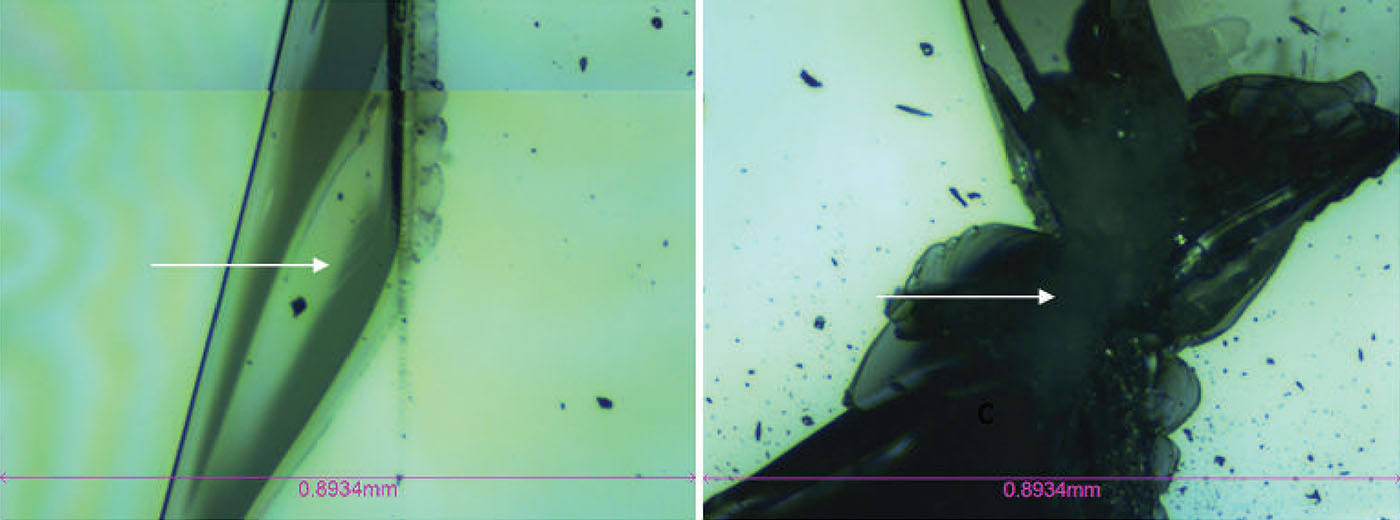
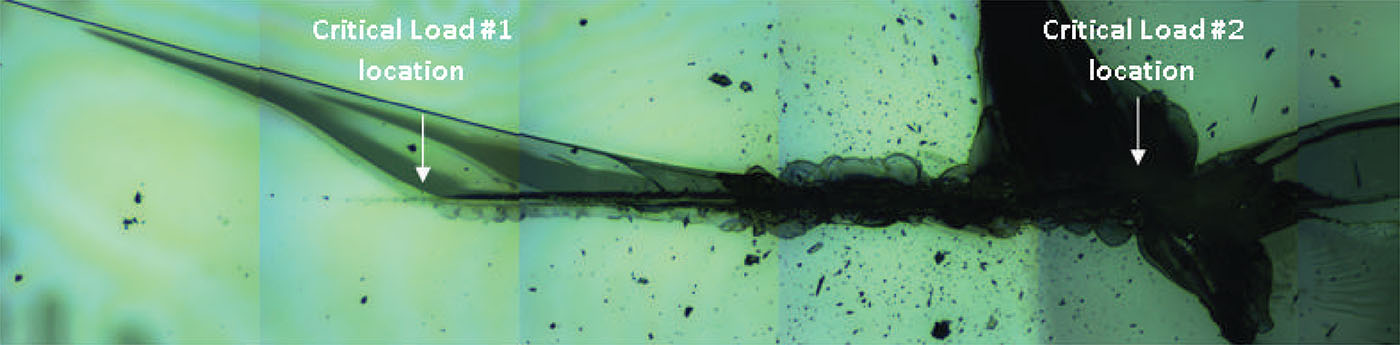
  • Critical Load #1 (≈3.61 N): Radial fractures and crack initiation were observed under the microscope, indicating early cohesive failure of the glass layer.

  • Critical Load #2 (≈7.44 N): A large AE spike and a sharp increase in scratch depth indicated protector penetration at higher loads.

Although the AE magnitude was higher than TPU, no damage was transferred to the phone screen, demonstrating the tempered-glass protector’s ability to absorb and distribute load before catastrophic failure.

In both materials, Critical Load #2 corresponded to the moment when the indenter broke through the screen protector, confirming the protective limit of each sample.

TPU Screen Protector: Scratch Test Data and Failure Analysis

SCRATCHCRITICAL LOAD #2 (N)
12.033
22.047
31.931
AVERAGE2.003
STANDARD DEVIATION0.052

TABLE 3: Critical loads measured during TPU screen protector scratch testing.

Graph showing friction, normal force, acoustic emissions, and depth versus scratch length for TPU screen protector tested on NANOVEA mechanical tester.

FIGURE 2: Friction force, normal load, acoustic emission (AE), and scratch depth vs. scratch length for the TPU screen protector. (B) Critical Load #2

FIGURE 3: Optical microscopy image of the TPU screen protector at Critical Load #2 (5× magnification; image width 0.8934 mm).

FIGURE 4: Full-length post-scratch image of the TPU screen protector showing the complete scratch track following progressive-load testing.

Tempered Glass Screen Protector: Critical Load Data and Fracture Behavior

SCRATCH CRITICAL LOAD #1 (N) CRITICAL LOAD #2 (N)
1 3.923 7.366
2 3.382 6.483
3 3.519 8.468
AVERAGE 3.653 6.925
STANDARD DEVIATION 0.383 0.624

TABLE 4: Critical loads measured during tempered-glass screen protector scratch testing.

ℹ️ For comparison with non-silicate polymer coatings, see our study on PTFE coating wear testing, which highlights failure behavior in low-friction polymer films under similar progressive-load conditions.

FIGURE 5: Friction force, normal load, acoustic emission (AE), and scratch depth vs. scratch length for the tempered-glass screen protector. (A) Critical Load #1  (B) Critical Load #2

Optical microscopy images showing Critical Load #1 and Critical Load #2 failure locations on tempered glass screen protector during scratch testing at 5x magnification using NANOVEA mechanical tester.

FIGURE 6: Optical microscopy images showing the failure locations for Critical Load #1 (left) and Critical Load #2 (right) at 5× magnification (image width: 0.8934 mm).

FIGURE 7: Post-test optical microscopy image of the tempered-glass scratch track, highlighting fracture initiation (CL#1) and the final penetration zone (CL#2) following progressive-load testing.

Conclusion: Scratch Performance Comparison of TPU vs. Tempered Glass Screen Protectors

This study demonstrates how the NANOVEA PB1000 Mechanical Tester delivers controlled, repeatable, and highly sensitive scratch resistance measurements using progressive loading and acoustic emission (AE) detection. By precisely capturing both cohesive and adhesive failure events, the system enables a clear comparison of how TPU and tempered-glass screen protectors behave under increasing mechanical stress.

The experimental results confirm that tempered glass exhibits significantly higher critical loads than TPU, providing superior scratch resistance, delayed fracture initiation, and reliable protection against indenter penetration. TPU’s lower cohesive strength and earlier delamination highlight its limitations in high-stress environments.

After identifying failure loads, the resulting scratch tracks can also be analyzed using a non-contact 3D optical profilometer to measure groove depth, residual deformation, and post-scratch topography. This helps complete the mechanical profile of each material.

The NANOVEA Mechanical Tester is engineered for accurate and repeatable indentation, scratch, and wear testing, and supports ISO- and ASTM-compliant nano and micro modules. Its versatility makes it an ideal solution for evaluating the full mechanical profile of thin films, coatings, polymers, glasses, and substrates across R&D, production, and quality control.

Frequently Asked Questions
About Scratch Resistance Testing

What is scratch resistance testing?

Scratch resistance testing evaluates how a material or coating responds when a diamond stylus applies a progressively increasing load. The test identifies the critical loads where cohesive or adhesive failures occur, providing a quantifiable measure of durability, adhesion strength, and resistance to surface damage.

What’s the difference between cohesive and adhesive failure?

Cohesive failure occurs within the coating or material, such as cracking, tearing, or internal fracture.
Adhesive failure happens when the coating detaches from the substrate, indicating insufficient bonding strength.

The NANOVEA PB1000 detects both using synchronized acoustic emission monitoring, scratch depth tracking, and friction analysis.

Why use a mechanical tester instead of manual methods?

A mechanical tester like the NANOVEA PB1000 provides precise, repeatable, and standardized measurements, ensuring reliable data for R&D, production validation, and quality control. It also offers advanced features, such as acoustic emission detection and real-time depth monitoring, that manual methods cannot deliver.

Need Reliable Scratch Testing for Your Materials?