ABD/GLOBAL: +1-949-461-9292
AVRUPA: +39-011-3052-794
BİZE ULAŞIN

Kategori Profilometri | Geometri ve Şekil


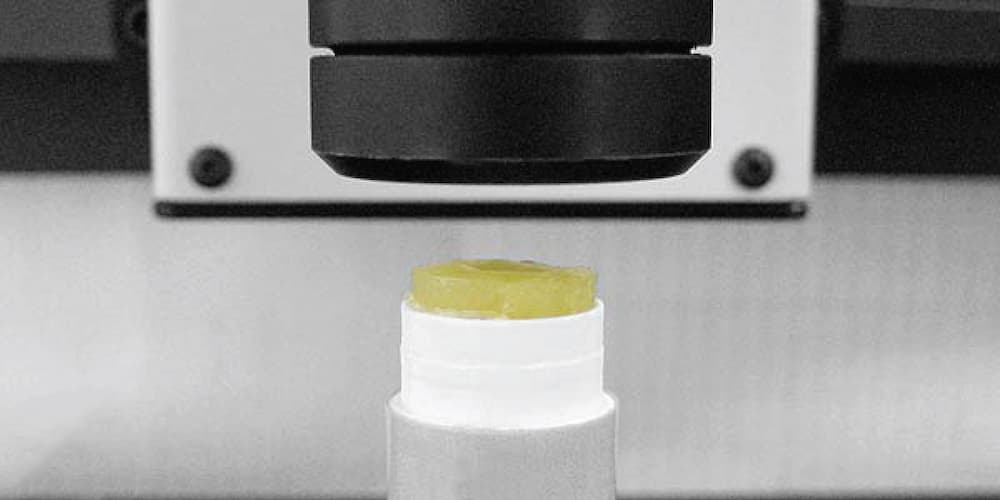
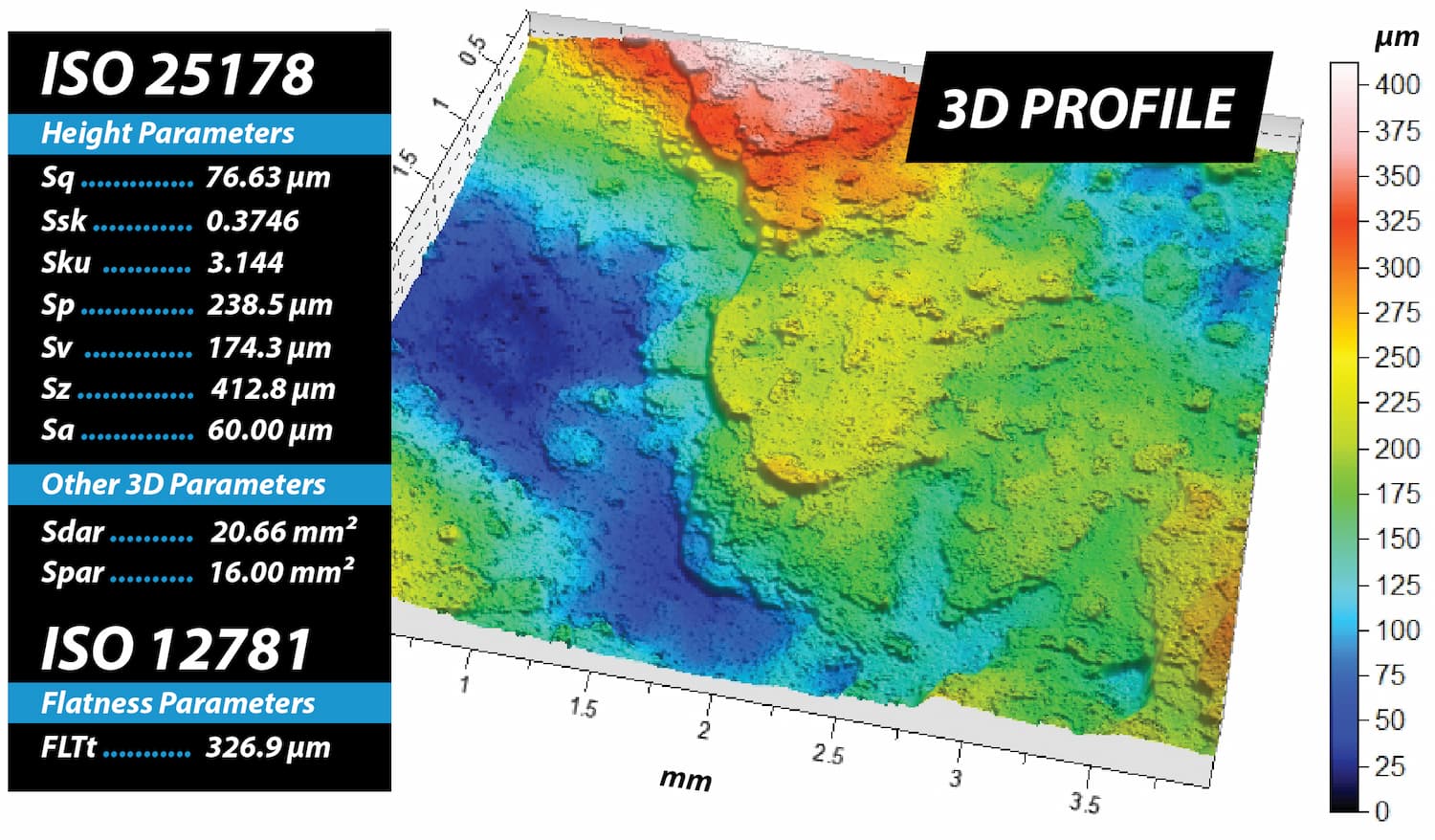
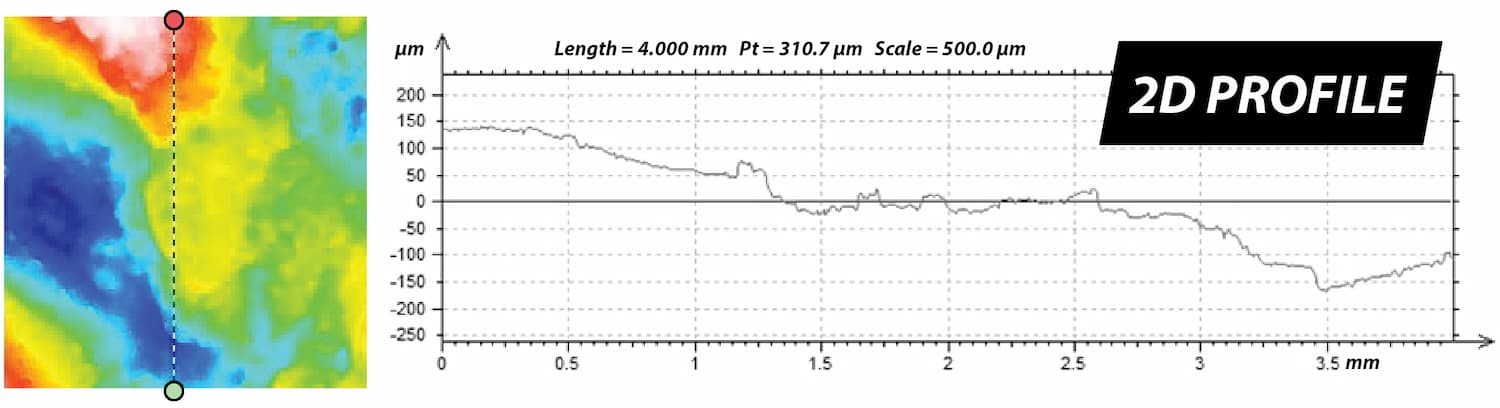
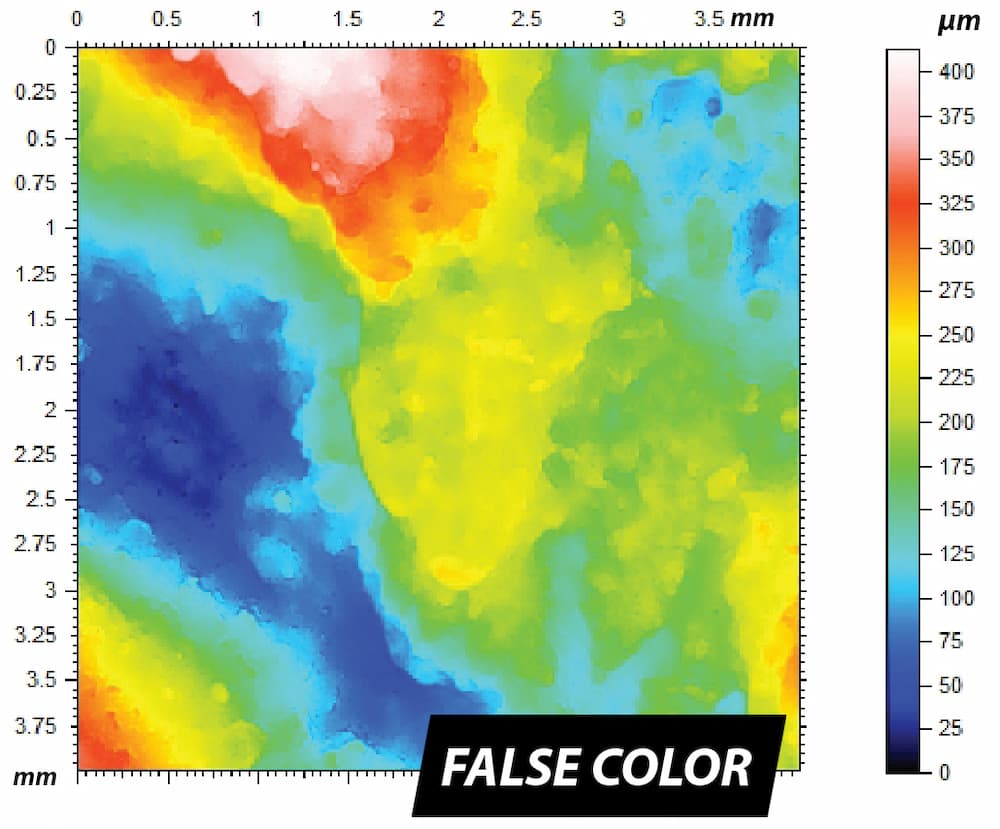
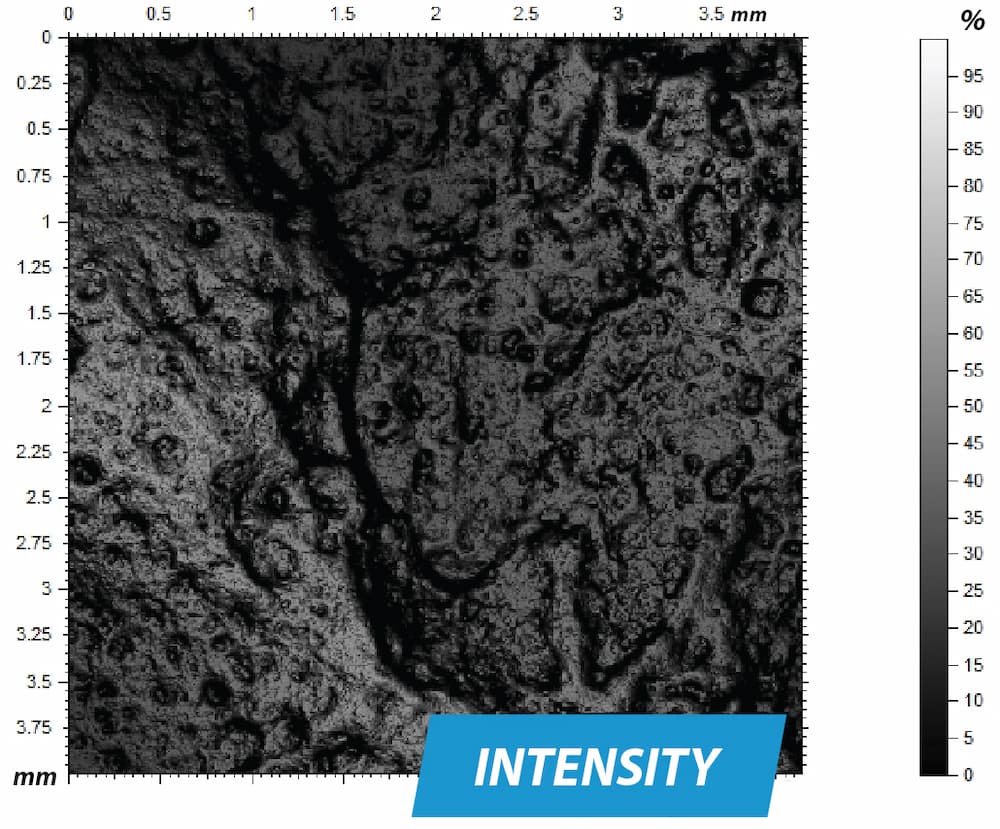
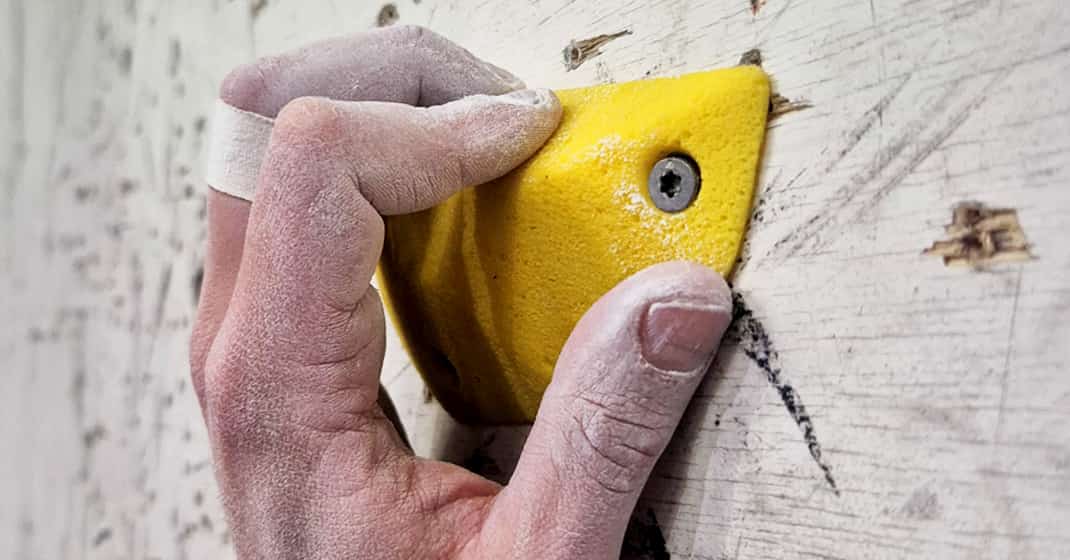
3D optical profilometry image showing climbing hold surface roughness, pore morphology, and grip-related texture features.

Climbing Hold Surface Roughness Analysis

Application Note | 3D Optical Profilometry

Climbing Hold Surface Roughness Analysis Using 3D Optical Profilometry

Measuring Texture, Porosity, and Topography on Bouldering Holds

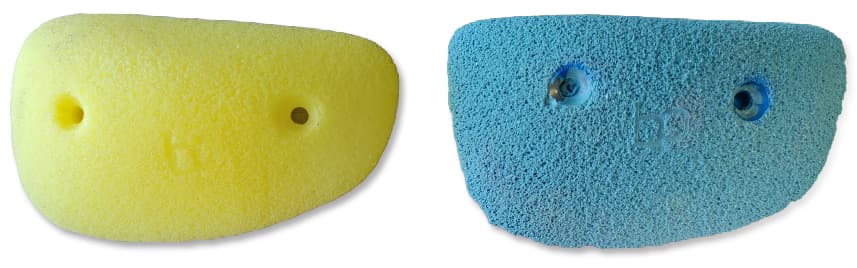
Bouldering holds analyzed for climbing hold surface roughness using 3D optical profilometry.

Research & Experimental Testing

Walter Alabiso, PhD

Visual Design & Editorial

Andrew Shore

Giriş

Bouldering is a demanding discipline that combines physical strength, precise body positioning, and an understanding of how the human body interacts with climbing surfaces. On slab routes, where the wall is angled below vertical and positive holds are limited or absent, a climber’s stability depends almost entirely on the tribological interaction between the body and the climbing hold surface.

Climbing hold surface roughness plays a central role in this contact. Roughness provides the microtexture needed for smearing, a technique where high-friction rubber soles are pressed firmly against the surface to expand the effective contact area and generate adherence. A similar mechanism occurs at the fingers, where the ridges of fingerprints and the pliability of skin deform slightly against the hold’s surface features, creating grip through microscopic interlocking.

Porosity contributes to grip performance by absorbing moisture, sweat, or chalk at the contact interface, preventing the formation of a thin lubricating film that would reduce friction. Micro-cracks and surface flaws act as additional friction points, helping the climber maintain lateral tension against the hold surface. Because these features (roughness, porosity, and surface morphology) operate at different scales and interact differently depending on the hold, quantitative 3D surface measurement is essential for comparing how different climbing hold textures perform under real contact conditions.

Bouldering grips used to compare surface roughness, pore morphology, and grip-related topography.

Why Use Non-Contact Profilometry for Climbing Hold Surface Analysis

Climbing holds and rock-like surfaces can include deep pores, steep asperities, sharp valleys, and irregular texture. These features are difficult to measure accurately with contact-based profilometry because a physical stylus can lose contact, deform local surface features, or fail to reach narrow cavities.

NANOVEA’s non-contact optical profilometry uses chromatic light technology to capture surface height data without touching the sample. This makes it suitable for reconstructing complex climbing hold topography, including deep nooks, pores, and surface flaws, while avoiding measurement artifacts caused by local plastic deformation.
In this study, the NANOVEA JR25 Optical Profiler was used to measure two bouldering grips: a yellow block with a smoother, flatter surface and a green block with a rougher tactile texture. Both samples were scanned using a PS4-MG35 single-point optical sensor with a 3000 µm Z-range and a 4 µm acquisition step in X and Y.

Dual-frequency acquisition was used to reduce light sensor saturation from localized bright spots on the grip surfaces, allowing the profiler to capture roughness and pore morphology across the scanned areas.

Ölçüm Hedefi

The objective of this study was to demonstrate how non-contact 3D optical profilometry can be used to reconstruct and compare the surface roughness, topography, and pore morphology of climbing holds.

Two bouldering grip samples were analyzed: a yellow block with a smoother, flatter surface and a blue block with a rougher tactile texture and sharper grip features. The analysis focused on surface height variation, areal roughness parameters, pore coverage, pore size, pore depth, and functional surface behavior.

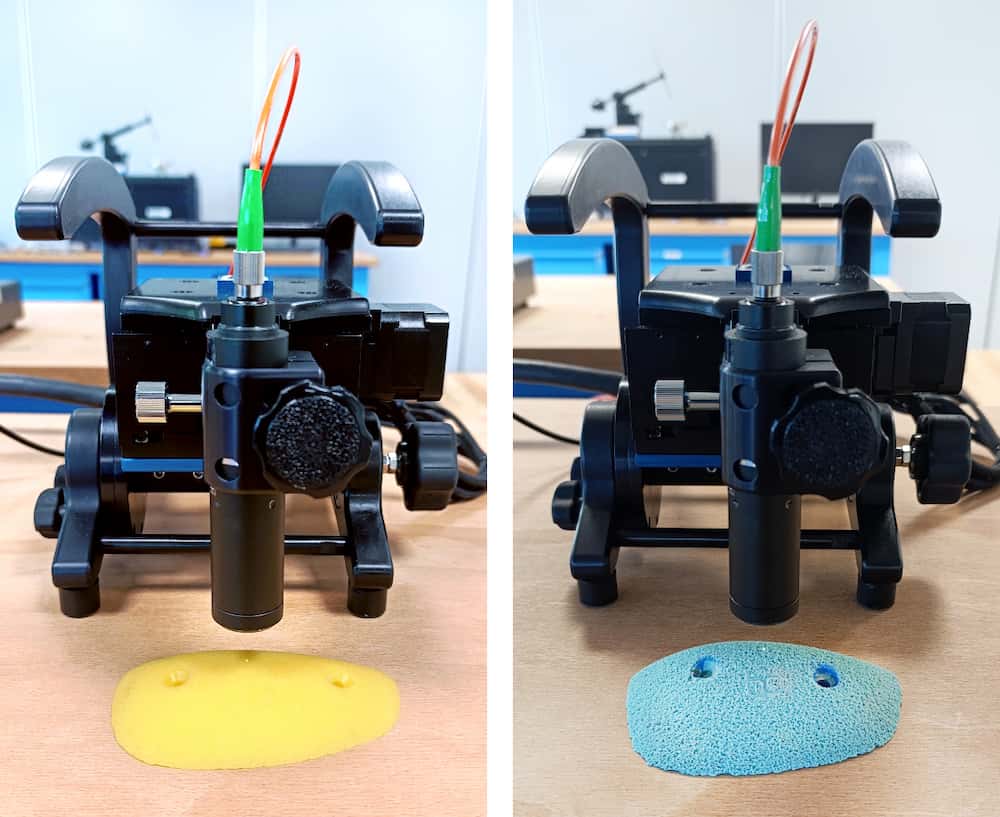
The NANOVEA JR25 Optical Profilometer measuring the climbing hold samples using an optical sensor.

Measurement Method

The NANOVEA JR25 Optical Profiler was used to measure the yellow and blue bouldering grip samples. Each surface was scanned with a PS4-MG35 single-point optical sensor with an enhanced 3000 µm Z-range, allowing the system to capture deep pores, sharp valleys, and irregular surface texture while maintaining a 4 µm acquisition step in X and Y.

Dual-frequency acquisition was used to reduce light sensor saturation from localized bright spots on the grip surfaces, improving data capture across rough, porous, and uneven areas.

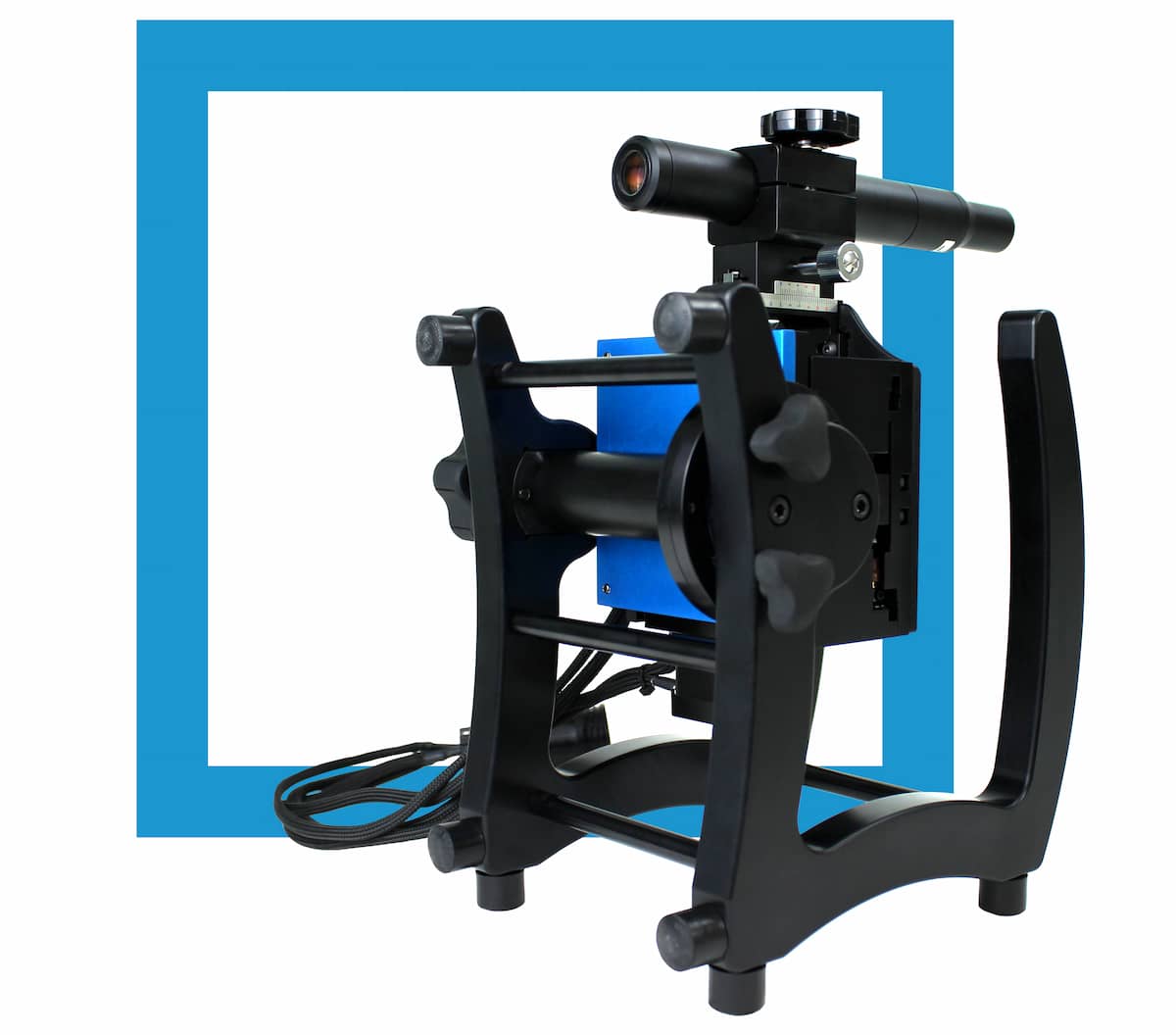
NANOVEA JR25 Portable

Optik Profilometre

Test Parametreleri

Two bouldering grip samples were analyzed: a yellow grip with a smoother, flatter surface and a blue grip with a rougher tactile texture and sharper grip features. The analysis focused on surface height variation, areal roughness parameters, pore coverage, pore size, pore depth, and functional surface behavior.

Measurement Setting Optical Profilometry Setup
Samples measured Yellow and blue bouldering grip samples
Optical pen PS4-MG35
Z-range 3000 µm
Scan area 5.00 mm × 5.00 mm
X-step size 4.00 µm
Y-step size 4.00 µm
Averaging 1
Measurement type Direct
Acquisition mode Dual frequency
Acquisition rate 100–400 Hz
Light intensity 100%

Tablo 1: Optical profilometry test conditions used to measure the bouldering grip samples.

Optical Profilometry Results

Yellow Grip Sample

Surface Roughness Analysis

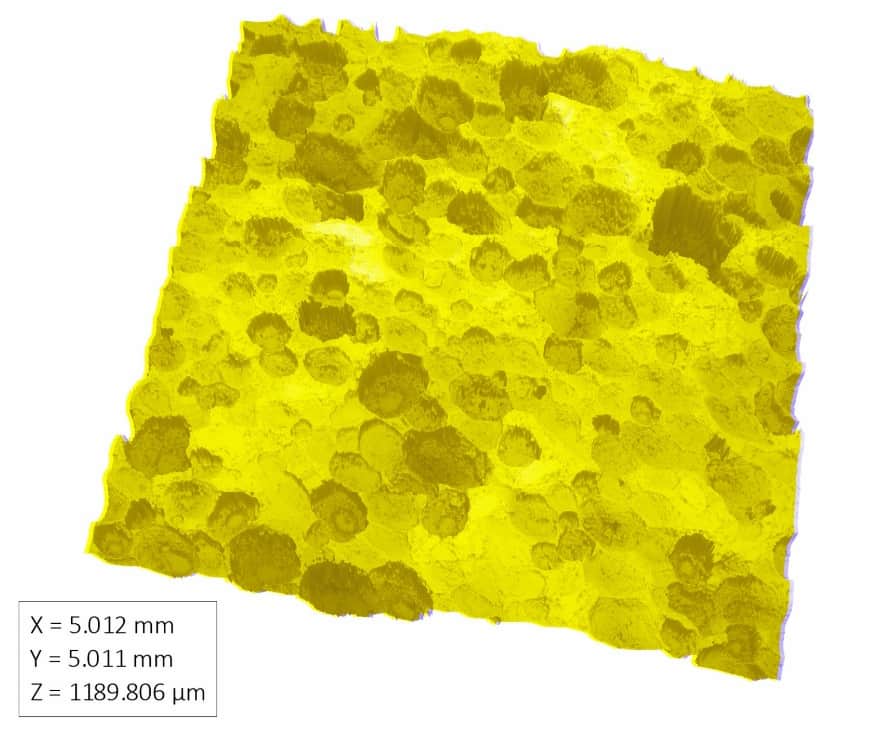
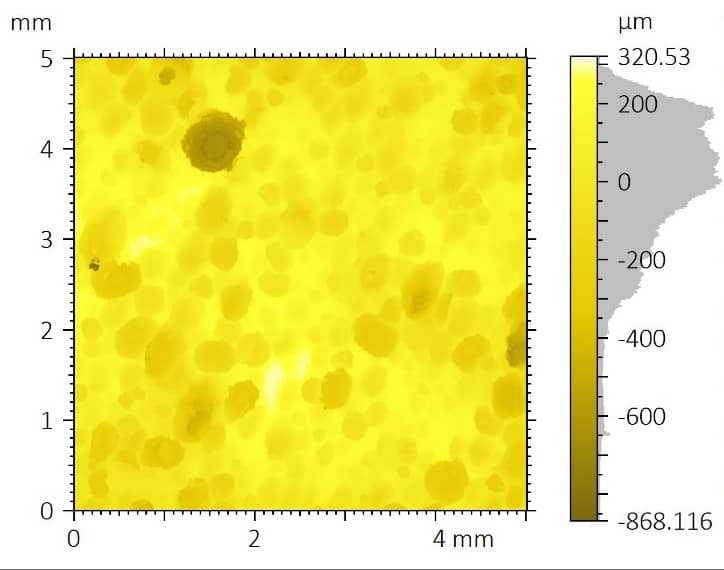
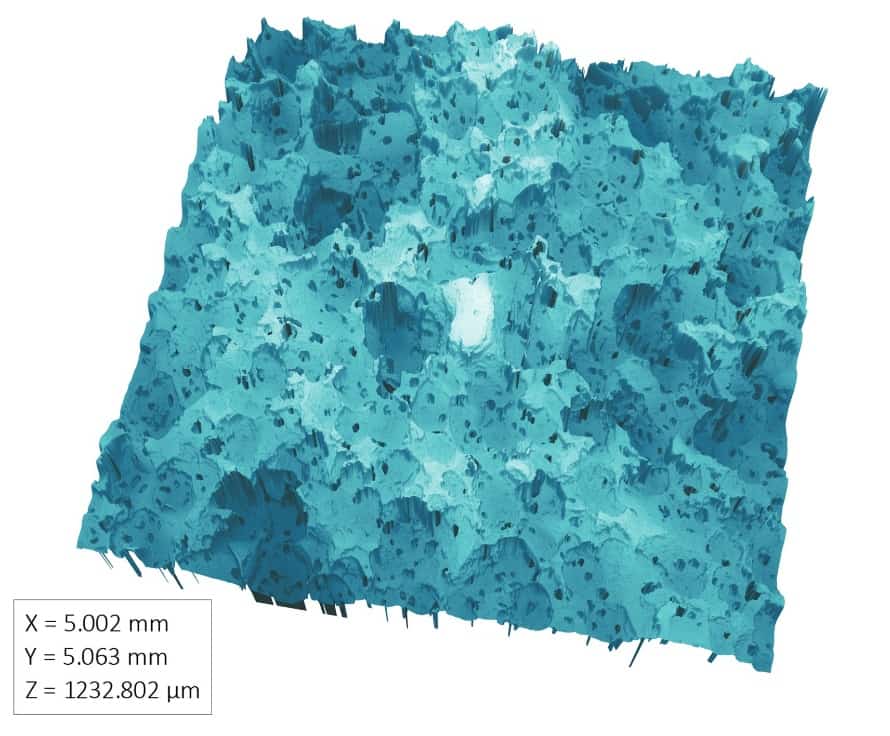
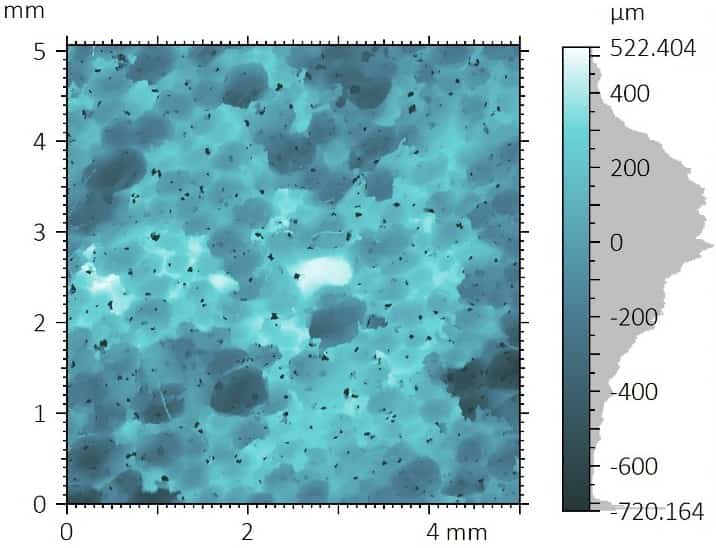
The 3D rendering below shows the reconstructed surface topography of the yellow climbing grip sample.

3D optical profilometry reconstruction of the yellow climbing grip surface showing pores, roughness, and surface height variation.
A total least-squares plane was removed to study surface properties. The roughness filters S-Gaussian 2.5 µm was applied following ISO 25178 (1/2 cut-off removed at each side). However, the sharp density of pores and asperities and the elevated average roughness make the use of a Gaussian L-filter (8 mm cut off) inapplicable. Therefore, the primary surface was considered, and the roughness parameters are listed in the table below, alongside the 2D false-color map of the filtered surface.

False-color optical profilometry surface roughness map of the yellow climbing grip sample with ISO 25178 height parameters.
ISO 25178-2 – Primary Surface
S-filter (λs): Gaussian, 2.5 µm, 1/2 cut-off
F-operation: [Workflow] Leveled (TLSPL)
Height Parameters
Sq 168.970 µm Kök ortalama kare yüksekliği
Ssk -0.927 Çarpıklık
Sku 4.117 Kurtosis
Sp 320.530 µm Maksimum tepe yüksekliği
Sv 868.116 µm Maximum pit depth
Sz 1188.645 µm Maksimum yükseklik
Sa 132.953 µm Aritmetik ortalama yükseklik

The average surface roughness Sa is 132.953 µm, whereas the peak-to-valley roughness, Sz amounts to 1188.645 µm. The surface morphology is skewed towards deep valleys (Ssk < 0, Sv > Sp), with a leptokurtotic (Sku > 3) distribution of peaks and valleys relative to the average plane.

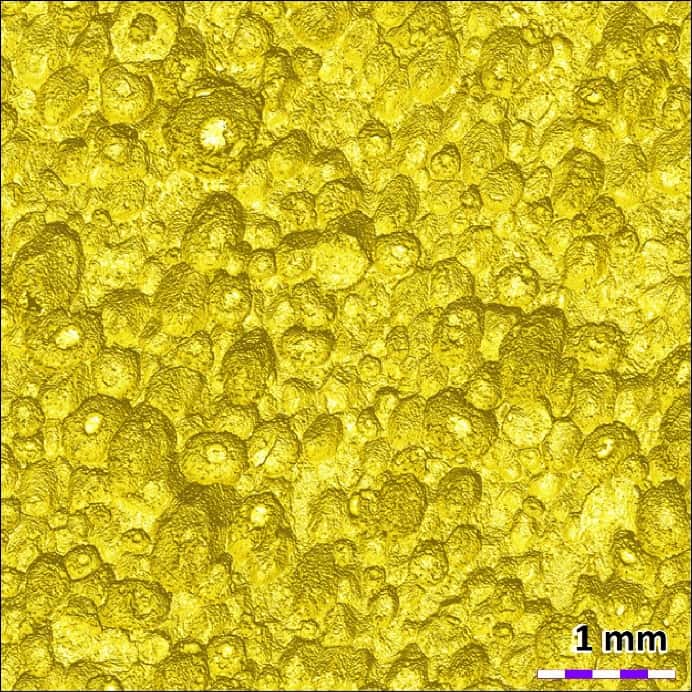
The following picture shows a 2D photo-simulation of the area under artificial lighting, highlighting the region’s morphology.

2D photo simulation of the yellow climbing grip surface showing pores, roughness, and morphology under artificial lighting.

Pore Morphology Analysis

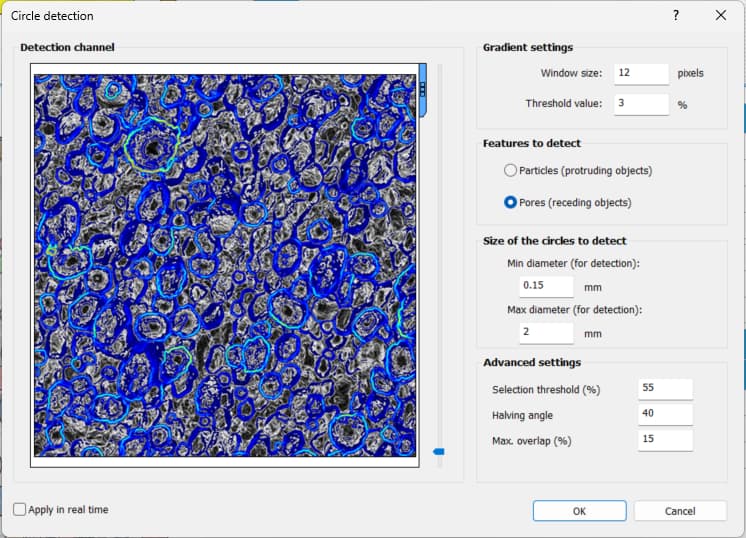
A pore analysis was performed across the full scanned area using a semi-automated edge-detection algorithm. The analysis identified recessed surface features to quantify pore coverage, pore density, radius, void volume, and maximum depth.

Pore detection analysis of the yellow climbing grip surface using semi-automated edge detection to identify recessed surface features.

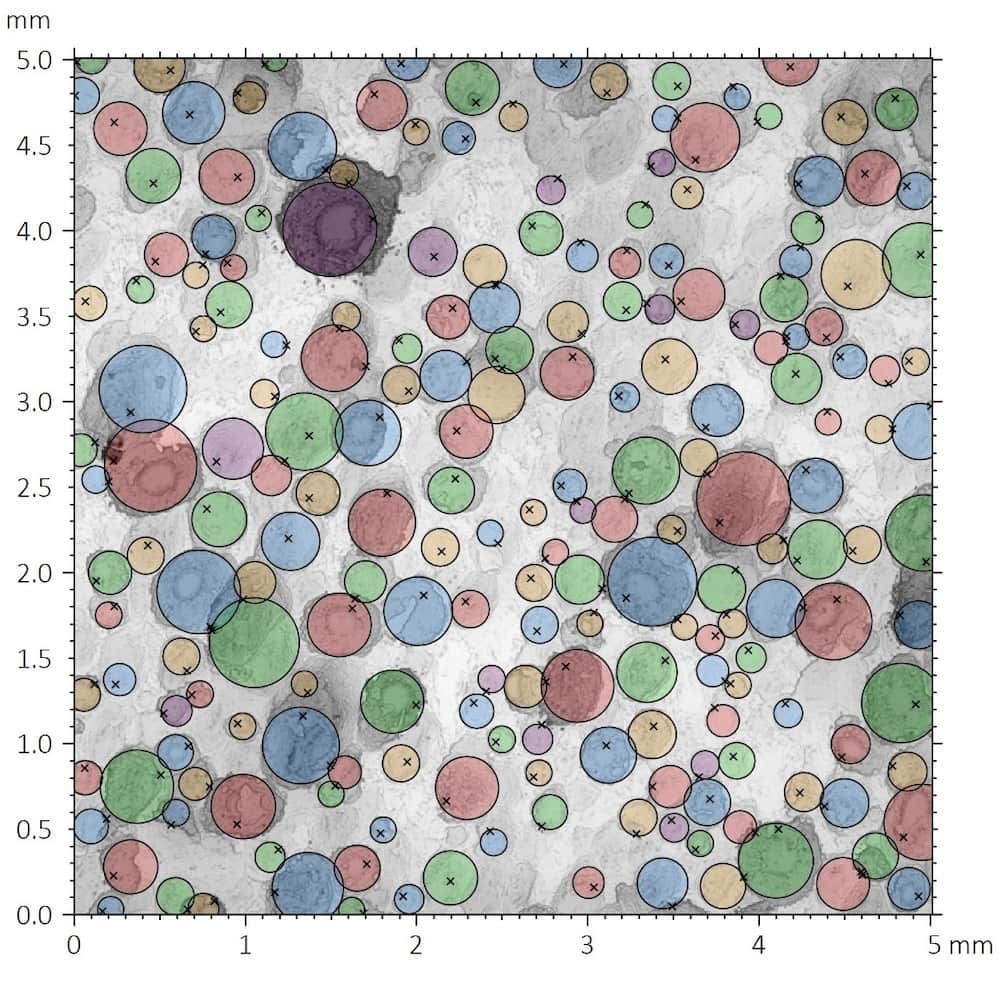
The detected pore locations were then mapped across the scanned 5 mm × 5 mm area to evaluate pore coverage, density, and size distribution.
Pore distribution map of the yellow climbing grip sample showing detected recessed surface features across a 5 mm by 5 mm scanned area.
Information
MethodCircle detection
Features detectedPores, recessed objects
Minimum detection diameter0.150 mm
Maximum detection diameter2.000 mm
Number of detected pores206
Surface coverage47.395%
Pore density8.203 particles/mm²
Global Statistics
ParameterUnitMeanStd. Dev.MinMax
Yarıçapmm0.1270.0490.0760.275
Void volumeµm³4,724,770.7056,748,143.92523,594.1724.422 × 10⁷
Maximum depthµm173.72994.94228.153716.480

Pores covered nearly half of the yellow grip’s scanned surface, with a measured coverage of 47.395% and a pore density of 8.203 particles/mm². The detected pores and cracks were highly heterogeneous in size, volume, and depth, ranging from large crater-like features with a maximum radius of 0.275 mm and void volume above 4.4 × 10⁷ µm³ to smaller pores with a minimum radius of 0.076 mm and void volume of 23,594.172 µm³. This uneven pore distribution is reflected in the large standard deviation measured for void volume and maximum depth.

Functional Surface Parameters (Abbott-Firestone curve)

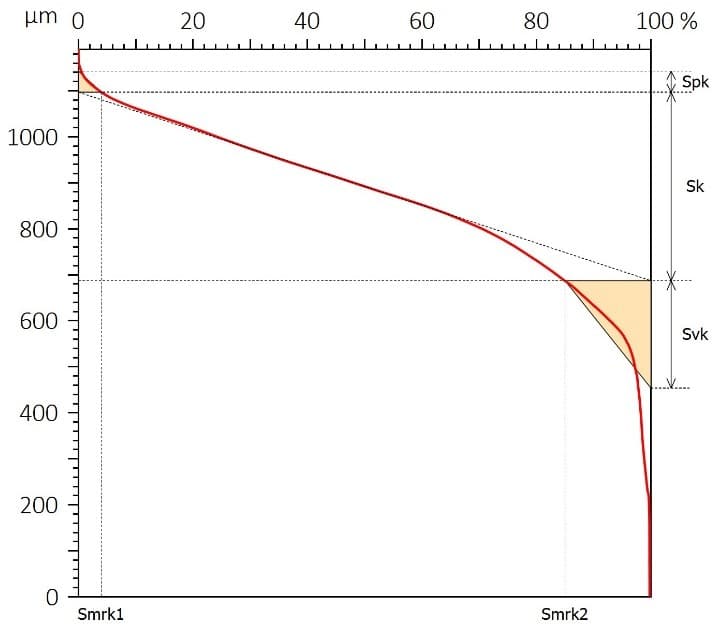
The Abbott-Firestone curve shows the cumulative areal material distribution of the yellow climbing grip sample. This analysis defines functional surface parameters including Sk, Spk, and Svk according to ISO 25178-2.

Abbott-Firestone curve for the yellow climbing grip sample showing cumulative areal material distribution and functional surface parameters.
Information
Standart ISO 25178-2
Parameter Value Unit
Sk 409.738 µm
Spk 45.480 µm
Svk 233.446 µm
Smrk1 3.976 %
Smrk2 85.005 %

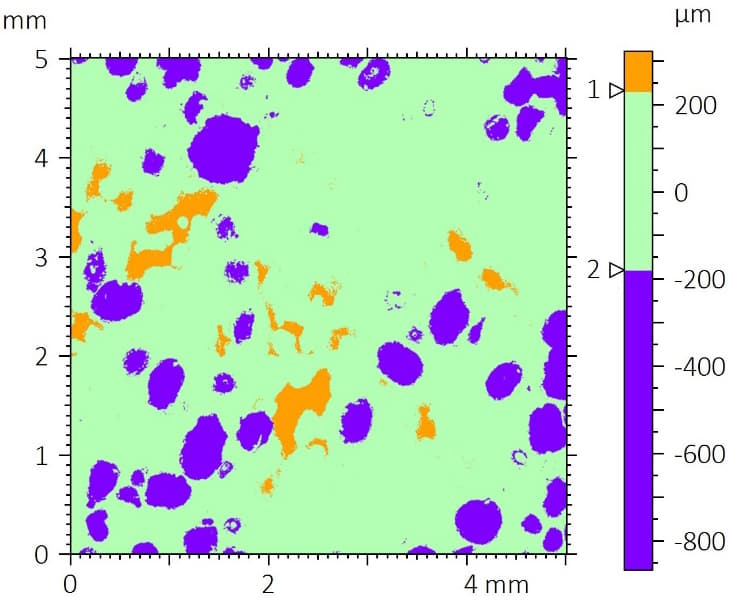
The chart below shows the peak-valley distribution from the mean plane based on the functional parameters derived from the Abbott-Firestone curve. Valleys are shown in purple, the mean plane in green, and peaks in orange.

Peak-valley distribution map of the yellow climbing grip sample showing valleys, mean plane regions, and peaks derived from Abbott-Firestone functional parameters.
Information
1st threshold Height – c1: 229.209 µm
2nd threshold Height – c2: -180.424 µm
Parameters Unit
Projected area (in %) % 14.995 81.029 3.976
Projected area mm² 3.772 20.381 1.000
Volume of material (in %) % 97.451 48.100 0.973
Volume of material µm³ 1.684 × 10¹⁰ 4.956 × 10⁹ 2.275 × 10⁷

The yellow grip sample shows a dominant mean-plane region with scattered recessed pores and a smaller population of raised peaks. This indicates a surface texture characterized mainly by average-sized pores distributed across the scanned area.

Blue Grip Sample

Surface Roughness Analysis

The 3D rendering below shows the reconstructed surface topography of the blue climbing grip sample.

3D optical profilometry reconstruction of the blue climbing grip surface showing roughness, pores, asperities, and surface height variation.
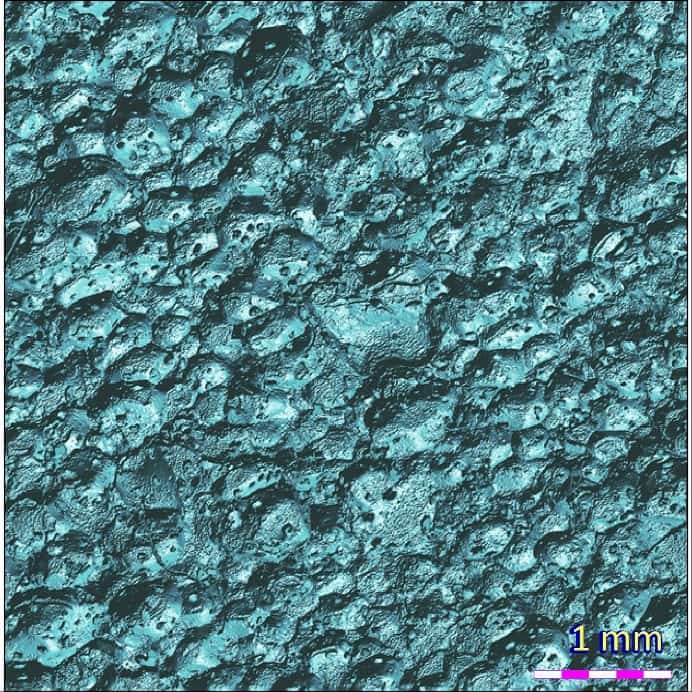
A total least-squares plane was removed to evaluate the blue grip’s surface properties. An S-Gaussian 2.5 µm roughness filter was applied following ISO 25178, with 1/2 cut-off removed at each side.

Because of the dense pores, asperities, and elevated average roughness, a Gaussian L-filter with an 8 mm cut-off was not applied. The primary surface was used for roughness analysis, with the roughness parameters listed alongside the 2D false-color map of the filtered surface.

False-color optical profilometry surface roughness map of the blue climbing grip sample with ISO 25178 height parameters.
ISO 25178-2 – Primary Surface
S-filter (λs): Gaussian, 2.5 µm, 1/2 cut-off
F-operation: [Workflow] Leveled (TLSPL)
Height Parameters
Sq 211.440 µm Kök ortalama kare yüksekliği
Ssk -0.682 Çarpıklık
Sku 3.672 Kurtosis
Sp 522.404 µm Maksimum tepe yüksekliği
Sv 720.164 µm Maximum pit depth
Sz 1242.568 µm Maksimum yükseklik
Sa 166.719 µm Aritmetik ortalama yükseklik

The blue grip sample had an average surface roughness, Sa, of 166.719 µm and a peak-to-valley roughness, Sz, of 1242.568 µm. The negative skewness value, Ssk &lt; 0, indicates that the surface morphology is skewed toward deep valleys, while Sv &gt; Sp shows that the maximum pit depth exceeded the maximum peak height.

The kurtosis value, Sku &gt; 3, indicates a leptokurtotic height distribution, meaning the blue grip surface contains sharper or more extreme peaks and valleys relative to the average plane.

The 2D photo simulation below highlights the blue climbing grip’s surface morphology under artificial lighting.

2D photo simulation of the blue climbing grip surface showing pores, roughness, and morphology under artificial lighting.

Pore Morphology Analysis

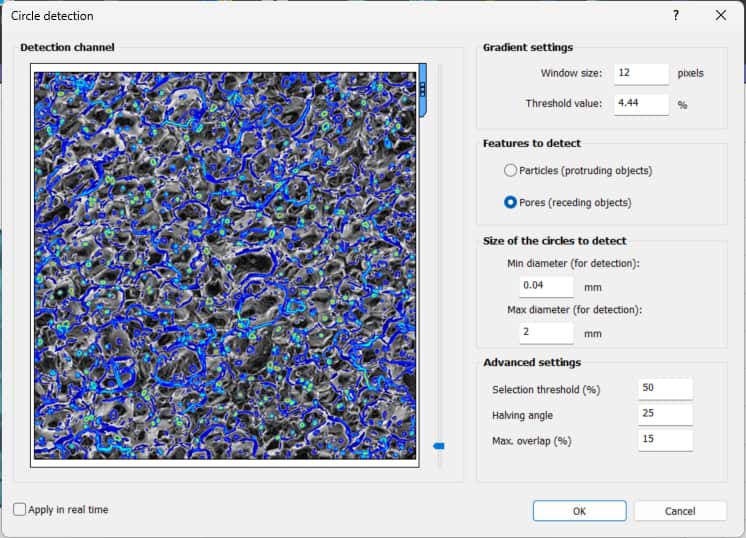
A pore analysis was performed across the full scanned area using a semi-automated edge-detection algorithm. The analysis identified recessed surface features to quantify pore coverage, pore density, radius, void volume, and maximum depth.

Pore detection analysis of the blue climbing grip surface using semi-automated edge detection to identify recessed surface features.

The detected pore locations were mapped across the scanned 5 mm × 5 mm area to evaluate pore coverage, density, and size distribution.
Pore distribution map of the blue climbing grip sample showing detected recessed surface features across a 5 mm by 5 mm scanned area.
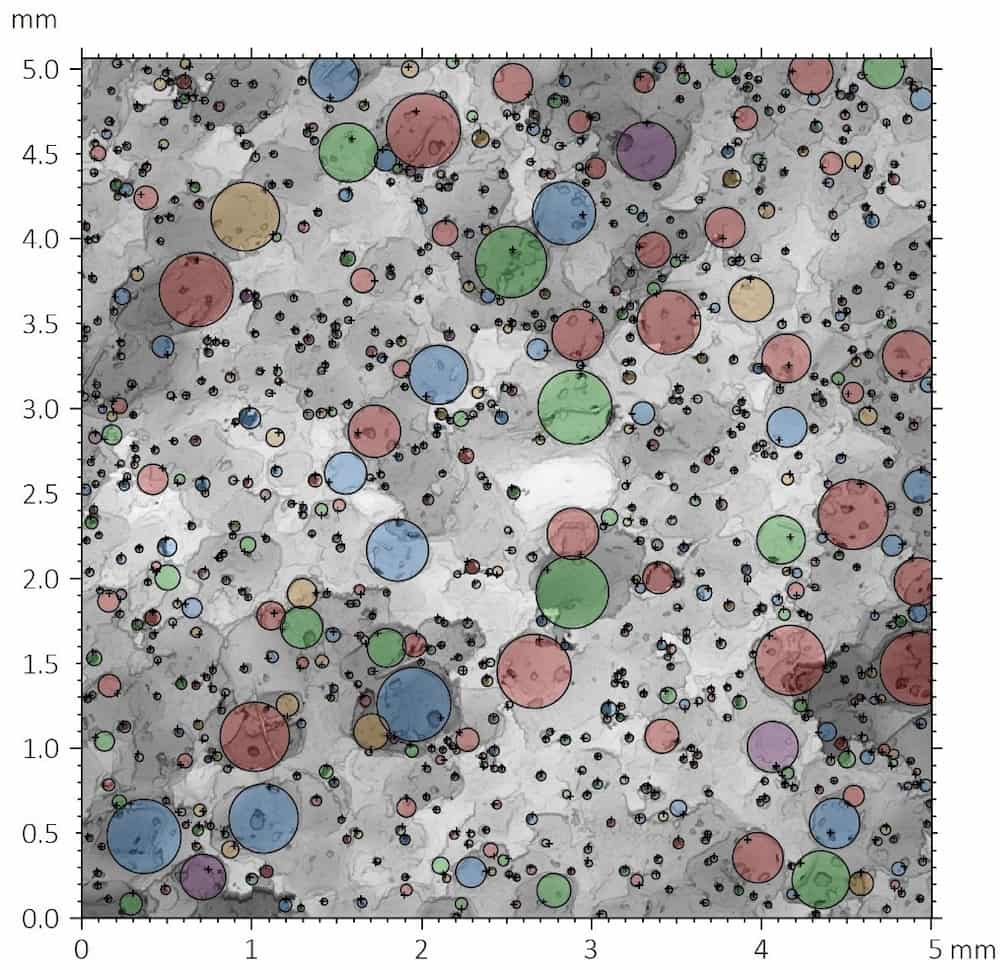
Information
Method Circle detection
Features detected Pores, recessed objects
Minimum detection diameter 0.040 mm
Maximum detection diameter 2.000 mm
Number of detected pores 794
Surface coverage 24.208%
Pore density 31.355 particles/mm²
Global Statistics
Parameter Unit Mean Std. Dev. Min Max
Yarıçap mm 0.035 0.035 0.020 0.218
Void volume µm³ 821,872.849 2,495,310.021 11,009.819 2.929 × 10⁷
Maximum depth µm 476.053 305.830 16.132 1044.045

Pores covered 24.208% of the blue grip’s scanned surface, with a pore density of 31.355 particles/mm². The detected pores and cracks were highly heterogeneous in size, volume, and depth, ranging from large crater-like features with a maximum radius of 0.218 mm and void volume greater than 2.9 × 10⁷ µm³ to small pores with a minimum radius of 0.020 mm and void volume of approximately 1.1 × 10⁴ µm³.

This uneven distribution is reflected in the large standard deviation measured for void volume and maximum depth. The pore distribution is bimodal, with one population of fine, deep pores and another population of larger crater-like valleys.

Functional Surface Parameters (Abbott-Firestone curve)

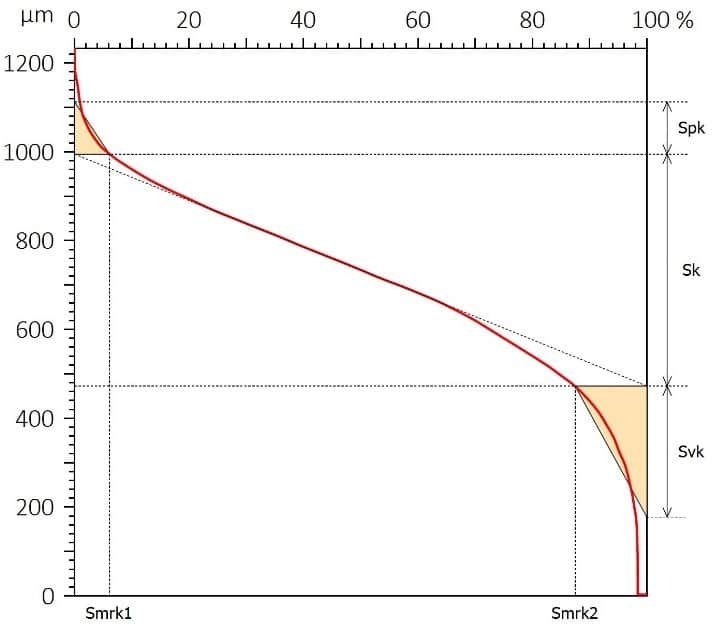
The Abbott-Firestone curve shows the cumulative areal material distribution of the blue climbing grip sample. This analysis defines functional surface parameters including Sk, Spk, and Svk according to ISO 25178-2.

Abbott-Firestone curve for the blue climbing grip sample showing cumulative areal material distribution and functional surface parameters.
Information
Standart ISO 25178-2
Parameter Value Unit
Sk 522.359 µm
Spk 117.670 µm
Svk 295.209 µm
Smrk1 6.122 %
Smrk2 87.456 %

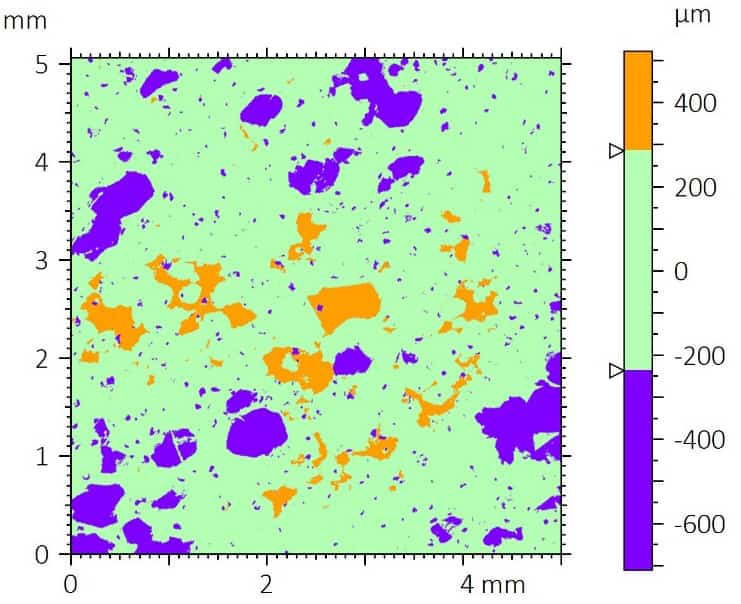
The chart below shows the peak-valley distribution from the mean plane based on the functional parameters derived from the Abbott-Firestone curve. Valleys are shown in purple, the mean plane in green, and peaks in orange.

Peak-valley distribution map of the blue climbing grip sample showing valleys, mean-plane regions, and peaks derived from Abbott-Firestone functional parameters.
Information
1st threshold Height – c1: 283.646 µm
2nd threshold Height – c2: -238.619 µm
Parameters Unit
Projected area (in %) % 12.544 81.334 6.122
Projected area mm² 3.182 20.629 1.553
Volume of material (in %) % 96.079 48.546 1.514
Volume of material µm³ 1.151 × 10¹⁰ 6.431 × 10⁹ 9.142 × 10⁷

The blue grip sample shows a dominant mean-plane region with fine, deep pores distributed across the surface and localized peak features. Compared with the yellow grip, the blue grip contains a higher projected peak area and a bimodal pore structure, combining fine recessed pores with larger crater-like valleys.

Sonuç

In this application, the NANOVEA JR25 Non-Contact Optical Profiler was used to measure the surface roughness, topography, and pore morphology of yellow and blue bouldering grip samples.

Topographic analysis showed that both grip samples had high surface roughness, with Sa values above 100 µm and Sz values above 1000 µm. Both surfaces also showed an asymmetric height distribution skewed toward valleys, indicating that recessed features played a major role in the measured surface morphology.

The yellow grip sample showed higher pore coverage, with pores covering 47.395% of the scanned surface. Its surface was mainly characterized by average-sized pores distributed across the measured area.

The blue grip sample showed lower pore coverage at 24.208%, but a much higher pore density of 31.355 particles/mm². Its pore distribution was bimodal, with a population of fine, deep pores and a separate population of larger crater-like valleys.

These results show how non-contact 3D optical profilometry can quantify climbing hold surface features that are difficult to evaluate from visual inspection alone, including roughness, pore coverage, pore depth, surface height distribution, and functional topography. The blue grip’s higher porosity and bimodal pore structure make it more likely to absorb moisture and chalk at the contact interface, while its elevated roughness and surface morphology support stable friction for shoe rubber and finger contact. The yellow grip’s lower roughness and flatter profile suggest it is better suited for use as a foothold in slab climbing, where broad surface contact matters more than deep textural engagement.

Frequently Asked Questions About Climbing Hold Surface Roughness

What is climbing hold surface roughness?

Climbing hold surface roughness describes the height variation, texture, pores, asperities, and valleys present on the surface of a climbing grip. These features can influence contact behavior between the hold, shoe rubber, skin, chalk, and moisture.

How can climbing hold surface roughness be measured?

Climbing hold surface roughness can be measured using non-contact 3D optical profilometry. This method reconstructs the surface topography and calculates areal roughness parameters such as Sa, Sz, Sp, Sv, Ssk, and Sku without touching or deforming the sample.

Why use non-contact optical profilometry for climbing hold analysis?

Non-contact optical profilometry is useful for climbing hold analysis because climbing grips can contain deep pores, sharp valleys, rough asperities, and irregular surface texture. A contact stylus may lose contact, fail to reach recessed features, or introduce artifacts on complex surfaces.

What does Sa mean in surface roughness analysis?

Sa is the arithmetic mean height of a surface and is commonly used to describe average areal surface roughness. In this app note, both climbing grip samples showed high Sa values above 100 µm, indicating strongly textured surfaces.

What does Sz mean in optical profilometry results?

Sz is the maximum height of the measured surface, calculated from the highest peak to the deepest valley. In climbing hold surface roughness analysis, Sz helps describe the full vertical range of the grip’s surface texture.

Why is pore morphology important for climbing grips?

Pore morphology can affect how a climbing grip interacts with chalk, sweat, humidity, skin, and shoe rubber. Measuring pore coverage, density, depth, and volume helps quantify surface features that are difficult to evaluate by visual inspection alone.

stent coating adhesion testing failure analysis drug eluting stent coating

Stent Coating Adhesion and Delamination Analysis Using Nano Scratch Testing

Application Note | Stent Coating Adhesion Testing

Stent Coating Adhesion and Delamination Analysis Using Nano Scratch Testing

Quantifying Coating Failure and Adhesion Performance on Drug-Eluting Stents

stent coating adhesion testing nano scratch delamination critical load

Research & Experimental Testing

Duanjie Li, PhD

Visual Design & Editorial

Andrew Shore

Giriş

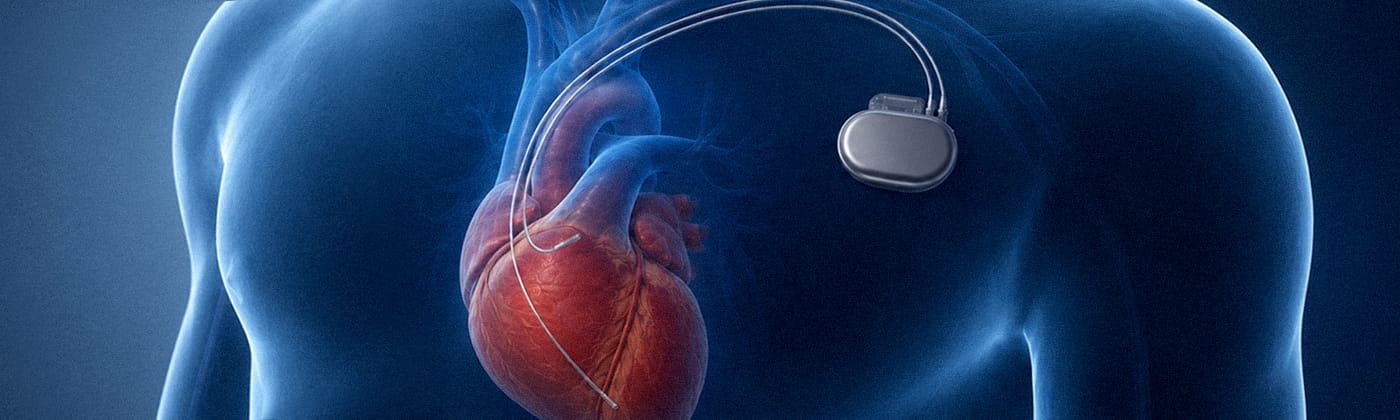
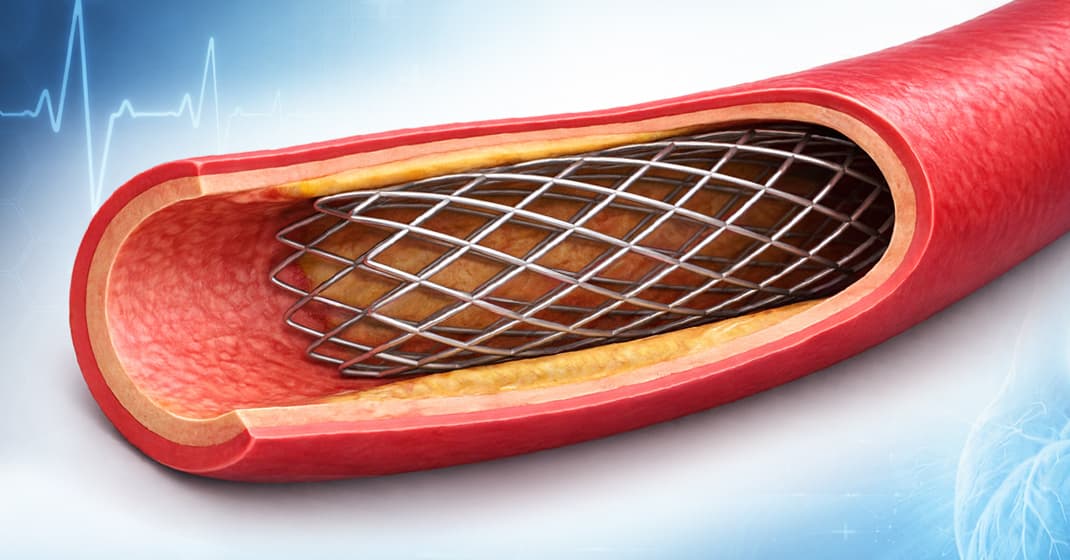
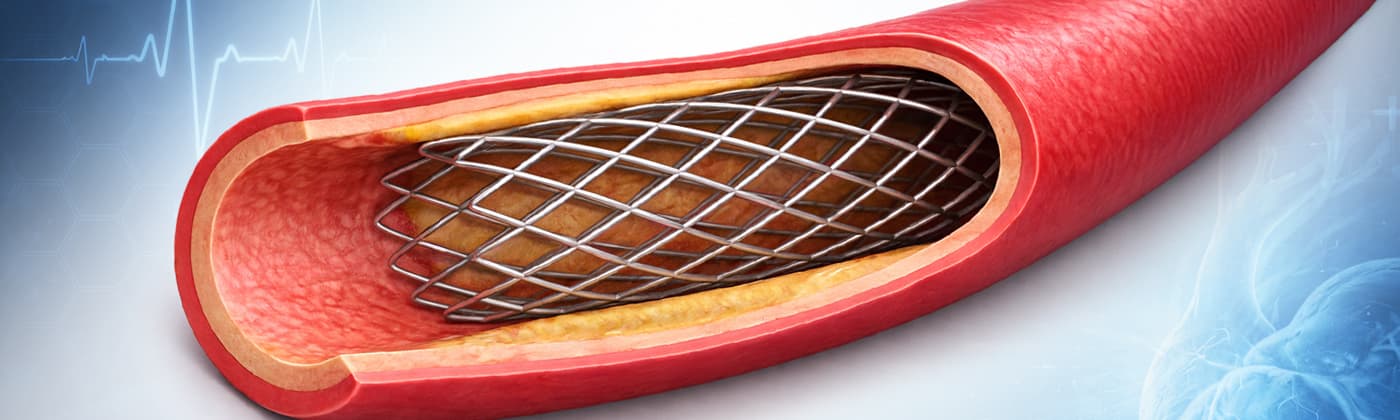
Blood is carried through arteries from the heart to the rest of the body. Any weakening or blockage of these vessels can pose significant health risks and may become life-threatening. A stent is a small mesh tube inserted into the lumen of a blood vessel to treat narrowed or weakened arteries. Stent implantation is now a widely used procedure to support the arterial wall and restore blood flowᶦ.

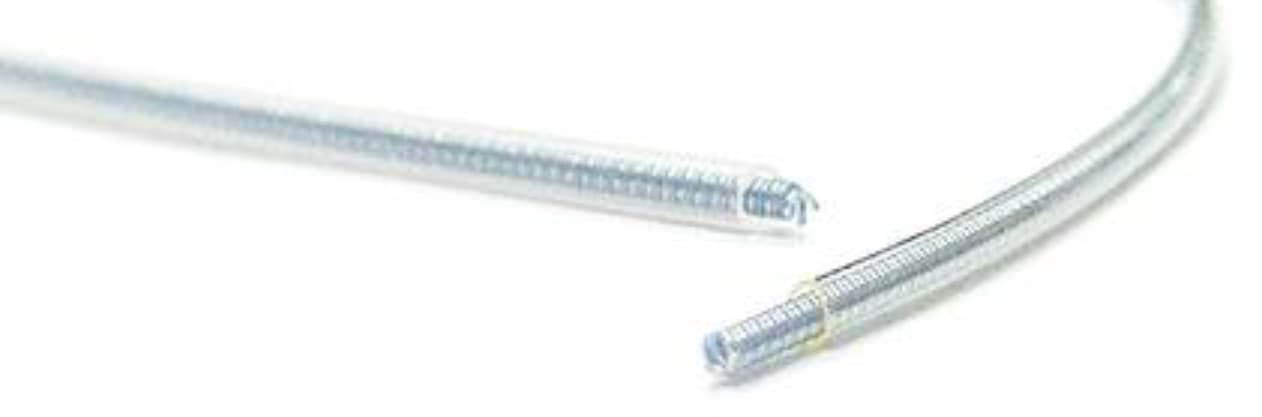
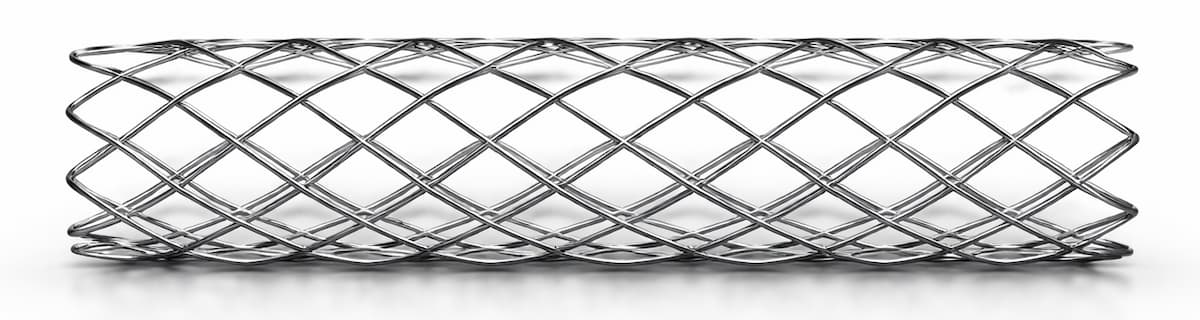
Metal stent mesh geometry illustrating the structural complexity of vascular implant design.

Why coating adhesion matters in drug-eluting stents

Drug-eluting stents represent a major advancement in stent technology. They incorporate a biodegradable, biocompatible polymer coating that enables controlled drug release at the arterial site, helping to inhibit intimal thickening and reduce the risk of restenosisᶦᶦ.

A critical concern in these systems is the delamination of the polymer coating from the metallic stent substrate. This coating carries the drug-eluting layer, and its adhesion directly impacts device performance and reliability.

To improve coating adhesion, stents are often designed with complex geometries. In this study, the polymer coating is located at the bottom of grooves within the stent mesh. This configuration presents a significant challenge for adhesion measurement.

A reliable method is required to quantitatively evaluate the interfacial strength between the polymer coating and the metal substrate. The small diameter of the stent mesh, comparable to a human hair, combined with its three-dimensional geometry, requires:

  • ultrafine X-Y positioning accuracy
  • precise control of applied load
  • accurate depth measurement during testing

Measurement Method

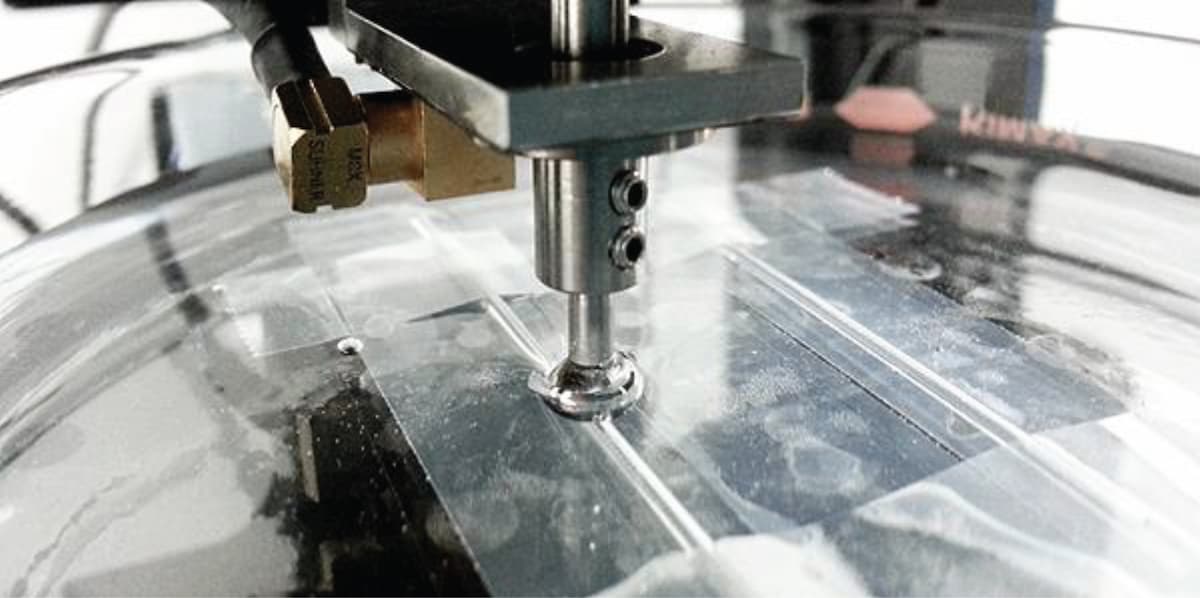
Nano scratch testing is performed using the NANOVEA PB1000 Mekanik Test Cihazı, in Nano Scratch Mode, to evaluate the cohesive and adhesive strength of the polymer coating on the metal mesh of stent samples.

Controlled scratch measurements are carried out on stent geometries with dimensions comparable to a human hair, enabling precise evaluation of coating adhesion on complex stent structures.

NANOVEA PB1000 Advanced

Mekanik Test Cihazı

Test Koşulları

1. Regular Stent Samples

The stent is fixed on the sample stage, with a support wire inserted inside the stent tube to ensure stability during nano scratch testing. The NANOVEA Mechanical Tester is used to perform nano scratch measurements using the parameters summarized in Table 1, to evaluate the cohesive and adhesive strength of the polymer coating on the metal substrate.

ParameterValue
Load typeİlerici
Initial load0.05 mN
Final load300 and 100 mN
Sliding speed0.5 mm/min
Sliding distance0.5 mm
Indenter geometryKonik
Indenter material (tip)Elmas
Girinti ucu yarıçapı20 µm
Sıcaklık24°C (room)

Tablo 1: Test parameters for nano scratch measurements on regular stent samples

2. Grooved Stent Samples

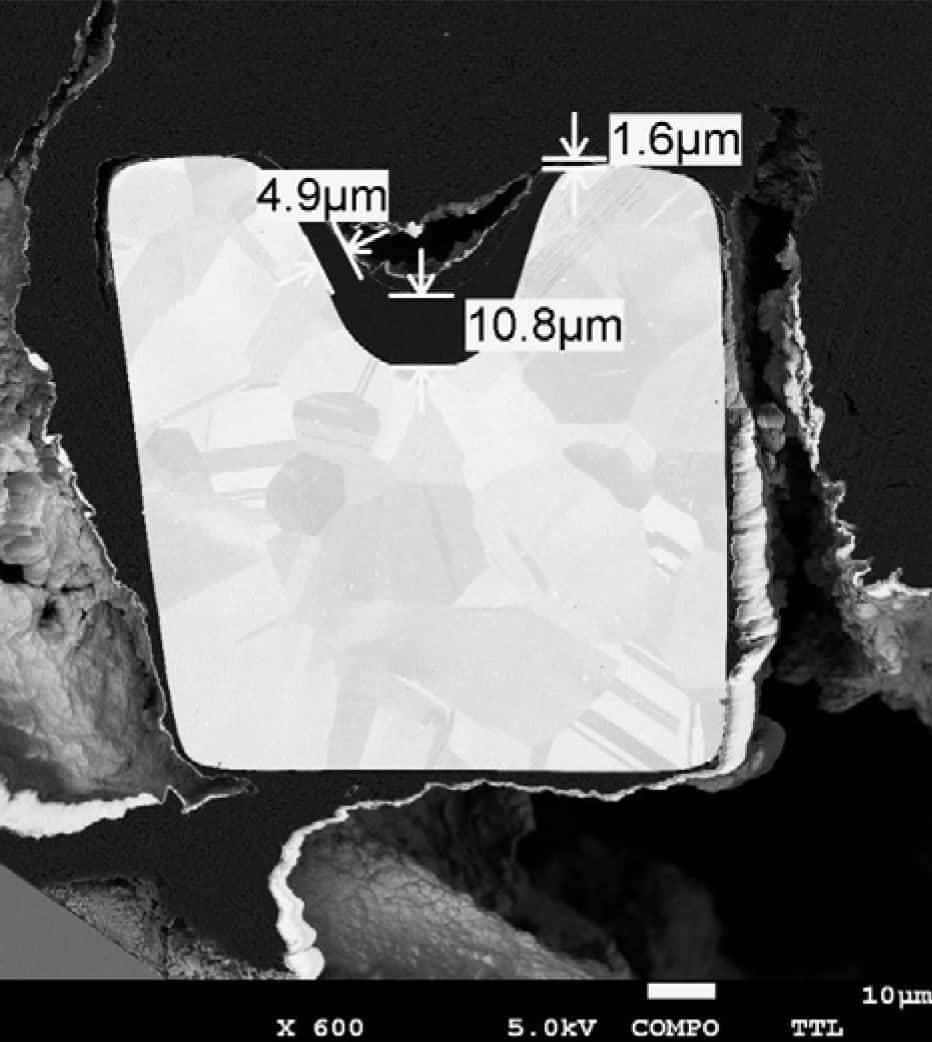
The SEM image in Fig. 1 shows the cross-section of the stent sample. The stent features a groove with a depth of approximately 30 µm. The polymer coating, with a thickness of 10.8 µm, is located at the bottom of the groove.

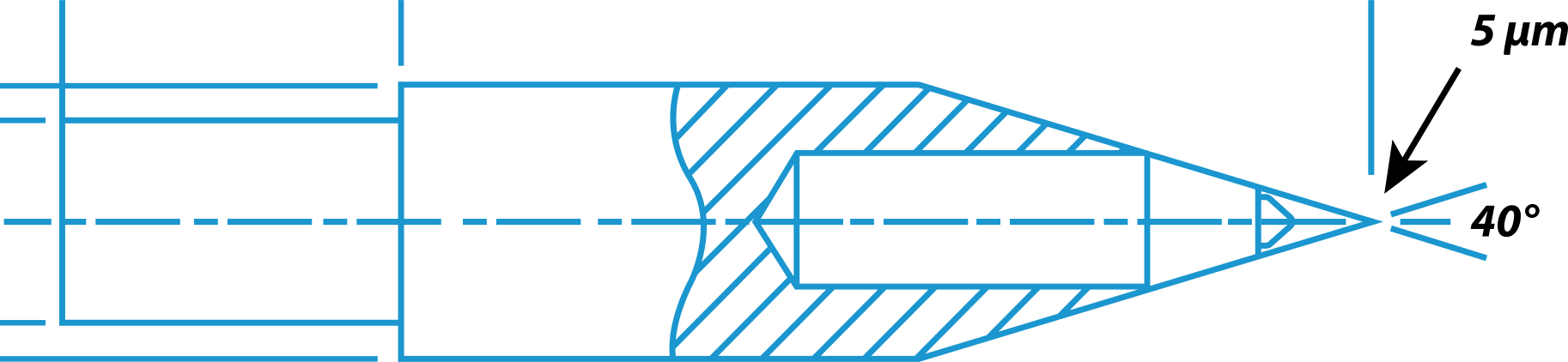
Standard 60° conical diamond tips are not sharp enough to reach the bottom of the groove without contacting the sidewalls. Therefore, a sharper 40° conical diamond tip is used in this study (Fig. 2).

Nano scratch measurements are performed using the parameters summarized in Table 2.

Parameter Value
Load type İlerici
Initial load 0.1 mN
Final load 300 mN
Yükleme oranı 300 mN/min
Scratch length 0.25 mm
Scratch speed 0.25 mm/min
Indenter geometry 40° cone
Indenter material (tip) Elmas
Girinti ucu yarıçapı 5 µm

Table 2: Test parameters for nano scratch measurements on grooved stent samples

stent groove cross section polymer coating thickness adhesion analysis nano scratch testing

Fig. 1: SEM cross-section of a grooved stent showing polymer coating located at the bottom of the groove, highlighting the challenge of coating adhesion measurement in recessed geometries.

nano scratch diamond tip 40 degree stent groove coating adhesion testing schematic

Fig. 2: Schematic of a 40° conical diamond tip designed for nano scratch testing inside stent grooves, enabling accurate adhesion measurement without sidewall interference.

Sonuçlar ve Tartışma

The stent mesh has a diameter of approximately 100 μm, comparable to a human hair. Precise positioning is therefore critical to ensure the scratch test is performed at the center of the stent mesh. The NANOVEA Mechanical Tester provides X–Y positioning accuracy down to 0.25 μm, enabling accurate test placement under the integrated optical microscope.

1. Regular Stent Samples

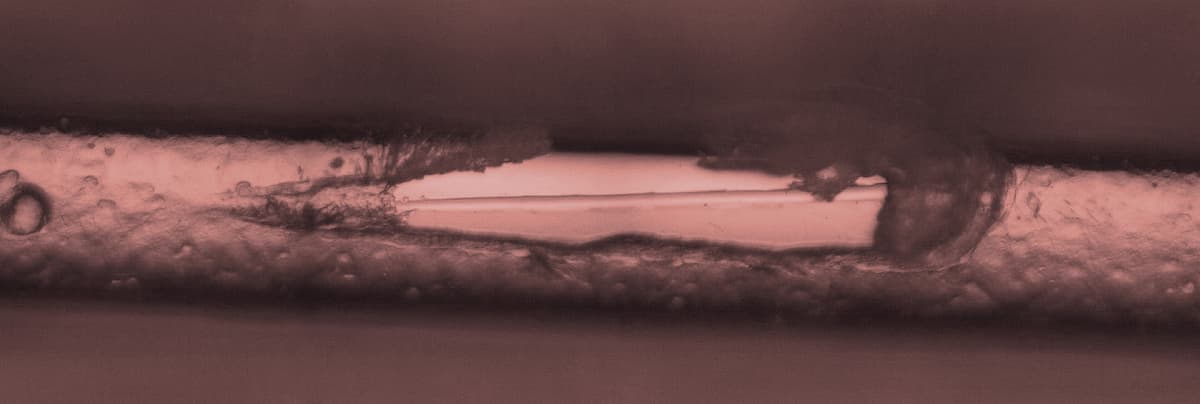
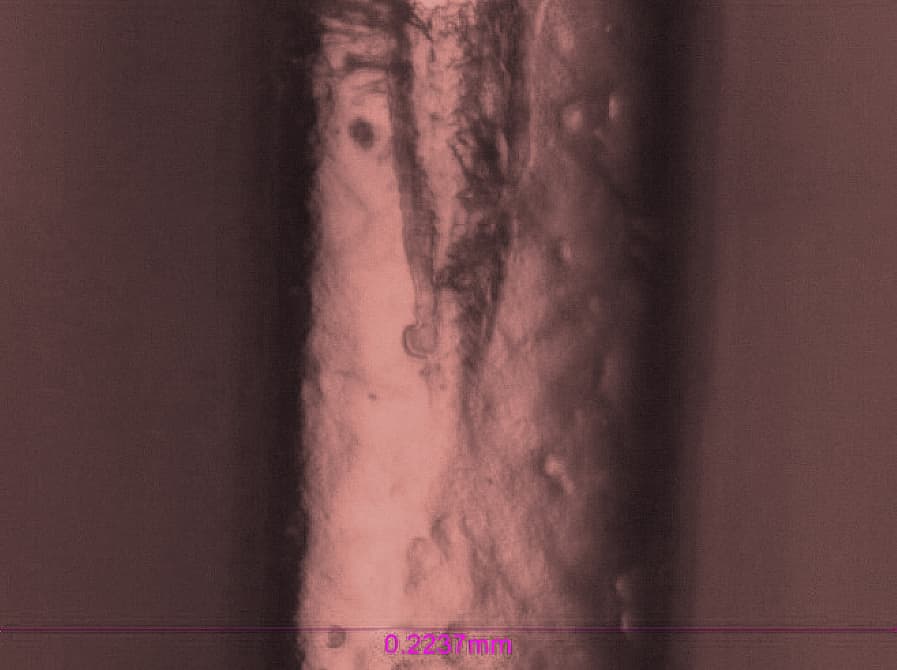
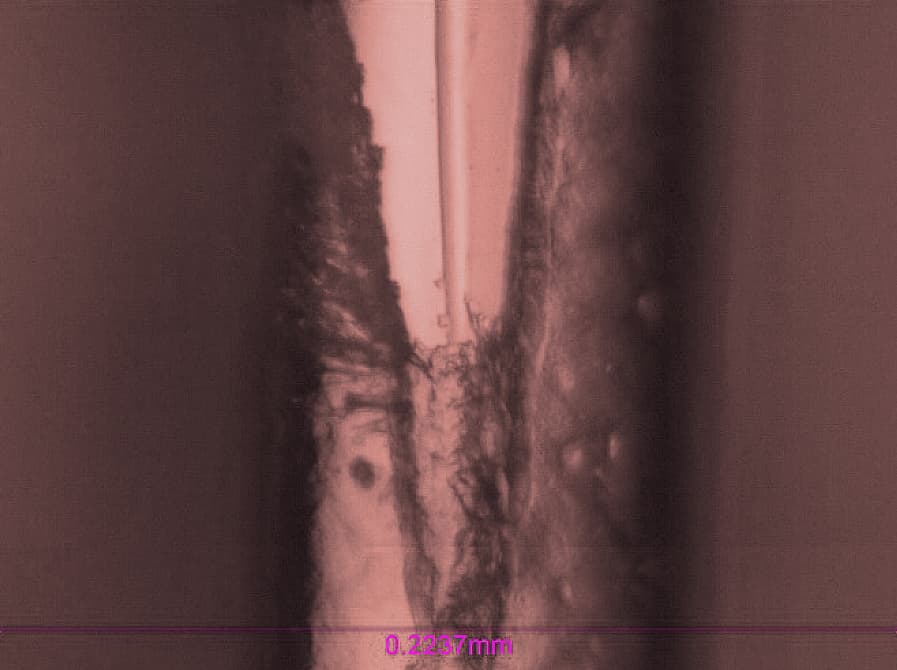
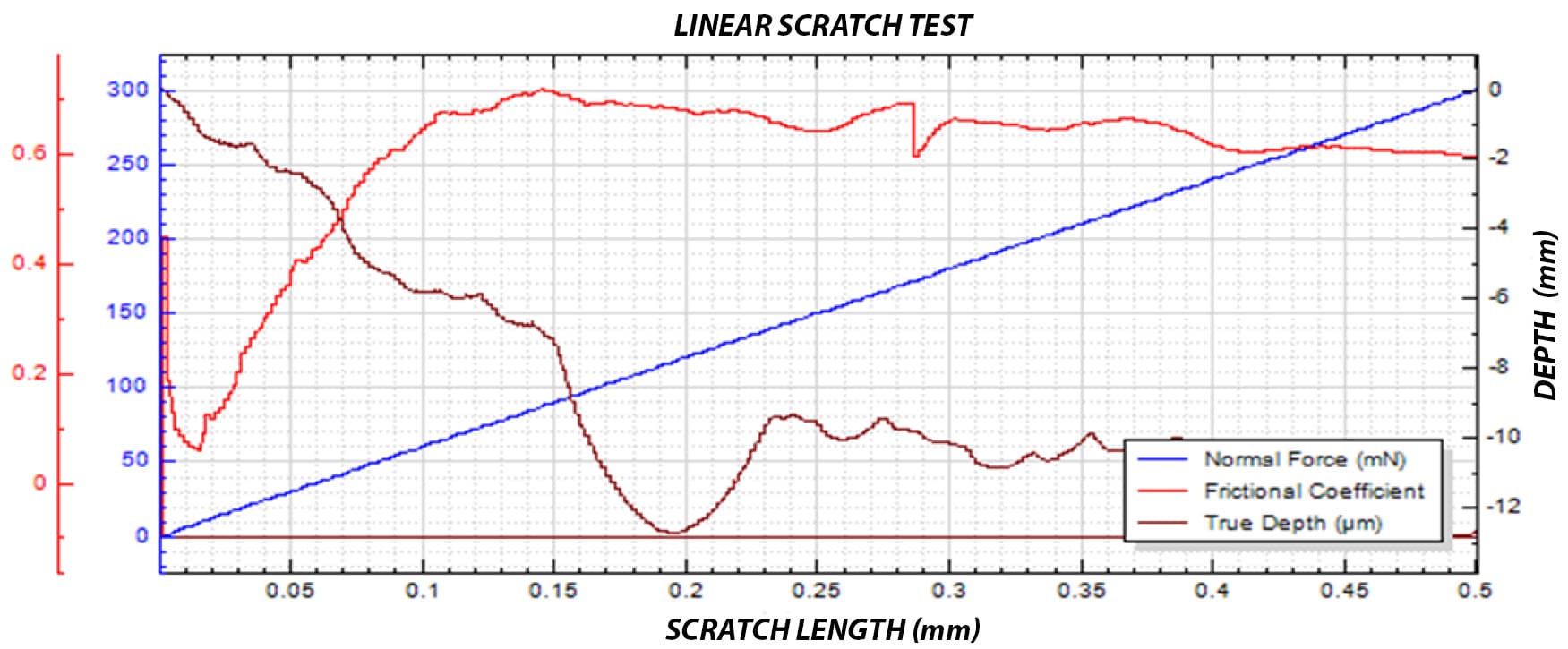
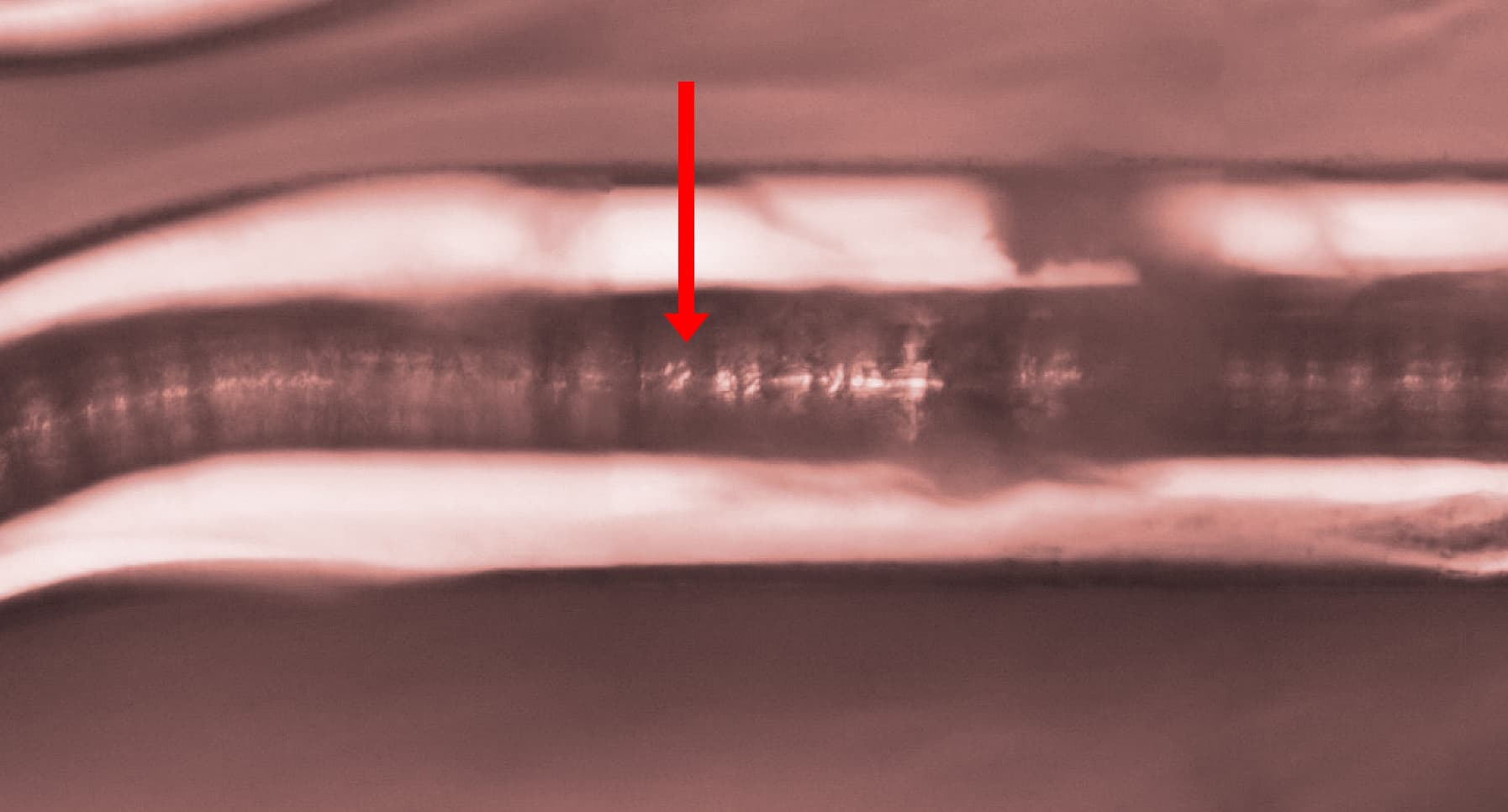
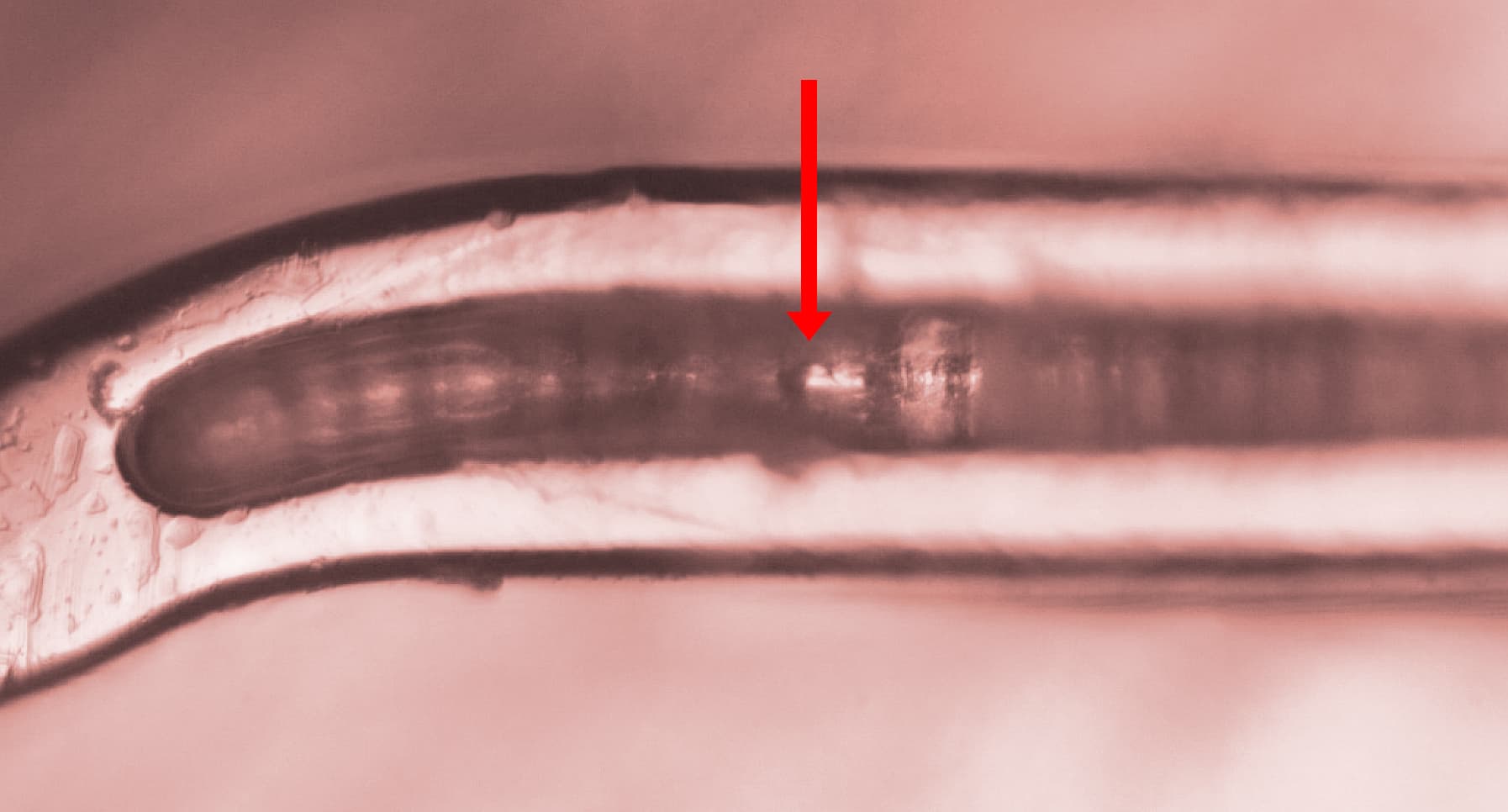
Nano scratch testing is performed with a progressively increasing load up to 300 mN. The full scratch track on the stent is shown in Fig. 3a, while failure behavior at different stages is presented in Fig. 3b and 3c.

Two critical loads are identified:

  • Lc1: the load at which the first visible damage appears on the coating
  • Lc2: the load at which the coating is fully removed and the substrate is exposed

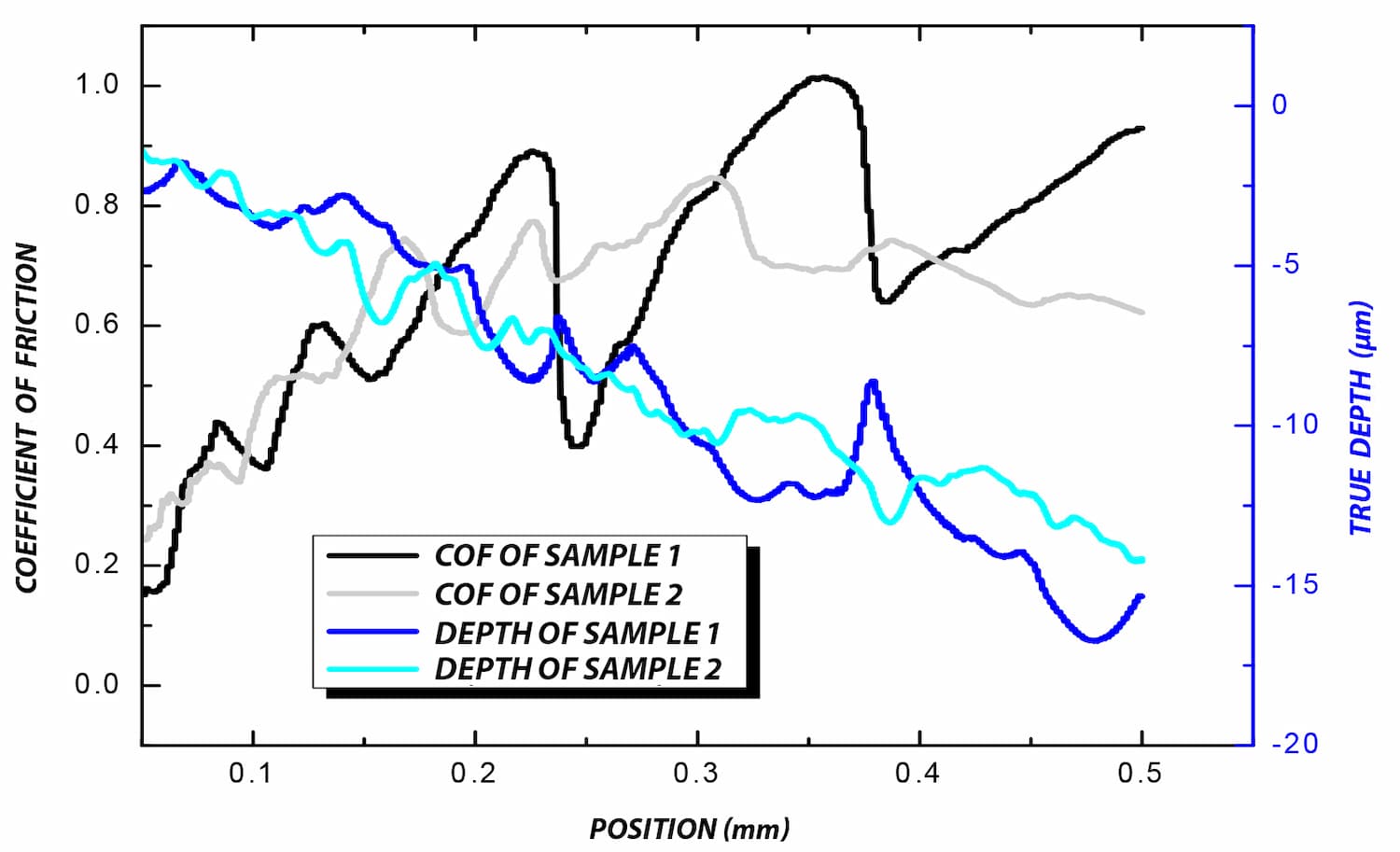
The evolution of coefficient of friction (COF) and penetration depth is shown in Fig. 4, providing insight into the progression of coating failure during the test.

The first signs of coating damage appear at Lc1 ≈ 14.5 mN. As the applied load increases, the diamond tip progressively penetrates the polymer coating, resulting in a wider and deeper scratch track. During this phase, the COF increases from approximately 0.05 to 0.7.

At Lc2 ≈ 78.1 mN, the coating is fully delaminated from the metal substrate. Beyond this point, as the load continues to increase, both COF and penetration depth remain relatively stable due to the mechanical support of the underlying metal substrate.

nano scratch track stent coating progressive load adhesion testing

(a) Full Scratch Track

(b) Lc1 ≈ 14.5 mN

stent coating delamination lc2 nano scratch 78.1 mN adhesion testing

(c) Lc2 ≈ 78.1 mN

Fig. 3: Nano scratch track on a stent coating under progressively increasing load, showing (a) full scratch path, (b) initial coating failure at Lc1 ≈ 14.5 mN, and (c) complete coating delamination at Lc2 ≈ 78.1 mN.

nano scratch testing stent coating coefficient of friction depth progression adhesion failure

Fig. 4: Evolution of coefficient of friction (COF) and penetration depth during nano scratch testing of a stent coating under progressively increasing load, showing the progression of coating failure and transition to substrate support.

Failures during nano scratch testing up to a maximum load of 300 mN occur at critical loads below 100 mN. To enable a more quantitative comparison of coating performance, additional tests are performed with a maximum load of 100 mN on two stent samples, referred to as Sample 1 and Sample 2.

Fig. 5 compares the scratch tracks of Sample 1 and Sample 2 after nano scratch testing. Sample 1 exhibits the first sign of coating damage at a critical load of Lc1 ≈ 13.2 mN, while Sample 2 shows initial failure at a higher load of Lc1 ≈ 21.1 mN.

Coating delamination occurs at 62.5 mN for Sample 1. In contrast, the coating on Sample 2 remains intact throughout the test, continuing to protect the metal substrate under the same loading conditions.

This behavior is further reflected in the evolution of coefficient of friction (COF) and penetration depth, as shown in Fig. 6. When the diamond tip penetrates through the coating and contacts the metal substrate in Sample 1, the COF reaches a peak while the penetration depth decreases due to the increased stiffness of the underlying substrate.

stent coating sample 1 early failure nano scratch track delamination adhesion testing

(a) Sample 1 – Early Coating Failure

stent coating sample 2 high adhesion nano scratch track minimal damage testing

(b) Sample 2 – Improved Coating Integrity

Fig. 5: Comparison of nano scratch tracks for two stent coatings, showing (a) early coating failure and delamination in Sample 1, and (b) improved coating integrity in Sample 2 under the same loading conditions.

nano scratch testing stent coating COF depth comparison sample 1 sample 2 adhesion performance

Fig. 6: Comparison of coefficient of friction (COF) and penetration depth for Sample 1 and Sample 2 during nano scratch testing, showing earlier substrate contact and higher friction response in Sample 1, indicating weaker coating adhesion.

2. Grooved Stent Samples

As shown in Fig. 1 and Fig. 7, the grooved stent mesh has a diameter of approximately 90 μm, comparable to a human hair. The groove has a width of ~50 μm and a depth of 30 μm. This geometry presents a significant challenge for nano scratch testing, particularly for evaluating coating adhesion at the bottom of the groove.

Precise positioning is critical to locate the scratch test within the groove. The nano scratch test is performed with a progressively increasing load up to 300 mN. The full scratch tracks of grooved stent Samples 3 and 4 are compared in Fig. 7.

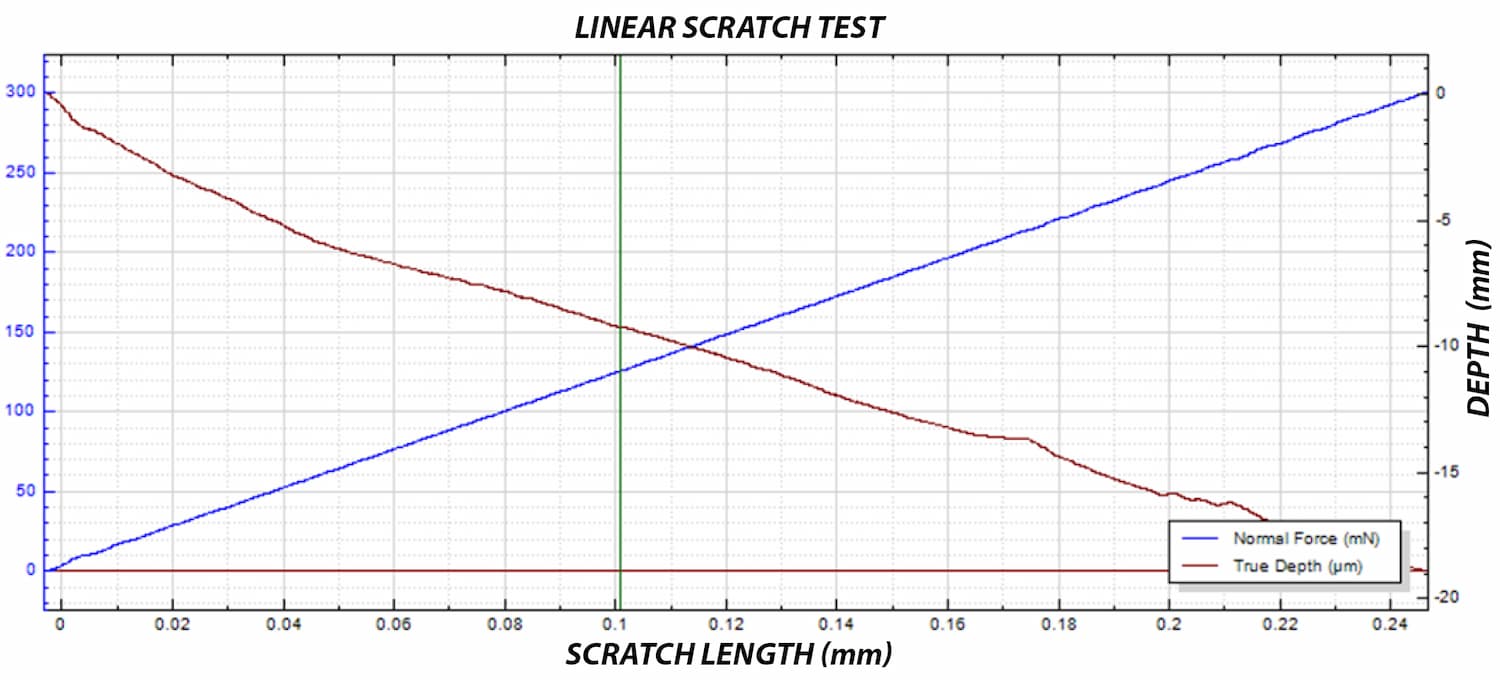
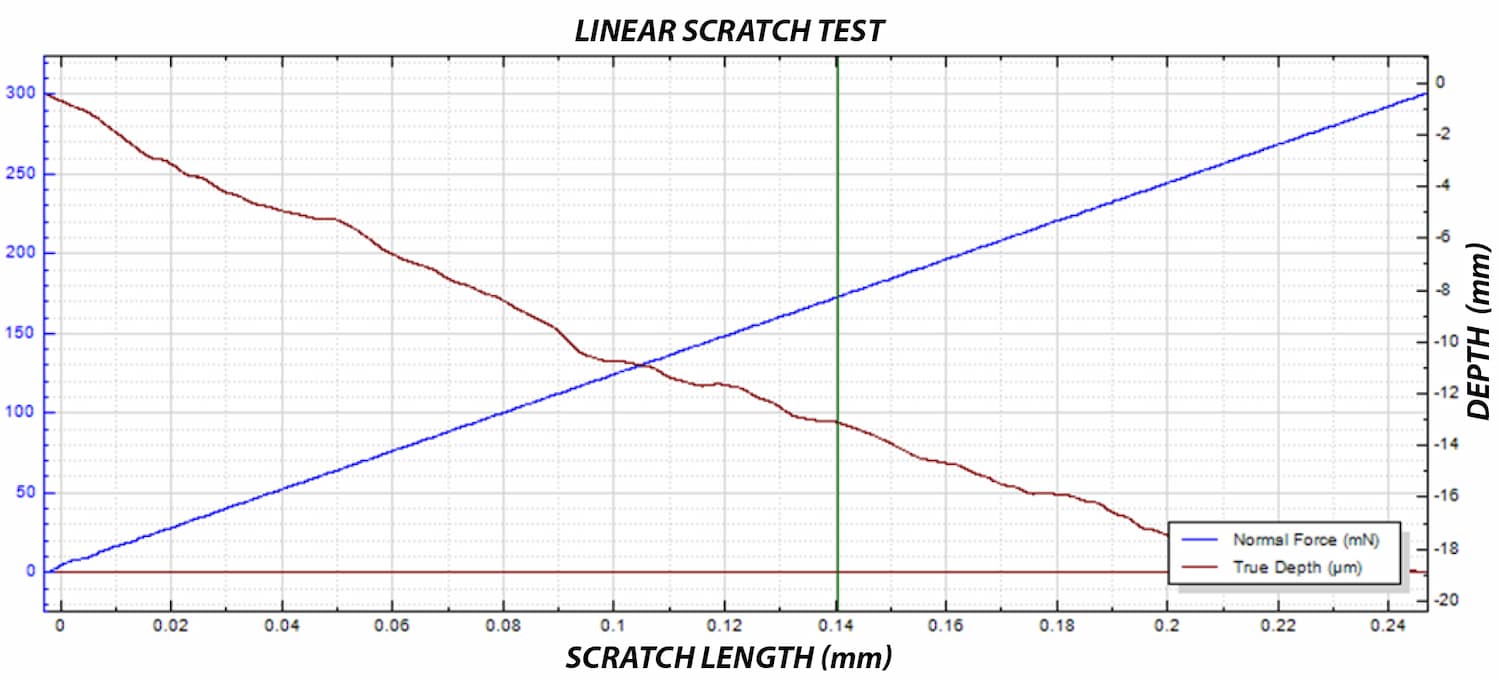
The critical load Lc is defined as the load at which the coating fails and the substrate becomes exposed. The evolution of normal load and penetration depth, shown in Fig. 8, provides further insight into the progression of coating failure during testing.

As the applied load increases, the diamond tip progressively penetrates the polymer coating, resulting in a deeper scratch track. When the critical load Lc is reached, the coating delaminates from the metal substrate.

Sample 3 exhibits coating failure at Lc ≈ 126 mN, while Sample 4 fails at a higher load of Lc ≈ 173 mN. This difference indicates stronger adhesion of the coating in Sample 4.

The measured critical loads enable quantitative comparison of coating adhesion performance. Under the same testing conditions, the coating on Sample 4 demonstrates higher resistance to delamination, making it the better-performing candidate in this study.

stent groove coating failure sample 3 nano scratch 126 mN adhesion testing

(c) Sample 3 – Coating Failure in Groove (Lc ≈ 126 mN)

stent groove coating adhesion sample 4 nano scratch 173 mN minimal failure testing

(d) Sample 4 – Higher Adhesion in Groove (Lc ≈ 173 mN)

Fig. 7: Nano scratch tracks inside stent grooves for Samples 3 and 4, showing (c) coating failure at Lc ≈ 126 mN in Sample 3 and (d) higher adhesion with delayed failure at Lc ≈ 173 mN in Sample 4.

(a) Sample 3 – Earlier Coating Failure (Lc ≈ 126 mN)

(b) Sample 4 – Delayed Failure and Higher Adhesion (Lc ≈ 173 mN)

Fig. 8: Evolution of normal load and penetration depth during nano scratch testing inside stent grooves for Samples 3 and 4, showing earlier coating failure in Sample 3 and delayed failure at higher load in Sample 4. The vertical green line indicates the critical load (Lc) where coating delamination occurs.

Sonuç

This study demonstrates the ability of the NANOVEA Mechanical Tester to quantitatively evaluate the cohesive and adhesive strength of polymer coatings on both regular and grooved stent geometries using nano scratch testing.

The recessed geometry of the stent grooves, approximately 50 μm wide and 30 μm deep, presents a significant challenge for coating adhesion measurement. The high X–Y positioning accuracy of 0.25 μm enables precise placement of the scratch test within these confined regions, allowing direct evaluation of coating performance where failure is most critical.

By applying a controlled, progressively increasing load, critical loads associated with coating failure can be identified and compared across samples. This approach enables reliable differentiation of coating adhesion performance and interfacial integrity, even on small, complex stent structures.

Referanslar

[I] http://www.nhlbi.nih.gov/health/health-topics/topics/stents
[II] http://www.scielo.org.mx/scielo.php?script=sci_arttext&pid=S1405-99402006000300008

Frequently Asked Questions About Stent Coating Adhesion Testing

What is stent coating adhesion testing?

Stent coating adhesion testing evaluates how strongly a polymer coating is bonded to the metal substrate of a stent. Techniques such as nano scratch testing quantify the load at which coating damage and delamination occur, providing measurable indicators of adhesion strength.

What is critical load (Lc) in nano scratch testing?

Critical load (Lc) is the applied load at which a coating fails during a scratch test.

  • Lc1 corresponds to the first visible damage in the coating
  • Lc2 indicates complete coating removal and exposure of the substrate

These values are used to quantify and compare coating adhesion performance.

Why is coating adhesion important in drug-eluting stents?

Coating adhesion directly affects the reliability of drug-eluting stents. Poor adhesion can lead to coating delamination, which may compromise controlled drug release and increase the risk of device failure.

How do you measure coating adhesion inside stent grooves?

Measuring adhesion inside stent grooves requires high positioning accuracy and appropriate indenter geometry. Nano scratch testing with sharp diamond tips allows access to recessed coating regions, enabling direct evaluation of adhesion within complex stent geometries.

What does coefficient of friction (COF) indicate in scratch testing?

The coefficient of friction (COF) reflects changes in surface interaction during the scratch test. A sudden increase in COF often indicates coating failure and contact between the indenter and the underlying metal substrate.

How can nano scratch testing compare different coating formulations?

Nano scratch testing enables direct comparison of coatings by measuring critical loads under controlled conditions. Higher critical loads indicate stronger adhesion and improved resistance to delamination, allowing selection of better-performing coating systems.

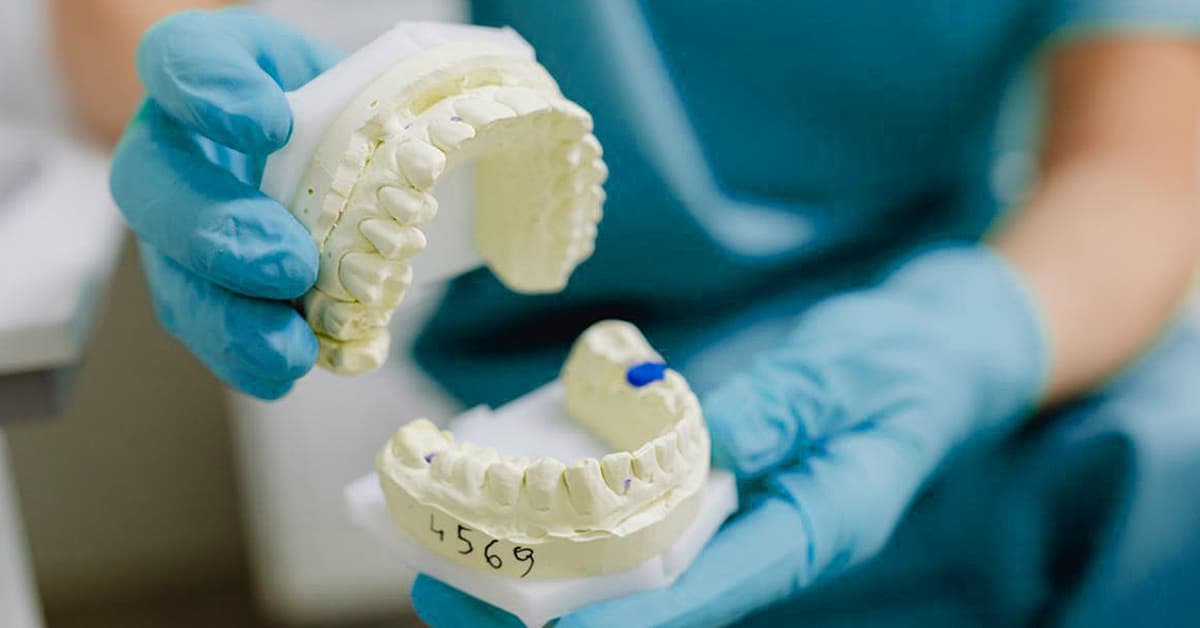
Dentist holding dental model for tooth surface roughness analysis and 3D reconstruction

Dental Surface Roughness Measurement & 3D Tooth Topography

Application Note | Dental Surface Characterization

Dental Surface Roughness Measurement and Full 3D Tooth Topography

Surface Roughness Analysis Using Non-Contact Optical Profilometry

Dental surface roughness measurement and 3D molar reconstruction using optical profilometry

Tarafından hazırlanmıştır

Walter Alabiso, PhD; Davide Morrone, MPhys; Andrew Shore, MA

Giriş

The ability to accurately characterize tooth surfaces, including micro-roughness and 3D surface topography at the nanometer scale, enables advanced research and applications in orthodontics and dental materials science. Non-contact optical profilometry provides a precise method for measuring dental surface roughness and analyzing tooth surface morphology without damaging delicate structures. These measurements support the development of composite dental materials that replicate the natural surface roughness of enamel, as well as the design and fabrication of patient-specific dental casts and restorative components.

Low surface roughness plays a primary role in limiting bacterial adhesion and plaque formation, thereby reducing the risk of cavities. An increase in average roughness (Ra) above 2 µm leads to a steep increase in biofilm formation in vivo.¹ An Ra of 0.2 µm is considered the threshold value below which no further reduction in bacterial adhesion can be expected.²

Reconstruction of the tooth’s 3D surface topography enables the fabrication of dental casts, which are essential for accurate diagnosis, treatment planning, and the fabrication of dental appliances.

Non-Contact Optical Profilometry for Dental Surface Analysis

The present study illustrates the potential of NANOVEA’s high-precision non-contact optical profilometers for dental surface roughness measurement and 3D tooth topography analysis. Chromatic Light technology offers significant advantages over classical touch probe techniques. It acquires data points from deep crevices and complex geometries without introducing measurement errors or artifacts caused by local plastic deformation and without requiring extensive data manipulation.
Compared to focus variation systems, single-point optical sensing provides superior lateral and height accuracy, with X/Y resolution below 0.5 µm, maximum vertical resolution of 1.9 nm, and the ability to measure surface angles up to 87°. The technique is effective on transparent, opaque, specular, diffusive, polished, and rough dental surfaces, making it well suited for comprehensive dental surface characterization.
Measurement Method

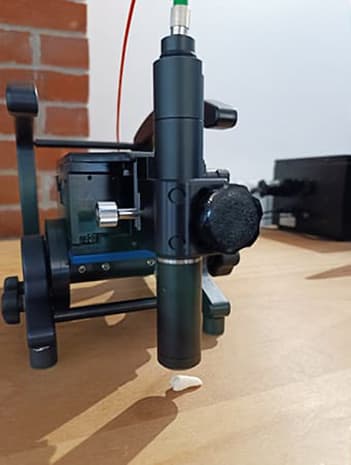
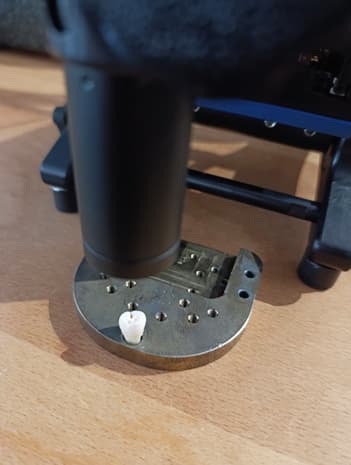
Bu uygulamada NANOVEA JR25 Non-Contact Optical Profiler was used to analyze the surface roughness and 3D surface topography of an adult human molar previously affected by tooth decay. The side of the tooth was scanned using a PS2–MG140 single-point optical sensor to measure surface roughness parameters over a defined region of interest and along multiple line profiles.

The crown of the tooth was then scanned and reconstructed using a PS5–MG35 single-point optical sensor, which is suited for larger-area acquisition and full 3D tooth topography measurement.


NANOVEA JR25 Portable
Optik Profilometre

Surface Measurement Using NANOVEA Optical Profilometer

Surface roughness measurements were performed on the lateral side of the molar crown, followed by full 3D reconstruction of the crown surface. Separate single-point optical sensors were used to optimize measurement accuracy for both localized roughness analysis and large-area surface topography acquisition.
PS2 – MG140

Surface roughness analysis by area and parallel line profiles on the side of the tooth’s crown.

PS5 – MG35

Full 3D surface reconstruction of the tooth’s crown.

Ölçüm Parametreleri

The following measurement parameters were used for localized surface roughness analysis and full 3D surface reconstruction of the molar crown using NANOVEA single-point optical sensors.

Parameter Roughness Analysis (Area) Roughness Analysis (Profiles) Full 3D Reconstruction
Optical Pen PS2-MG140 PS2-MG140 PS5-MG35
Z-Range [µm] 300 300 10000
X-Distance [mm] 2.00 3.00 7.50
X-Step Size [µm] 1.70 1.70 10.00
Y-Distance [mm] 2.00 1.00 7.00
Y-Step Size [µm] 1.70 100.00 10.00
Averaging (Avg) 1 1 1
Measurement Type Direct Direct Direct
Acquisition Mode Single Frequency Single Frequency Dual Frequency
Acquisition Rate [Hz] 200 200 100–400
Light Intensity [%] 100 100 100

Optical Profilometry Results

Surface Roughness Analysis (Area)

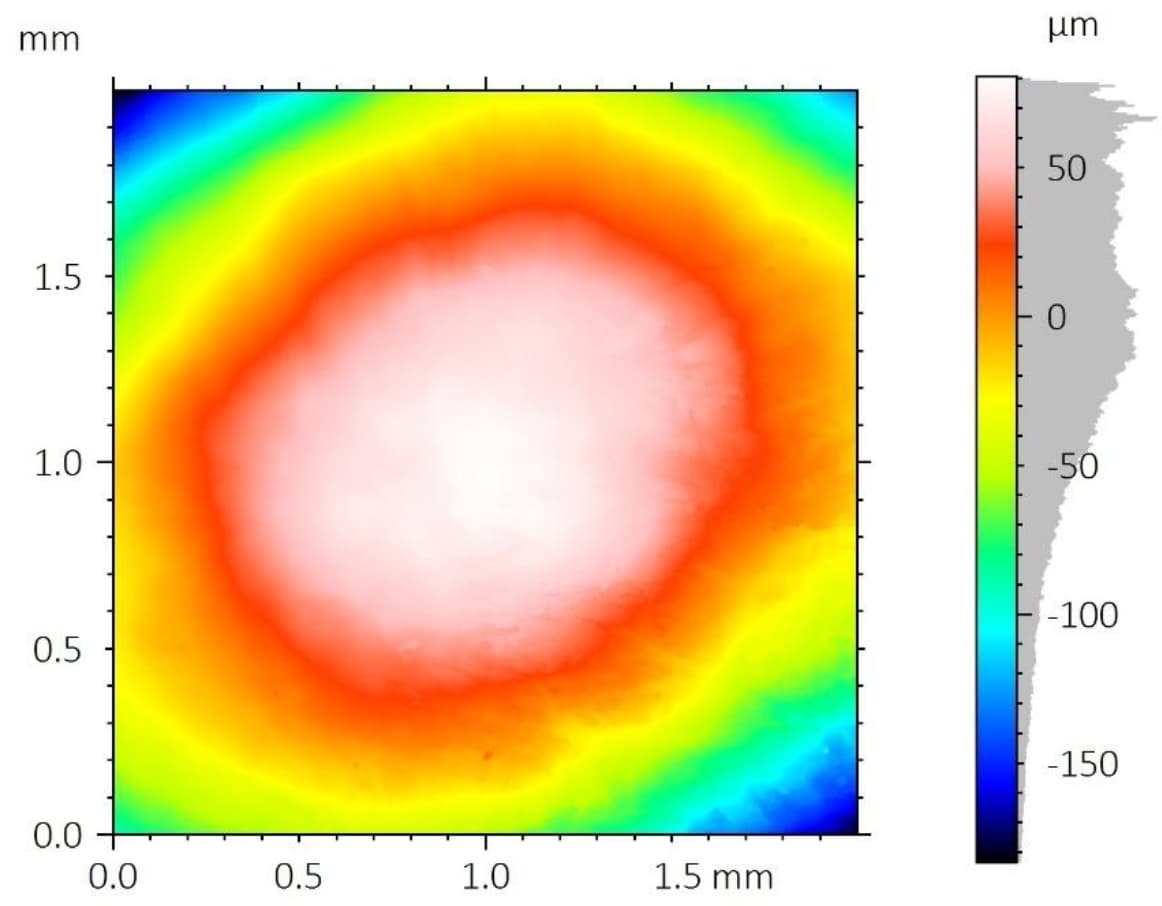
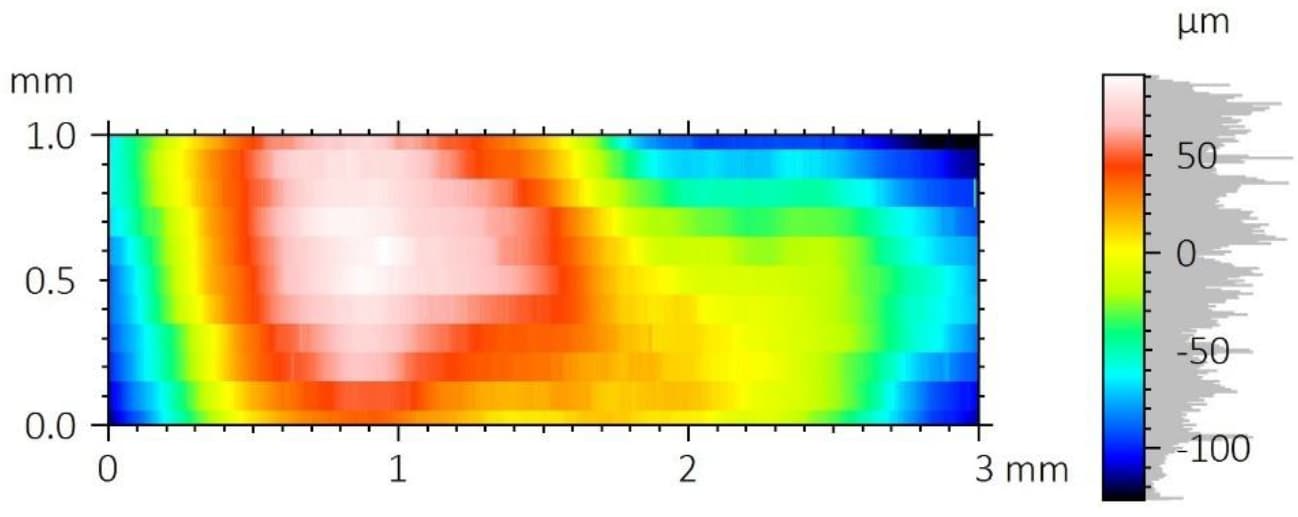
The PS2 single-point optical sensor was used to investigate fine surface features on the side of the tooth. The image below shows a false-color 2D surface map of the scanned region obtained by non-contact optical profilometry.

False-color 2D height map of scanned tooth surface region

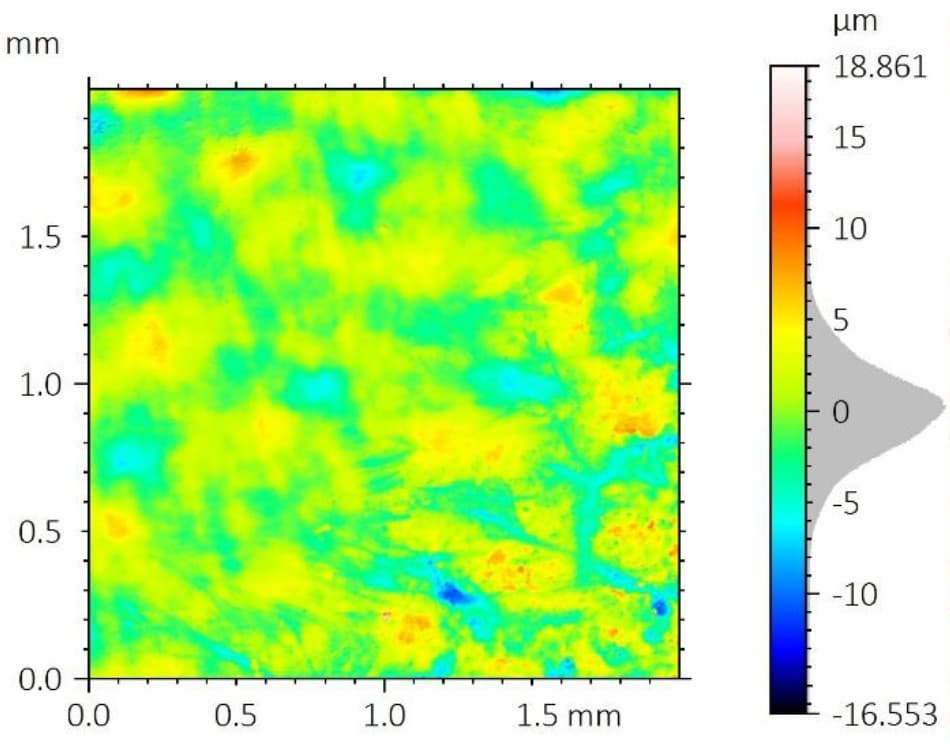
A least-squares degree-8 polynomial form removal was applied to isolate the surface roughness component. The roughness filters S-Gaussian 2.5 µm and L-Gaussian 0.8 mm were then applied according to ISO 25178. The resulting filtered surface and corresponding roughness parameters are presented below.

ISO 25178 – Roughness (S-L)
S-filter (λs): Gaussian, 2.5 µm
F: [Workflow] Form removed (LS-poly 8)
L-filter (λc): Gaussian, 0.8 mm
Height Parameters
Sq2.433µmKök ortalama kare yüksekliği
Ssk-0.102 Çarpıklık
Sku3.715 Kurtosis
Sp18.861µmMaksimum tepe yüksekliği
Sv16.553µmMaximum pit depth
Sz35.414µmMaksimum yükseklik
Sa1.888µmAritmetik ortalama yükseklik

The average surface roughness Sa is 1.888 µm, while the peak-to-valley height Sz reaches 35.414 µm.

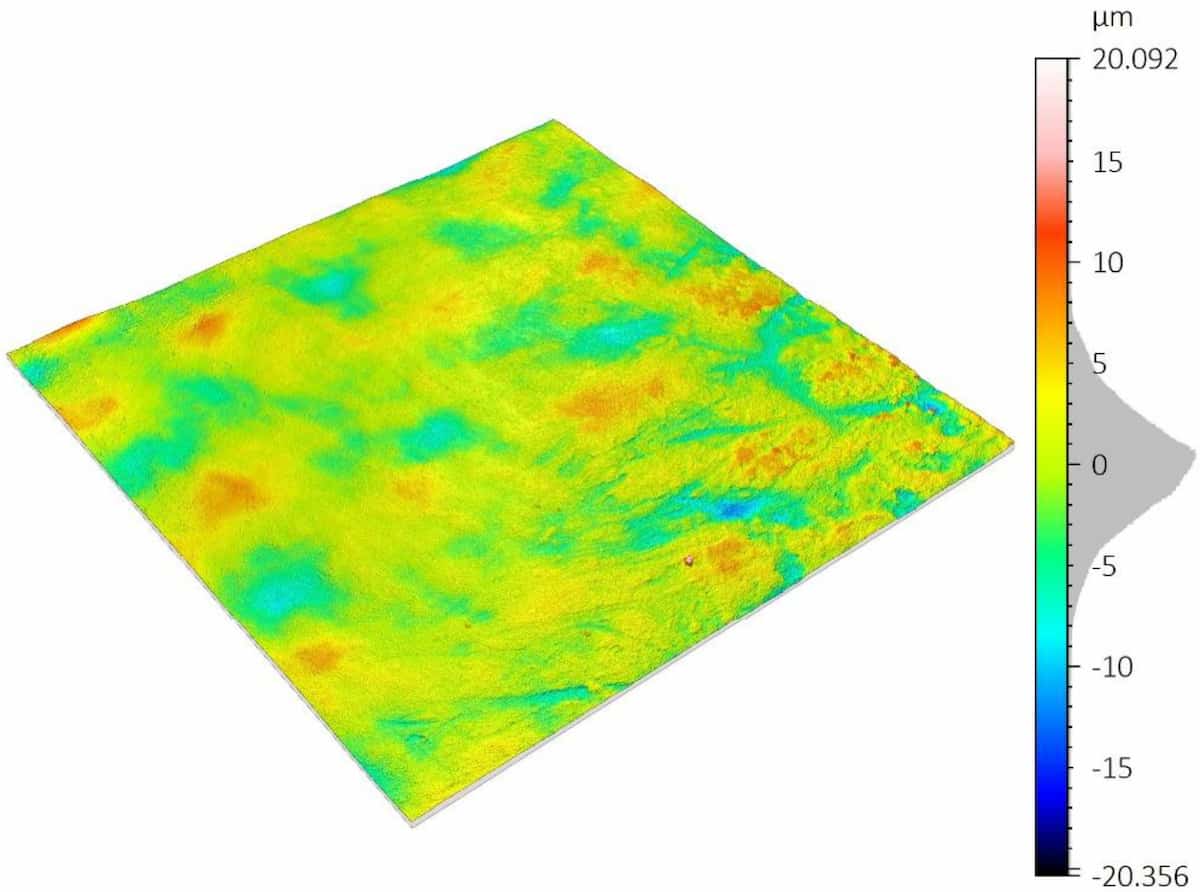
A 3D surface rendering of the filtered area is shown below for visualization.
3D rendering of ISO 25178 filtered tooth surface roughness

Roughness Analysis (Profiles)

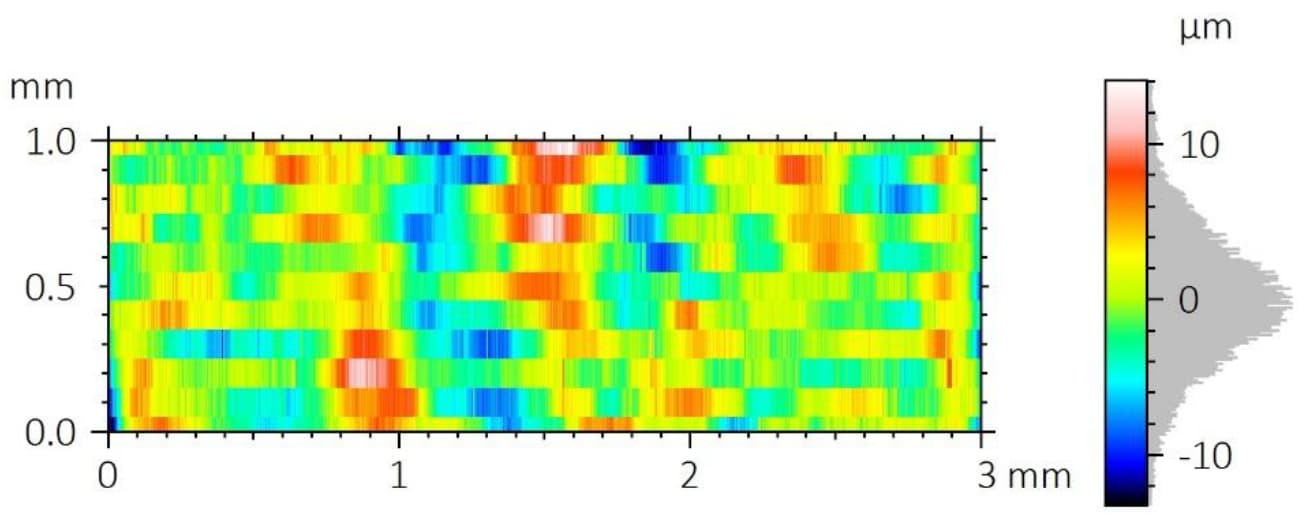
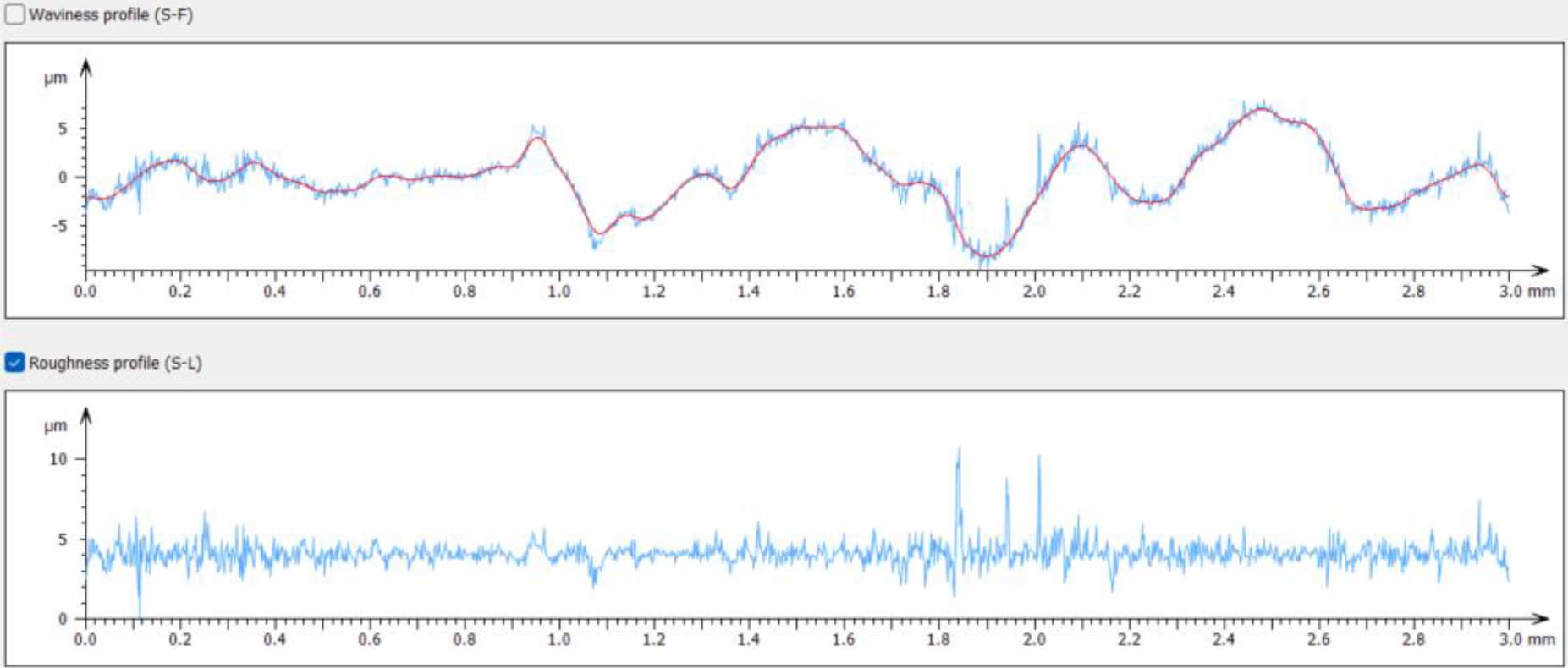
Surface roughness profiles were measured using a series of 11 parallel line scans along the X direction on the side of the tooth. The false-color 2D surface map of the raw scan is shown below.

False-color 2D raw scan of tooth surface for line roughness profiles

The surface form was removed using a least-squares 8-degree polynomial prior to applying the metrological filters, leaving the residual surface shown below.

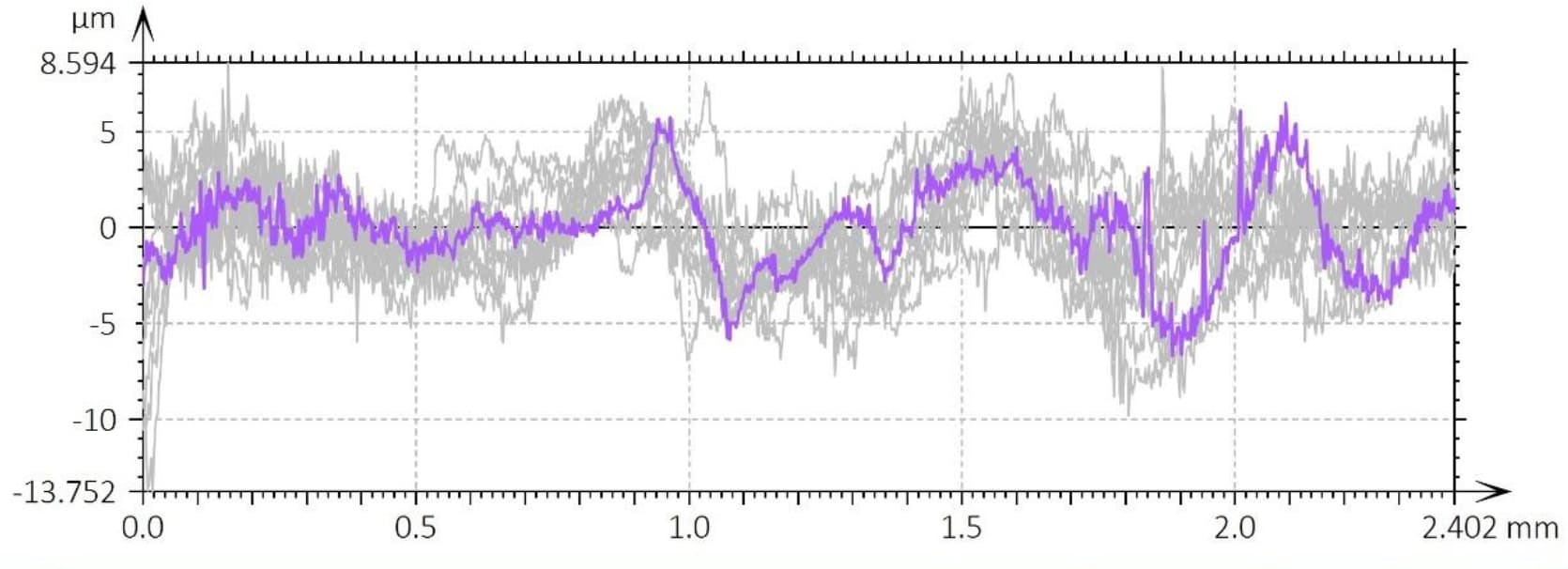
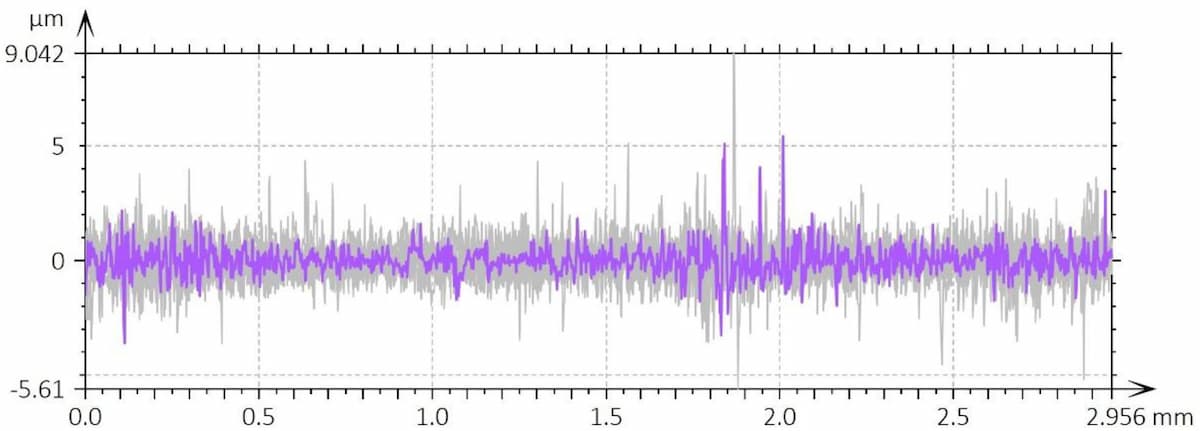
A statistical analysis of the measured surface roughness profiles reveals the following line roughness parameters.

Overlay of multiple tooth surface roughness profiles for statistical analysis

ISO 4287 – Roughness (S-L)
F: Hiçbiri
S-filter (λs): Gaussian, 2.5 µm
L-filter (λc): Gaussian, 0.8 mm
Evaluation length: All λc (3)
Amplitude Parameters – Roughness Profile
  DescriptionMeanStd devMinMax
RpµmMaximum peak height of the roughness profile5.6830.7614.3156.610
RvµmMaximum valley depth of the roughness profile6.2421.0094.7018.438
RzµmMaximum height of roughness profile11.9251.6769.12315.048
RaµmArithmetic mean deviation of the roughness profile2.0630.2971.7102.629
RqµmRoot-mean-square (RMS) deviation of the roughness profile2.5230.3612.0573.175

ISO 4287 – Roughness (S-L)
F: Hiçbiri
S-filter (λs): Gaussian, 2.5 µm
L-filter (λc): Gaussian, 0.8 mm
Evaluation length: All λc (3)
Amplitude Parameters – Roughness Profile
Rpµm
Maximum peak height of the roughness profile
Mean5.683
Std dev0.761
Min4.315
Max6.610
Rvµm
Maximum valley depth of the roughness profile
Mean6.242
Std dev1.009
Min4.701
Max8.438
Rzµm
Maximum height of roughness profile
Mean11.925
Std dev1.676
Min9.123
Max15.048
Raµm
Arithmetic mean deviation of the roughness profile
Mean2.063
Std dev0.297
Min1.710
Max2.629
Rqµm
Root-mean-square (RMS) deviation of the roughness profile
Mean2.523
Std dev0.361
Min2.057
Max3.175

The value of Ra is consistent with the Sa value extracted from the surface area measurement.

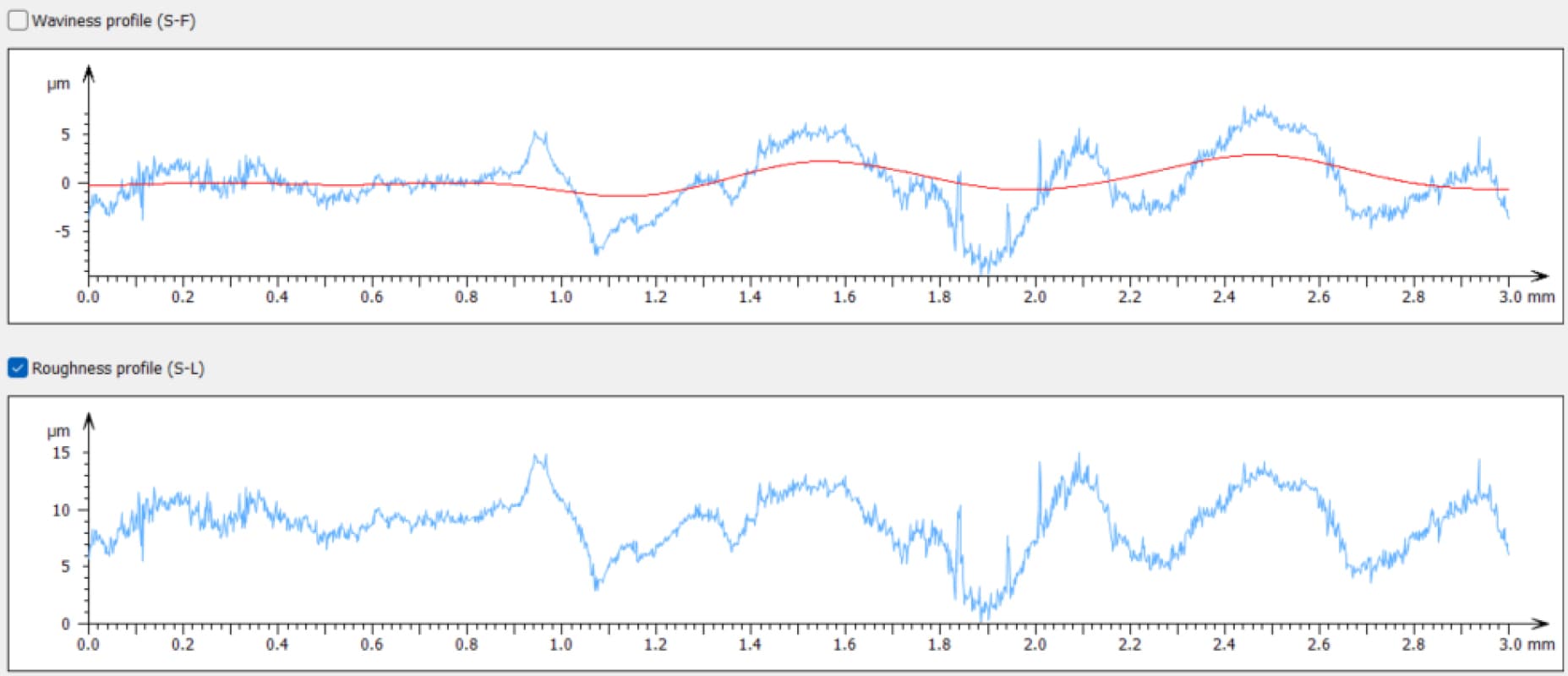
Different metrological filters can be applied to distinguish between macroscopic waviness and microscopic surface roughness. For example, a coarser filter cut-off, such as the 8 mm cut-off used with the Robust Gaussian order-2 filter, produces a smoother waviness profile (red) that is less sensitive to sharp local variations and follows the original surface profile more loosely.

Comparison of waviness and roughness profiles on tooth surface using coarse filter

Alternatively, a finer cut-off (e.g., 0.08 mm) enables the analysis of micro-roughness by removing the waviness component that follows the original profile at a larger scale, leaving the finer surface roughness features of the tooth visible.

The microroughness analysis obtained using a 0.08 mm L-Gaussian filter is presented below.

Final microroughness profile of tooth surface after filtering

ISO 4287 – Roughness (S-L)
F: Hiçbiri
S-filter (λs): Gaussian, 2.5 µm
L-filter (λc): Gaussian, 0.08 mm
Evaluation length: All λc (37)
Amplitude Parameters – Roughness Profile
  DescriptionMeanStd devMinMax
RpµmMaximum peak height of the roughness profile1.5820.1221.3421.748
RvµmMaximum valley depth of the roughness profile1.4660.1191.2541.661
RzµmMaximum height of roughness profile3.0490.1962.8203.409
RaµmArithmetic mean deviation of the roughness profile0.4950.0470.4230.597
RqµmRoot-mean-square (RMS) deviation of the roughness profile0.6430.0560.5620.762

ISO 4287 – Roughness (S-L)
F: Hiçbiri
S-filter (λs): Gaussian, 2.5 µm
L-filter (λc): Gaussian, 0.8 mm
Evaluation length: All λc (3)
Amplitude Parameters – Roughness Profile
Rpµm
Maximum peak height of the roughness profile
Mean5.683
Std dev0.761
Min4.315
Max6.610
Rvµm
Maximum valley depth of the roughness profile
Mean6.242
Std dev1.009
Min4.701
Max8.438
Rzµm
Maximum height of roughness profile
Mean11.925
Std dev1.676
Min9.123
Max15.048
Raµm
Arithmetic mean deviation of the roughness profile
Mean2.063
Std dev0.297
Min1.710
Max2.629
Rqµm
Root-mean-square (RMS) deviation of the roughness profile
Mean2.523
Std dev0.361
Min2.057
Max3.175

Full 3D Tooth Surface Topography Reconstruction

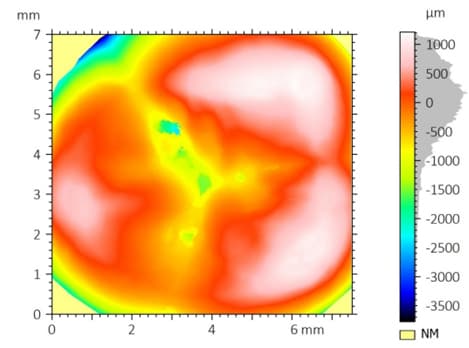
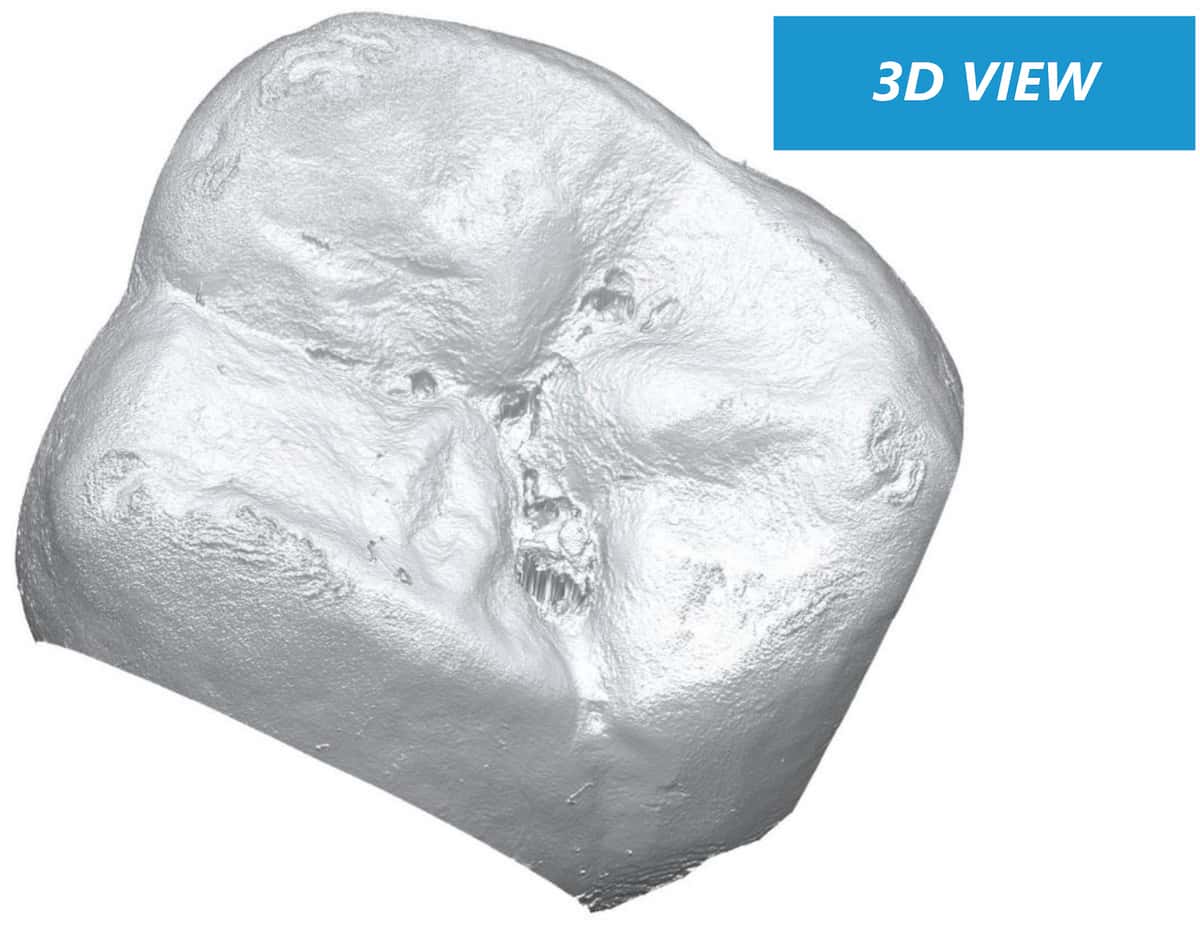
The extended Z-scan range of the PS5 optical sensor enables high-fidelity scanning of the entire tooth crown surface. The resulting 3D surface topography is shown below.

False-color surface topography map of full tooth crown measured with optical profilometer

2D VIEW: 2D surface map of the tooth crown measured with optical profilometry

3D surface reconstruction of molar crown from optical profilometer scan

3D VIEW: High-fidelity 3D rendering of the molar crown surface obtained with optical profilometry

Sonuç

In this application, the NANOVEA JR25 Non-Contact Optical Profiler was used to measure the surface roughness and 3D surface topography of an adult human molar.

Both the area scan and the line profile analysis revealed a roughness Rq of approximately 2.5 µm and an Ra of about 1.9–2.0 µm. These values are consistent with results reported in the literature.³ The use of a narrower L-Gaussian filter with an 80 µm cut-off enabled further investigation of micro-roughness, revealing an Rq of 0.643 µm and an Ra of 0.495 µm.

The full 3D surface topography of the molar crown was reconstructed with high fidelity. The high measurement resolution allows detection of fine surface features and crevices. The resulting surface data can be easily processed and exported as STL files, enabling the design and fabrication of customized dental devices and restorative components.

Referanslar

[1] Shin, B.W., et al. Surface Roughness of Prefabricated Pediatric Zirconia Crowns Following Simulated Toothbrushing. Pediatric Dentistry 44.5 (2022): 363–367.
[2] Bollen, C.M.L., Paul Lambrechts, and Marc Quirynen. Comparison of surface roughness of oral hard materials to the threshold surface roughness for bacterial plaque retention: A review of the literature. Dental Materials 13.4 (1997): 258–269.
[3] Suputtamongkol, K., et al. Surface roughness resulting from wear of lithia-disilicate-based posterior crowns. Wear 269.3–4 (2010): 317–322.

Frequently Asked Questions About Dental Surface Roughness Measurement

What is dental surface roughness measurement?

Dental surface roughness measurement quantifies the microscopic texture of tooth surfaces using parameters such as Ra, Rq, and Sa. Optical profilometers measure these features without contacting the surface, allowing accurate analysis of enamel, restorative materials, and dental crowns.

Why use optical profilometry to measure tooth roughness?

Optical profilometry provides non-contact surface measurement with nanometer-scale vertical resolution. It captures 2D surface maps and full 3D surface topography of dental structures without damaging soft or polished surfaces.

What roughness parameters are used for dental surface analysis?

Common roughness parameters include Ra (arithmetic mean roughness), Rq (root mean square roughness), Sa (areal roughness), and Sz (maximum surface height). These parameters help evaluate enamel wear, plaque adhesion risk, and the performance of restorative materials.

Why is surface roughness important in dentistry?

Surface roughness affects plaque retention, wear resistance, and the long-term performance of dental restorations. Controlling micro-roughness can reduce bacterial adhesion and improve the durability of dental materials.

Need Reliable Surface Roughness Measurement for Dental Materials?

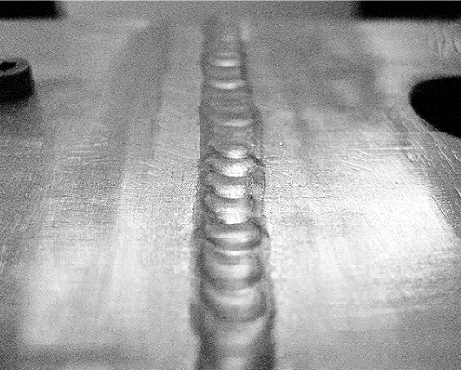
Taşınabilir 3D Profilometre Kullanarak Kaynak Yüzeyi Denetimi

WELd yüzey denetimi

portati̇f 3 boyutlu profi̇lometre kullanimi

Tarafından hazırlanmıştır

CRAIG LEISING

GİRİŞ

Tipik olarak görsel inceleme ile yapılan belirli bir kaynağın aşırı hassasiyetle incelenmesi kritik hale gelebilir. Hassas analiz için spesifik ilgi alanları arasında, sonraki muayene prosedürlerinden bağımsız olarak yüzey çatlakları, gözeneklilik ve doldurulmamış kraterler bulunur. Boyut/şekil, hacim, pürüzlülük, boyut vb. gibi kaynak özelliklerinin tümü kritik değerlendirme için ölçülebilir.

KAYNAK YÜZEYİ DENETİMİNDE 3 BOYUTLU TEMASSIZ PROFİLOMETRENİN ÖNEMİ

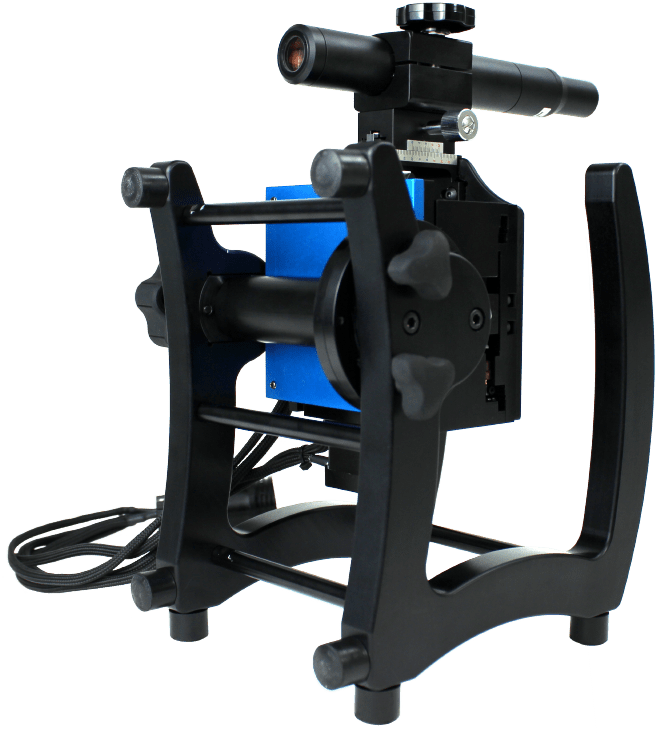
NANOVEA, dokunma probları veya interferometri gibi diğer tekniklerin aksine 3D Temassız ProfilometreEksenel kromatizmi kullanarak neredeyse her yüzeyi ölçebilir, açık aşamalandırma nedeniyle numune boyutları büyük ölçüde değişebilir ve numune hazırlamaya gerek yoktur. Nanodan makroya kadar aralık, yüzey profili ölçümü sırasında numune yansımasından veya emiliminden sıfır etkiyle elde edilir, yüksek yüzey açılarını ölçme konusunda gelişmiş bir yeteneğe sahiptir ve sonuçların yazılımla manipülasyonu yoktur. Herhangi bir malzemeyi kolayca ölçün: şeffaf, opak, aynasal, dağınık, cilalı, pürüzlü vb. NANOVEA Taşınabilir Profilometrelerin 2D ve 2D yetenekleri, onları hem laboratuvarda hem de sahada tam kapsamlı kaynak yüzeyi muayenesi için ideal cihazlar haline getirir.

ÖLÇÜM HEDEFI

Bu uygulamada, NANOVEA JR25 Taşınabilir Profilleyici, bir kaynağın yüzey pürüzlülüğünü, şeklini ve hacmini ve ayrıca çevresindeki alanı ölçmek için kullanılır. Bu bilgiler, kaynağın ve kaynak işleminin kalitesini doğru bir şekilde araştırmak için kritik bilgiler sağlayabilir.

NANOVEA

JR25

TEST SONUÇLARI

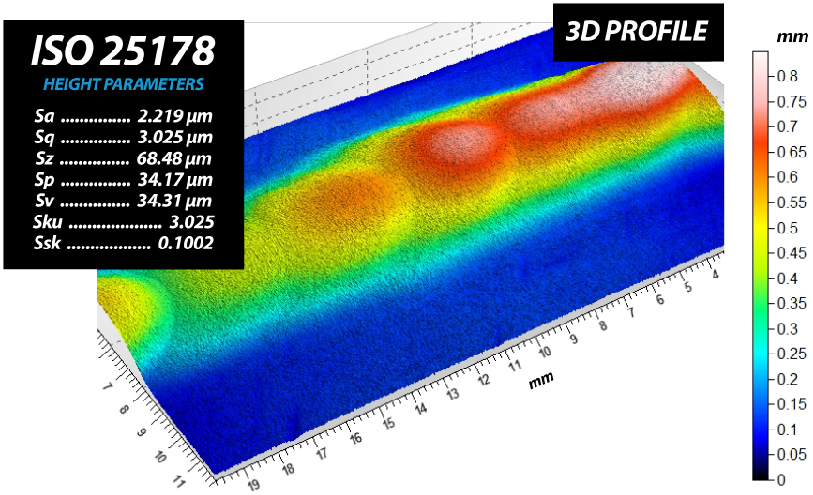
Aşağıdaki görüntü, kaynağın ve çevresindeki alanın tam 3D görünümünü ve yalnızca kaynağın yüzey parametrelerini göstermektedir. 2D kesit profili aşağıda gösterilmiştir.

örneklem

Yukarıdaki 2D kesit profili 3D'den çıkarıldığında, kaynağın boyutsal bilgileri aşağıda hesaplanır. Aşağıda sadece kaynak için yüzey alanı ve malzeme hacmi hesaplanmıştır.

 DELİKZİRVE
YÜZEY1.01 mm214.0 mm2
HACİM8.799e-5 mm323,27 mm3
MAKSIMUM DERINLIK/YÜKSEKLIK0,0276 mm0,6195 mm
ORTALAMA DERINLIK/YÜKSEKLIK 0.004024 mm 0,2298 mm

SONUÇ

Bu uygulamada, NANOVEA 3D Temassız Profilleyicinin bir kaynağın ve çevresindeki yüzey alanının kritik özelliklerini nasıl hassas bir şekilde karakterize edebileceğini gösterdik. Pürüzlülük, boyutlar ve hacimden, kalite ve tekrarlanabilirlik için nicel bir yöntem belirlenebilir ve / veya daha fazla araştırılabilir. Bu uygulama notundaki örnek gibi örnek kaynaklar, kurum içi veya saha testleri için standart bir masa üstü veya taşınabilir NANOVEA Profilleyici ile kolayca analiz edilebilir

3D Profilometri Kullanarak Fraktografi Analizi

FRAKTOGRAFİ ANALİZİ

3 BOYUTLU PROFILOMETRI KULLANARAK

Tarafından hazırlanmıştır

CRAIG LEISING

GİRİŞ

Fraktografi, kırık yüzeylerdeki özelliklerin incelenmesidir ve tarihsel olarak Mikroskop veya SEM aracılığıyla araştırılmıştır. Özelliğin boyutuna bağlı olarak yüzey analizi için mikroskop (makro özellikler) veya SEM (nano ve mikro özellikler) seçilir. Her ikisi de sonuçta kırılma mekanizması tipinin tanımlanmasına olanak sağlar. Etkili olmasına rağmen, Mikroskopun açık sınırlamaları vardır ve çoğu durumda SEM, atomik seviye analizi dışında, kırılma yüzeyi ölçümü için pratik değildir ve daha geniş kullanım kapasitesinden yoksundur. Optik ölçüm teknolojisindeki gelişmeler sayesinde NANOVEA 3D Temassız Profilometre makro ölçekli 2D ve 3D yüzey ölçümleri yoluyla nano sağlama yeteneğiyle artık tercih edilen cihaz olarak kabul ediliyor

KIRIK İNCELEMESİ İÇİN 3 BOYUTLU TEMASSIZ PROFİLOMETRENİN ÖNEMİ

SEM'in aksine, 3D Temassız Profilometre neredeyse her yüzeyi, numune boyutunu, minimum numune hazırlığı ile ölçebilir ve tüm bunlar bir SEM'e göre üstün dikey / yatay boyutlar sunar. Bir profilometre ile nano ile makro arasındaki özellikler, numune yansıtıcılığından sıfır etkilenerek tek bir ölçümde yakalanır. Her türlü malzemeyi kolayca ölçün: şeffaf, opak, speküler, difüzif, cilalı, pürüzlü vb. 3D Temassız Profilometre, SEM maliyetinin çok altında bir maliyetle yüzey kırılma çalışmalarını en üst düzeye çıkarmak için geniş ve kullanıcı dostu bir yetenek sağlar.

ÖLÇÜM HEDEFI

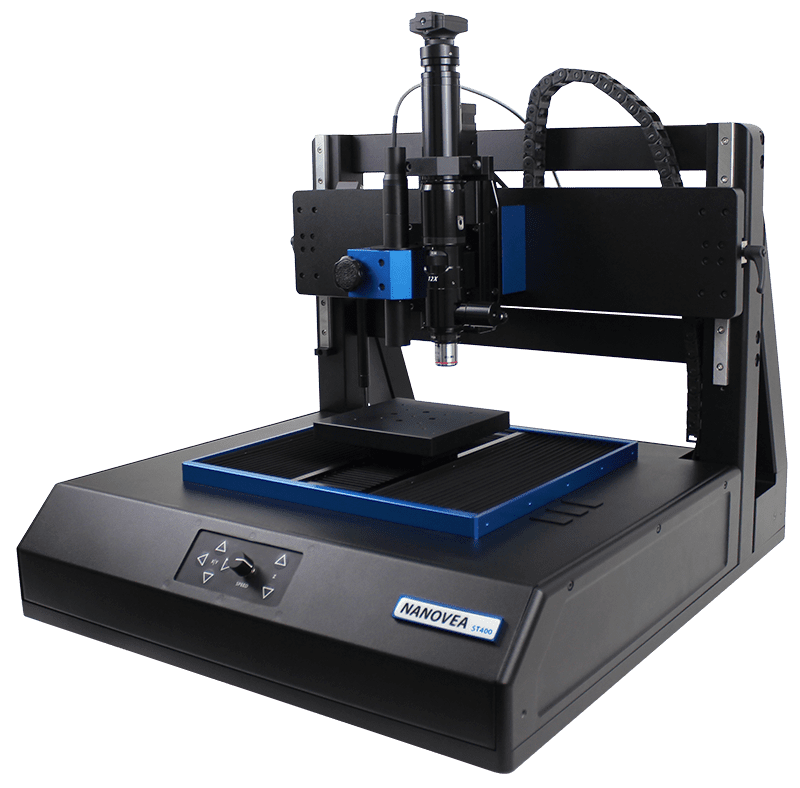
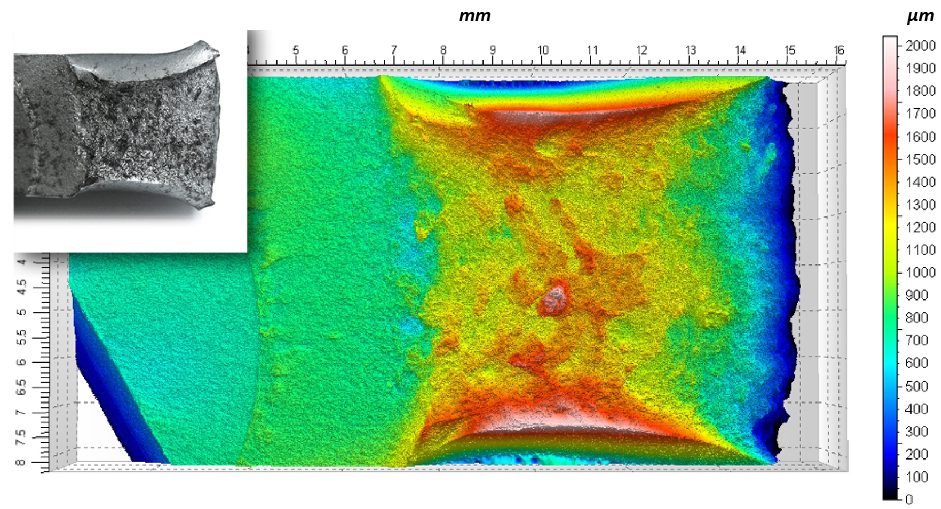
Bu uygulamada, NANOVEA ST400 bir çelik numunenin kırılmış yüzeyini ölçmek için kullanılmaktadır. Bu çalışmada, yüzeyin 3D alanını, 2D profil çıkarımını ve yüzey yön haritasını göstereceğiz.

NANOVEA

ST400

SONUÇLAR

ÜST YÜZEY

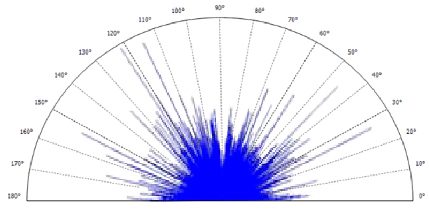
3B Yüzey Doku Yönü

İzotropi51.26%
Birinci Yön123.2º
İkinci Yön116.3º
Üçüncü Yön0.1725º

Yüzey Alanı, Hacim, Pürüzlülük ve diğerleri bu ekstraksiyondan otomatik olarak hesaplanabilir.

2D Profil Çıkarma

SONUÇLAR

YAN YÜZEY

3B Yüzey Doku Yönü

İzotropi15.55%
Birinci Yön0.1617º
İkinci Yön110.5º
Üçüncü Yön171.5º

Yüzey Alanı, Hacim, Pürüzlülük ve diğerleri bu ekstraksiyondan otomatik olarak hesaplanabilir.

2D Profil Çıkarma

SONUÇ

Bu uygulamada, NANOVEA ST400 3D Temassız Profilometrenin kırılmış bir yüzeyin tüm topografyasını (nano, mikro ve makro özellikler) nasıl hassas bir şekilde karakterize edebileceğini gösterdik. 3D alandan yüzey net bir şekilde tanımlanabilir ve alt alanlar veya profiller / kesitler hızlı bir şekilde çıkarılabilir ve sonsuz bir yüzey hesaplamaları listesi ile analiz edilebilir. Nanometre altı yüzey özellikleri, entegre bir AFM modülü ile daha fazla analiz edilebilir.

Ayrıca NANOVEA, Profilometre serisine, özellikle kırık yüzeyinin taşınamaz olduğu saha çalışmaları için kritik olan taşınabilir bir versiyon eklemiştir. Bu geniş yüzey ölçüm yetenekleri listesiyle, kırık yüzey analizi tek bir cihazla hiç bu kadar kolay ve kullanışlı olmamıştı.

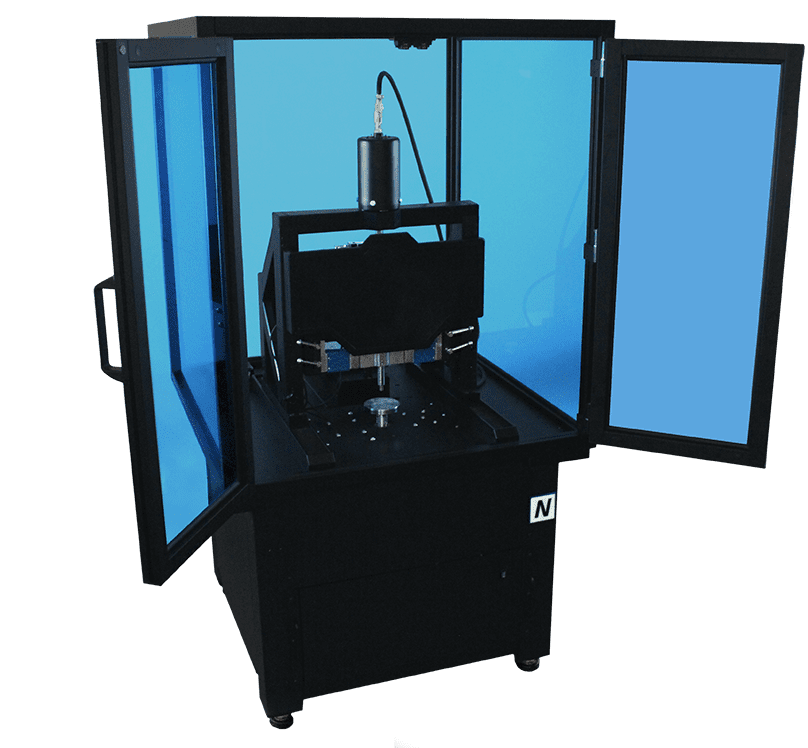
Tribometre Kullanarak Polimer Kayış Aşınması ve Sürtünmesi

POLİMER KAYIŞLAR

TRİBOMETRE KULLANARAK AŞINMA VE KIRILMA

Tarafından hazırlanmıştır

DUANJIE LI, PhD

GİRİŞ

Kayış tahriki, gücü iletir ve iki veya daha fazla dönen şaft arasındaki göreceli hareketi izler. Minimum bakım gerektiren basit ve ucuz bir çözüm olan kayış tahrikleri, testereler, hızarlar, harman makineleri, silo üfleyiciler ve konveyörler gibi çeşitli uygulamalarda yaygın olarak kullanılmaktadır. Kayış tahrikleri makineyi aşırı yükten korumanın yanı sıra titreşimi sönümler ve izole eder.

AŞINMA DEĞERLENDİRMESİNİN ÖNEMİ KAYIŞ TAHRIKLERI IÇIN

Kayış tahrikli bir makinedeki kayışlar için sürtünme ve aşınma kaçınılmazdır. Yeterli sürtünme kayma olmadan etkili güç aktarımı sağlar, ancak aşırı sürtünme kayışı hızla aşındırabilir. Kayışla tahrik işlemi sırasında yorulma, aşınma ve sürtünme gibi farklı aşınma türleri meydana gelir. Kayışın ömrünü uzatmak ve kayış onarımı ve değişiminde maliyeti ve zamanı azaltmak için, kayışların aşınma performansının güvenilir bir şekilde değerlendirilmesi, kayış ömrünü, üretim verimliliğini ve uygulama performansını iyileştirmek için arzu edilir. Kayışın sürtünme katsayısının ve aşınma oranının doğru ölçümü, Ar-Ge'yi ve kayış üretiminin kalite kontrolünü kolaylaştırır.

ÖLÇÜM HEDEFI

Bu çalışmada, farklı yüzey dokularına sahip kayışların aşınma davranışlarını simüle ettik ve karşılaştırdık. NANOVEA T2000 Tribometre, kayışın aşınma sürecini kontrollü ve izlenebilir bir şekilde simüle eder.

NANOVEA

T2000

TEST PROSEDÜRLERI

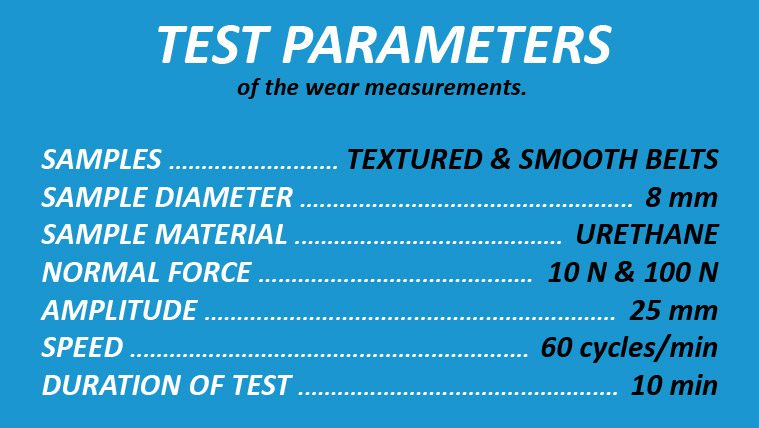
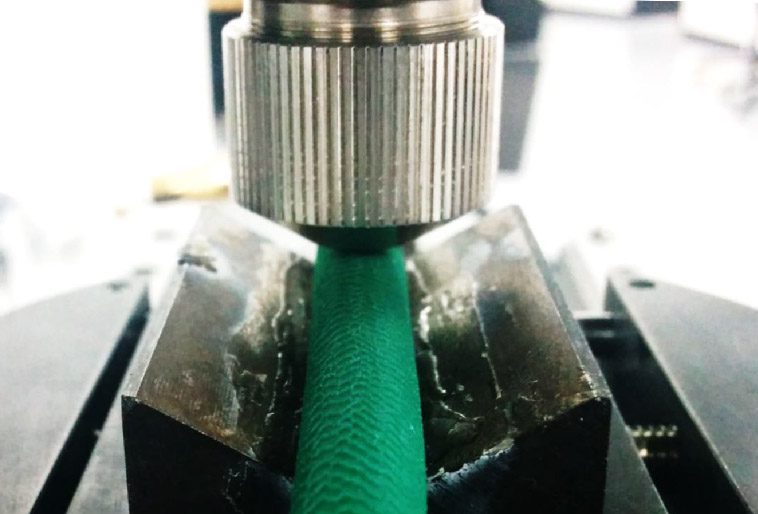
Farklı yüzey pürüzlülüğüne ve dokusuna sahip iki kayışın sürtünme katsayısı, COF ve aşınma direnci aşağıdaki yöntemlerle değerlendirilmiştir NANOVEA Yüksek Yük Tribometre Doğrusal Pistonlu Aşınma Modülü kullanarak. Karşı malzeme olarak Çelik 440 bilya (10 mm çapında) kullanıldı. Yüzey pürüzlülüğü ve aşınma izi entegre bir sistem kullanılarak incelendi. 3D Temassız profilometre. Aşınma oranı, Kformülü kullanılarak değerlendirilmiştir K=Vl(Fxs), nerede V aşınmış hacimdir, F normal yük ve s kayma mesafesidir.


Bu çalışmada örnek olarak pürüzsüz bir Çelik 440 bilye muadilinin kullanıldığını, gerçek uygulama durumunu simüle etmek için özel fikstürler kullanılarak farklı şekillere ve yüzey kaplamasına sahip herhangi bir katı malzemenin uygulanabileceğini lütfen unutmayın.

SONUÇLAR & TARTIŞMA

Dokulu Kayış ve Düz Kayışın yüzey pürüzlülüğü Ra sırasıyla 33,5 ve 8,7 um'dir. NANOVEA 3D Temassız Optik profilleyici. Test edilen iki kayışın COF ve aşınma oranı, kayışların farklı yüklerdeki aşınma davranışını karşılaştırmak için sırasıyla 10 N ve 100 N'de ölçülmüştür.

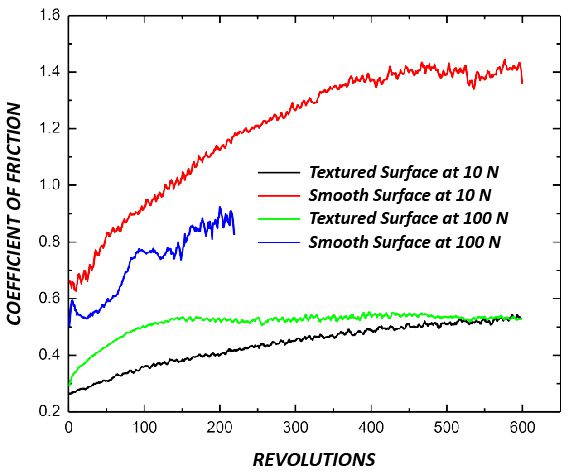
ŞEKİL 1 aşınma testleri sırasında kayışların COF'sinin gelişimini göstermektedir. Farklı dokulara sahip kayışlar önemli ölçüde farklı aşınma davranışları sergilemektedir. COF'nin kademeli olarak arttığı alıştırma döneminden sonra, Dokulu Kayışın 10 N ve 100 N yükler kullanılarak yapılan her iki testte de ~0,5'lik daha düşük bir COF'ye ulaşması ilginçtir. 10 N yük altında test edilen Düz Kayış, COF sabitlendiğinde ~1,4'lük önemli ölçüde daha yüksek bir COF sergilemekte ve testin geri kalanında bu değerin üzerinde kalmaktadır. Düz Kayış 100 N yük altında test edildiğinde çelik 440 bilye tarafından hızla aşındırılmış ve büyük bir aşınma izi oluşturmuştur. Bu nedenle test 220 devirde durdurulmuştur.

ŞEKİL 1: Farklı yüklerde kayışların COF'sinin evrimi.

NANOVEA 3D temassız profilometre, aşınma izlerinin ayrıntılı morfolojisini analiz etmek için bir araç sunarak aşınma mekanizmasının temel olarak anlaşılmasına yönelik daha fazla bilgi sağlar.

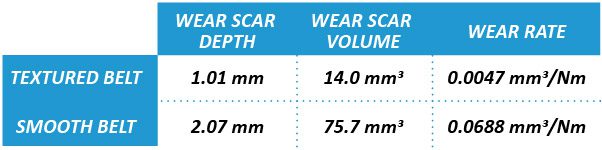
TABLO 1: Aşınma izi analizinin sonucu.

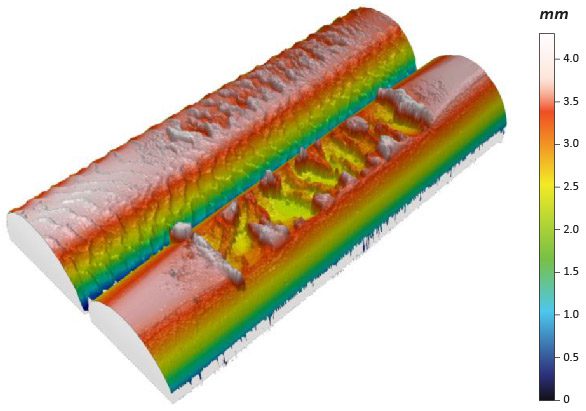
ŞEKİL 2:  İki kayışın 3D görünümü
100 N'deki testlerden sonra.

3D aşınma izi profili, TABLO 1'de gösterildiği gibi gelişmiş analiz yazılımı tarafından hesaplanan aşınma izi hacminin doğrudan ve doğru bir şekilde belirlenmesini sağlar. Düz Kayış, 220 devirlik bir aşınma testinde 75,7 mm3 hacmiyle çok daha büyük ve derin bir aşınma izine sahipken, 600 devirlik bir aşınma testinden sonra Dokulu Kayış için aşınma hacmi 14,0 mm3'tür. Düz Kayışın çelik bilyeye karşı önemli ölçüde daha yüksek sürtünmesi, Dokulu Kayışa kıyasla 15 kat daha yüksek bir aşınma oranına yol açmaktadır.


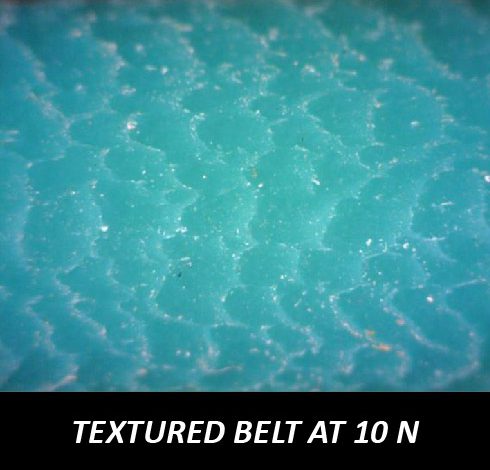
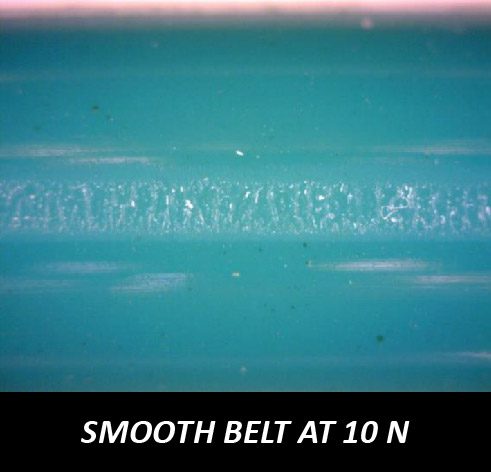
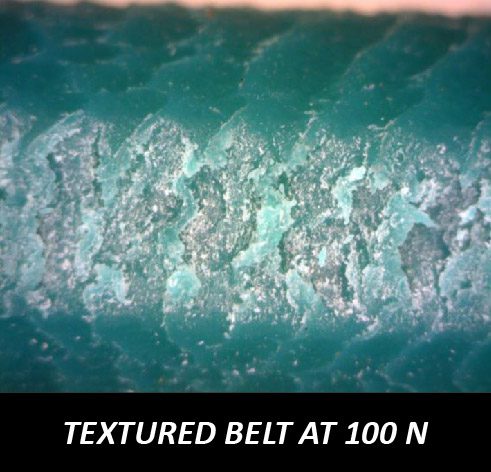
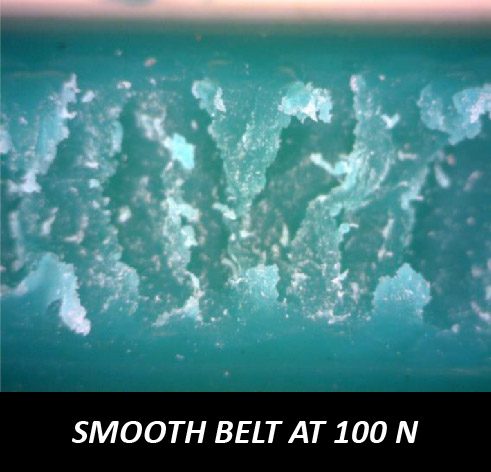
Dokulu Kayış ile Düz Kayış arasındaki bu kadar ciddi bir COF farkı muhtemelen kayış ile çelik bilye arasındaki temas alanının boyutuyla ilgilidir ve bu da farklı aşınma performanslarına yol açmaktadır. ŞEKİL 3, iki kayışın optik mikroskop altındaki aşınma izlerini göstermektedir. Aşınma izi incelemesi, COF evrimine ilişkin gözlemle uyumludur: 0,5 gibi düşük bir COF değerini koruyan Dokulu Kayış, 10 N yük altındaki aşınma testinden sonra hiçbir aşınma belirtisi göstermez. 10 N'de Düz Kayış küçük bir aşınma izi gösterir. 100 N'de gerçekleştirilen aşınma testleri, hem Dokulu hem de Düz Kayışlarda önemli ölçüde daha büyük aşınma izleri oluşturur ve aşınma oranı, aşağıdaki paragrafta tartışılacağı gibi 3D profiller kullanılarak hesaplanacaktır.

ŞEKİL 3:  Optik mikroskop altında aşınma izleri.

SONUÇ

Bu çalışmada, NANOVEA T2000 Tribometre'nin kayışların sürtünme katsayısını ve aşınma oranını iyi kontrollü ve nicel bir şekilde değerlendirme kapasitesini sergiledik. Yüzey dokusu, hizmet performansları sırasında kayışların sürtünme ve aşınma direncinde kritik bir rol oynamaktadır. Dokulu kayış, ~0,5'lik sabit bir sürtünme katsayısı sergiler ve uzun bir kullanım ömrüne sahiptir, bu da takım onarımı veya değişimi için daha az zaman ve maliyet sağlar. Buna karşılık, düz kayışın çelik bilyeye karşı aşırı sürtünmesi kayışı hızla aşındırır. Ayrıca, kayış üzerindeki yükleme, hizmet ömrü açısından hayati bir faktördür. Aşırı yük çok yüksek sürtünme yaratarak kayışın daha hızlı aşınmasına neden olur.

NANOVEA T2000 Tribometre, ISO ve ASTM uyumlu rotatif ve lineer modları kullanarak hassas ve tekrarlanabilir aşınma ve sürtünme testleri sunar ve isteğe bağlı yüksek sıcaklık aşınması, yağlama ve tribokorozyon modülleri önceden entegre edilmiş tek bir sistemde mevcuttur. NANOVEA'nın eşsiz ürün yelpazesi, ince veya kalın, yumuşak veya sert kaplamaların, filmlerin ve alt tabakaların tüm tribolojik özelliklerini belirlemek için ideal bir çözümdür.

3D Profilometri Kullanarak Fosil Mikroyapısı

FOSIL MIKRO YAPISI

3 BOYUTLU PROFILOMETRI KULLANARAK

Tarafından hazırlanmıştır

DUANJIE LI, PhD

GİRİŞ

Fosiller, eski denizlerin, göllerin ve nehirlerin altındaki tortulara gömülmüş bitki, hayvan ve diğer organizmaların izlerinin korunmuş kalıntılarıdır. Yumuşak vücut dokusu genellikle ölümden sonra çürür, ancak sert kabuklar, kemikler ve dişler fosilleşir. Orijinal kabukların ve kemiklerin mineral değişimi gerçekleştiğinde mikroyapı yüzey özellikleri genellikle korunur, bu da havanın evrimi ve fosillerin oluşum mekanizması hakkında bir fikir verir.

FOSİL İNCELEMESİ İÇİN 3 BOYUTLU TEMASSIZ PROFİLOMETRENİN ÖNEMİ

Fosilin 3 boyutlu profilleri, fosil örneğinin detaylı yüzey özelliklerini daha yakından gözlemlememizi sağlıyor. NANOVEA profilometrenin yüksek çözünürlüğü ve doğruluğu çıplak gözle fark edilemeyebilir. Profilometrenin analiz yazılımı bu benzersiz yüzeylere uygulanabilen geniş bir çalışma yelpazesi sunar. NANOVEA, dokunmalı problar gibi diğer tekniklerin aksine 3D Temassız Profilometre Numuneye dokunmadan yüzey özelliklerini ölçer. Bu, bazı hassas fosil örneklerinin gerçek yüzey özelliklerinin korunmasına olanak tanır. Ayrıca taşınabilir model Jr25 profilometre, fosil alanlarında 3 boyutlu ölçüm yapılmasına olanak tanır ve bu da fosil analizini ve kazı sonrası korumayı büyük ölçüde kolaylaştırır.

ÖLÇÜM HEDEFI

Bu çalışmada, iki temsili fosil örneğinin yüzeyini ölçmek için NANOVEA Jr25 Profilometre kullanılmıştır. Her bir fosilin tüm yüzeyi taranmış ve pürüzlülük, kontur ve doku yönünü içeren yüzey özelliklerini karakterize etmek için analiz edilmiştir.

NANOVEA

Jr25

BRAKİOPOD FOSİLİ

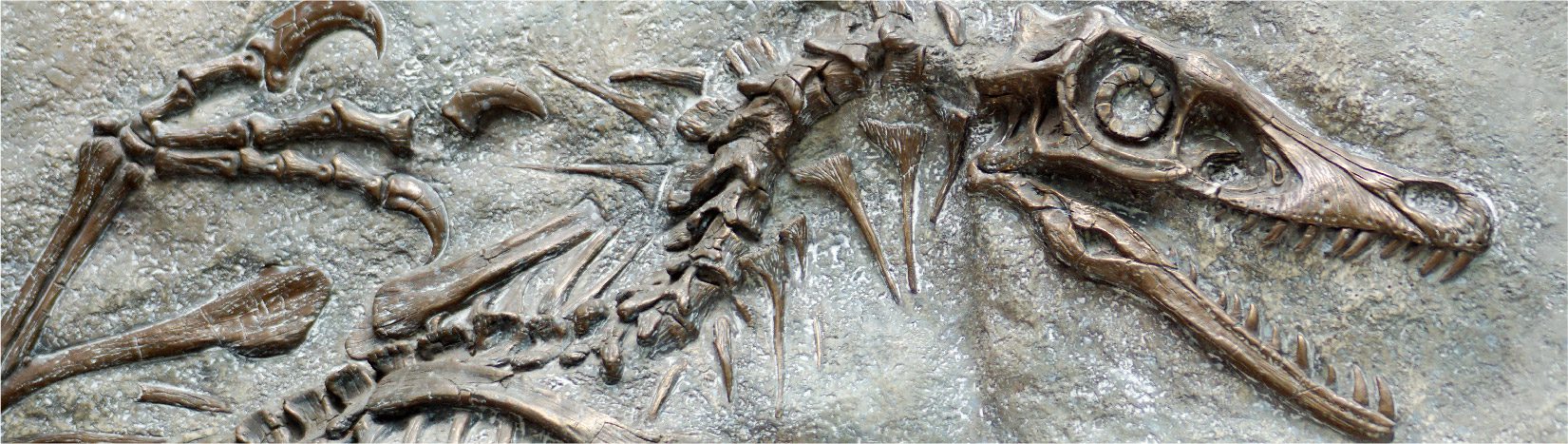
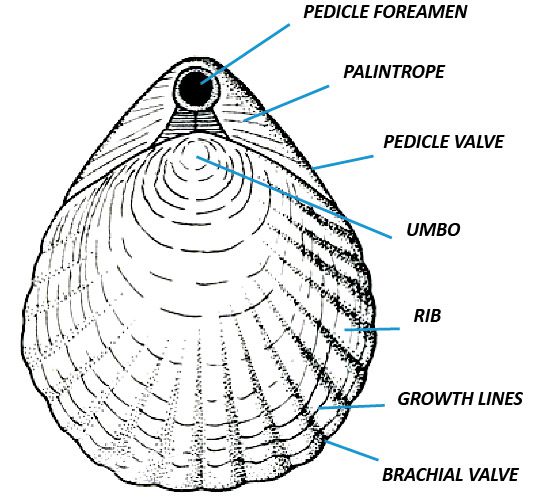
Bu raporda sunulan ilk fosil örneği, üst ve alt yüzeylerinde sert "valfler" (kabuklar) bulunan bir deniz hayvanından gelen bir Brachiopod fosilidir. İlk olarak Kambriyen döneminde, yani 550 milyon yıldan daha uzun bir süre önce ortaya çıkmışlardır.

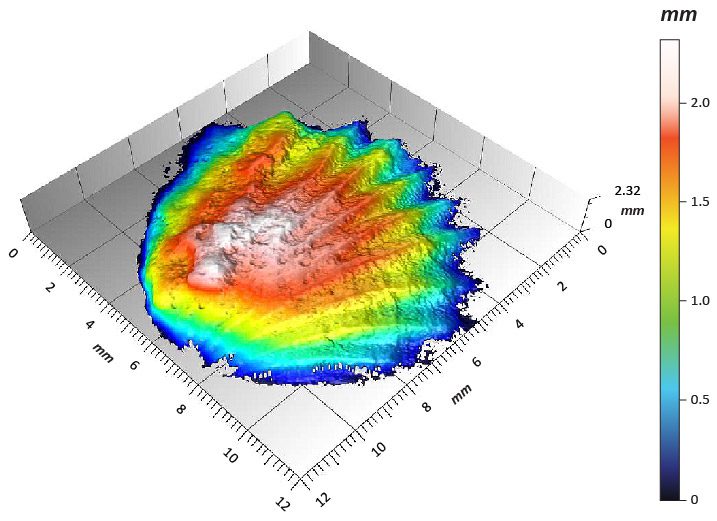
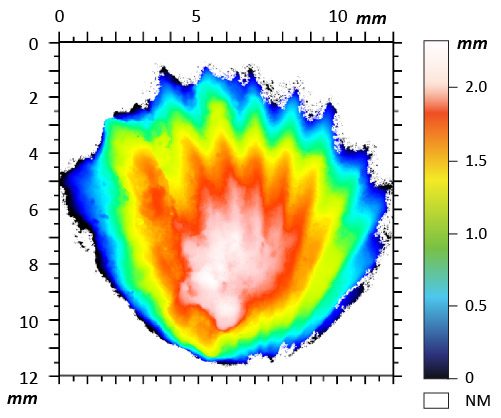
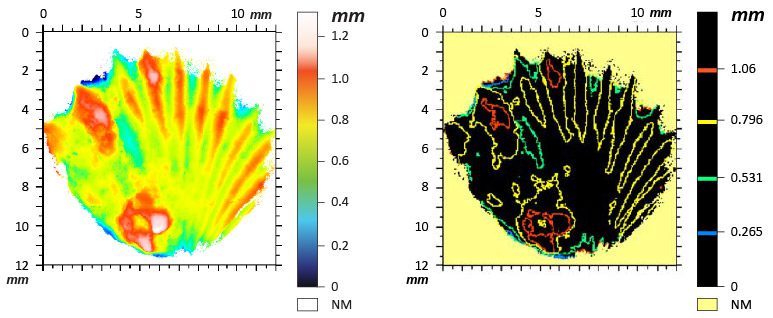
Taramanın 3D Görünümü ŞEKİL 1'de ve Yanlış Renkli Görünümü ŞEKİL 2'de gösterilmektedir. 

ŞEKİL 1: Brachiopod fosil örneğinin 3D görünümü.

ŞEKİL 2: Brachiopod fosil örneğinin Yanlış Renkli Görünümü.

Daha sonra, ŞEKİL 3'te gösterildiği gibi Brachiopod fosilinin yerel yüzey morfolojisini ve konturunu araştırmak için genel form yüzeyden çıkarılmıştır. Brachiopod fosil örneğinde artık tuhaf bir ıraksak oluk dokusu gözlemlenebilmektedir.

ŞEKİL 3: Form kaldırıldıktan sonra Yanlış Renk Görünümü ve Kontur Çizgileri Görünümü.

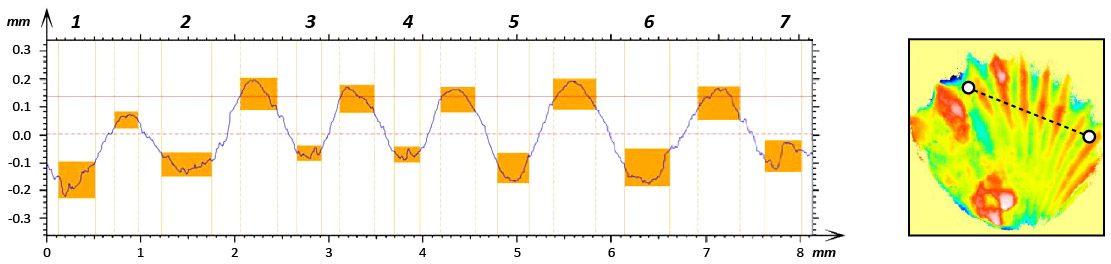
ŞEKİL 4'te fosil yüzeyinin kesitsel bir görünümünü göstermek için dokulu alandan bir çizgi profili çıkarılmıştır. Basamak Yüksekliği çalışması yüzey özelliklerinin kesin boyutlarını ölçmektedir. Oluklar ortalama ~0,38 mm genişliğe ve ~0,25 mm derinliğe sahiptir.

ŞEKİL 4: Dokulu yüzeyin çizgi profili ve Basamak Yüksekliği çalışmaları.

KRINOID KÖK FOSILI

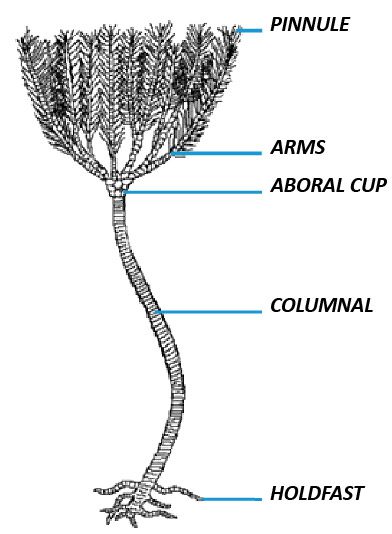
İkinci fosil örneği bir Crinoid kök fosilidir. Crinoidler ilk olarak Orta Kambriyen Dönemi denizlerinde, dinozorlardan yaklaşık 300 milyon yıl önce ortaya çıkmıştır. 


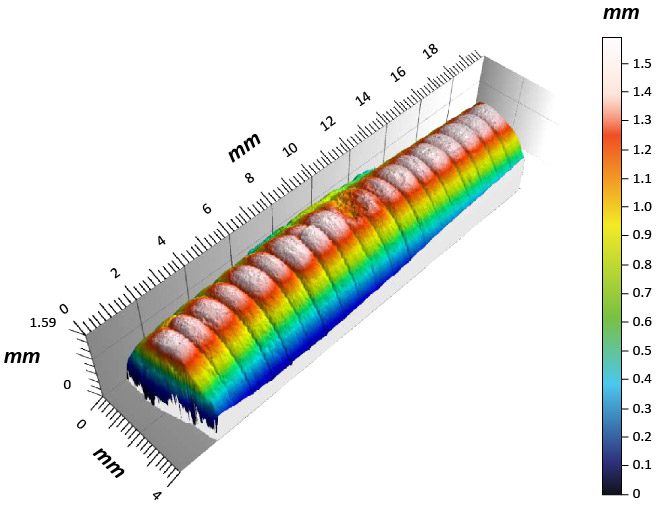
Taramanın 3D Görünümü ŞEKİL 5'te ve Yanlış Renkli Görünümü ŞEKİL 6'da gösterilmektedir. 

ŞEKİL 5: Crinoid fosil örneğinin 3D görünümü.

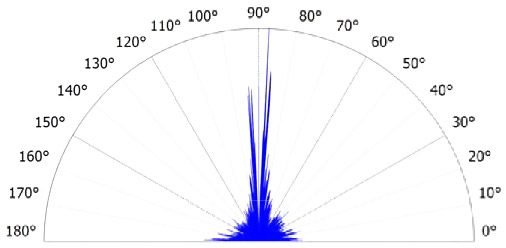
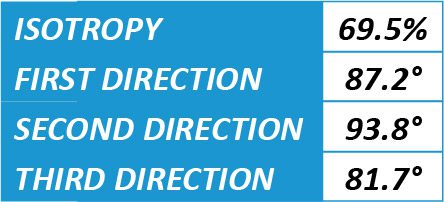
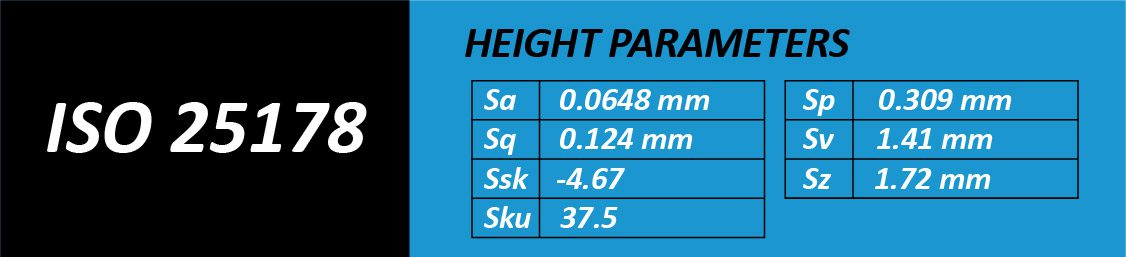
Crinoid gövde fosilinin yüzey dokusu izotropisi ve pürüzlülüğü ŞEKİL 7'de analiz edilmiştir. 

 Bu fosil, 90°'ye yakın açıda tercihli bir doku yönüne sahiptir ve bu da 69%'nin doku izotropisine yol açar.

ŞEKİL 6: Yanlış Renk Görünümü Crinoid gövde Örnek.


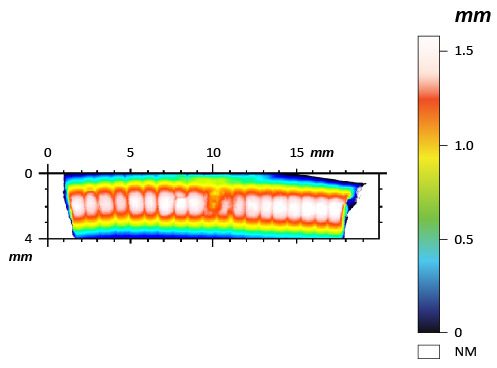
ŞEKİL 7: Crinoid kök fosilinin yüzey dokusu izotropisi ve pürüzlülüğü.

Crinoid gövde fosilinin eksenel yönü boyunca 2D profili ŞEKİL 8'de gösterilmektedir. 

Yüzey dokusunun tepe noktalarının boyutu oldukça eşittir.

ŞEKİL 8: Crinoid kök fosilinin 2D profil analizi.

SONUÇ

Bu uygulamada, NANOVEA Jr25 Taşınabilir Temassız Profilometre kullanarak bir Brachiopod ve Crinoid kök fosilinin 3D yüzey özelliklerini kapsamlı bir şekilde inceledik. Cihazın fosil örneklerinin 3D morfolojisini hassas bir şekilde karakterize edebildiğini gösterdik. Örneklerin ilginç yüzey özellikleri ve dokuları daha sonra analiz edilmektedir. Brachiopod örneği farklı bir oluk dokusuna sahipken, Crinoid kök fosili tercihli doku izotropisi göstermektedir. Detaylı ve hassas 3D yüzey taramaları, paleontologlar ve jeologlar için yaşamların evrimini ve fosillerin oluşumunu incelemek için ideal araçlar olduğunu kanıtlıyor.

Burada gösterilen veriler, analiz yazılımında bulunan hesaplamaların yalnızca bir kısmını temsil etmektedir. NANOVEA Profilometreler, Yarı İletken, Mikroelektronik, Güneş, Fiber Optik, Otomotiv, Havacılık ve Uzay, Metalurji, İşleme, Kaplama, İlaç, Biyomedikal, Çevre ve diğer birçok alanda hemen hemen her yüzeyi ölçer.

Strafor Yüzey Sınır Ölçümü Profilometri

Yüzey Sınır Ölçümü

3D Profilometri Kullanarak Yüzey Sınır Ölçümü

Daha fazla bilgi edinin

YÜZEY SINIR ÖLÇÜMÜ

3 BOYUTLU PROFILOMETRI KULLANARAK

Tarafından hazırlanmıştır

Craig Leising

GİRİŞ

Yüzey özelliklerinin, desenlerin, şekillerin vb. arayüzünün oryantasyon için değerlendirildiği çalışmalarda, ölçüm profilinin tamamı üzerinde ilgilenilen alanları hızlı bir şekilde belirlemek faydalı olacaktır. Kullanıcı, bir yüzeyi önemli alanlara bölerek, incelenen tüm yüzey profilindeki işlevsel rollerini anlamak için sınırları, tepeleri, çukurları, alanları, hacimleri ve diğerlerini hızlı bir şekilde değerlendirebilir. Örneğin, metallerin tane sınırı görüntülemesinde olduğu gibi, analizin önemi birçok yapının arayüzü ve bunların genel yönelimidir. Her bir ilgi alanının anlaşılmasıyla, genel alan içindeki kusurlar ve / veya anormallikler tanımlanabilir. Tane sınırı görüntüleme tipik olarak Profilometre kapasitesini aşan bir aralıkta çalışılmasına ve yalnızca 2D görüntü analizi olmasına rağmen, burada gösterilecek olan kavramı 3D yüzey ölçüm avantajlarıyla birlikte daha büyük ölçekte göstermek için yararlı bir referanstır.

YÜZEY AYIRMA ÇALIŞMASI İÇİN 3 BOYUTLU TEMASSIZ PROFİLOMETRENİN ÖNEMİ

Temaslı problar veya interferometri gibi diğer tekniklerin aksine, 3D Temassız ProfilometreEksenel kromatizmi kullanarak neredeyse her yüzeyi ölçebilir, açık aşamalandırma nedeniyle numune boyutları büyük ölçüde değişebilir ve numune hazırlamaya gerek yoktur. Nanodan makroya kadar aralık, yüzey profili ölçümü sırasında numune yansıtma veya absorpsiyondan sıfır etkiyle elde edilir, yüksek yüzey açılarını ölçme konusunda gelişmiş bir yeteneğe sahiptir ve sonuçların yazılımla manipülasyonu gerekmez. Herhangi bir malzemeyi kolayca ölçün: şeffaf, opak, aynasal, dağınık, cilalı, pürüzlü vb. Temassız Profilometre tekniği, yüzey sınır analizine ihtiyaç duyulduğunda yüzey çalışmalarını en üst düzeye çıkarmak için ideal, geniş ve kullanıcı dostu bir yetenek sağlar; kombine 2D ve 3D yeteneğinin avantajlarıyla birlikte.

ÖLÇÜM HEDEFI

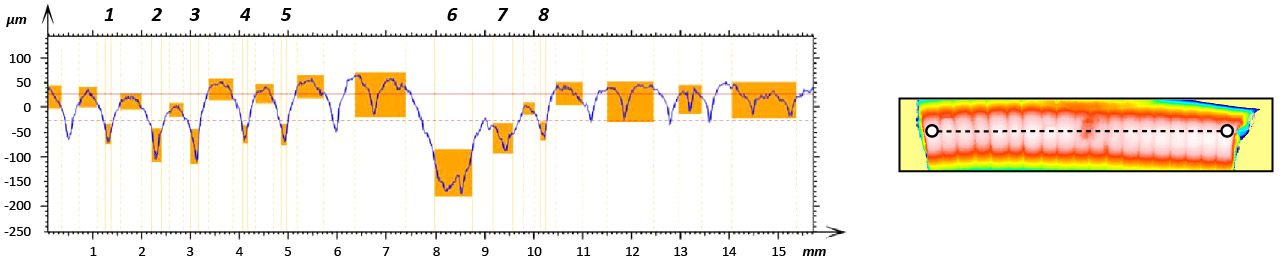
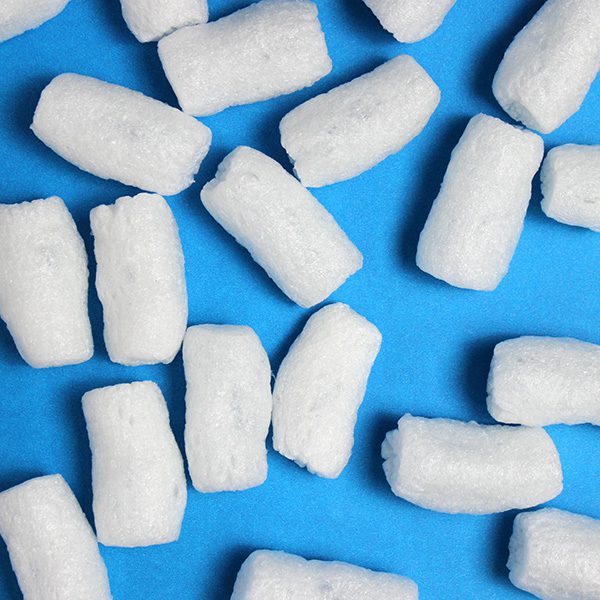
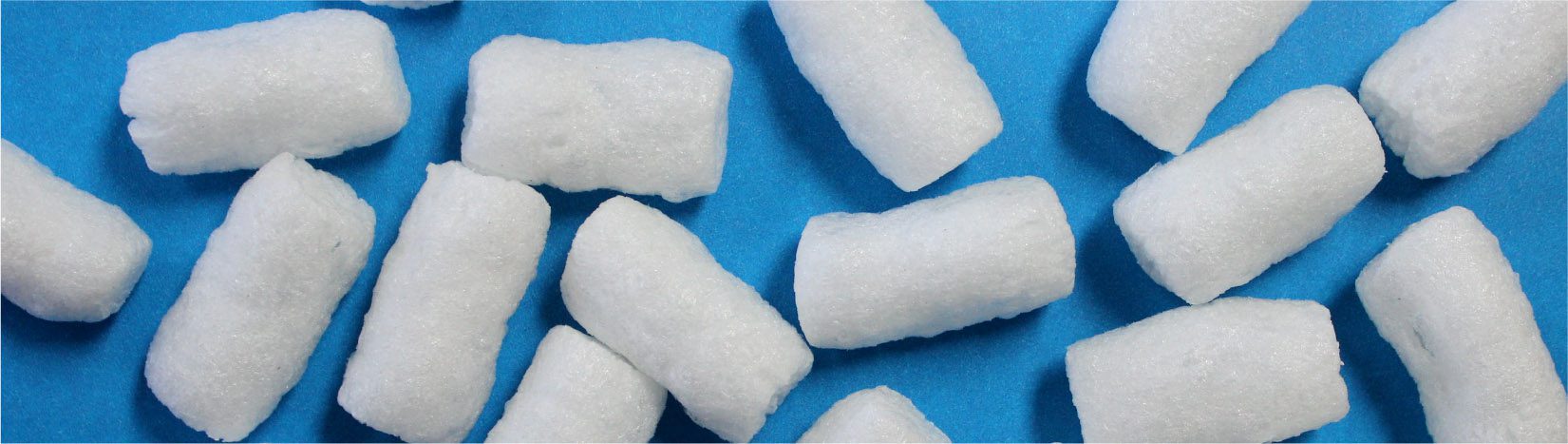
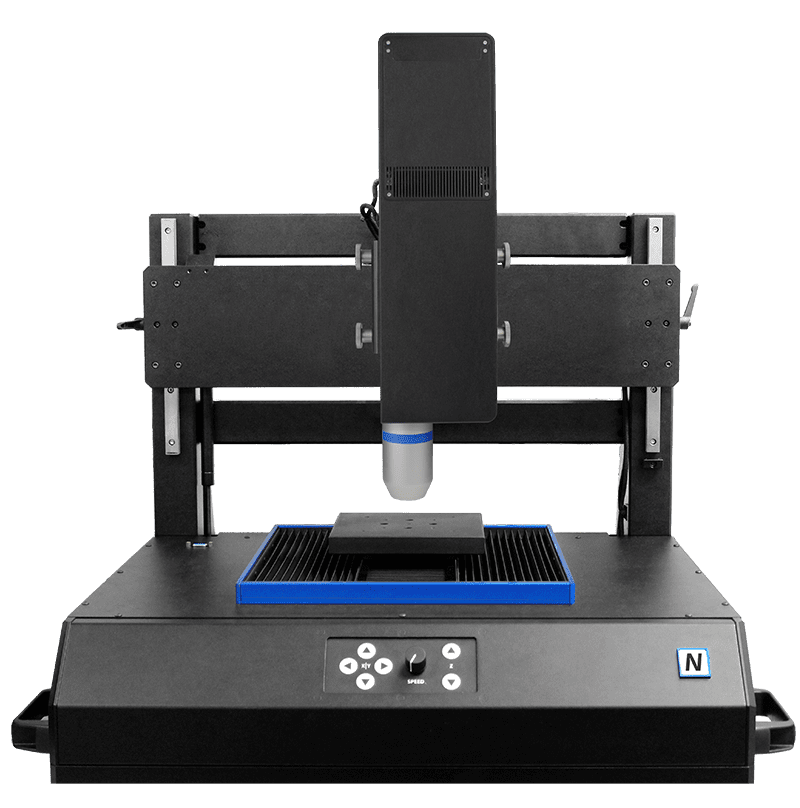
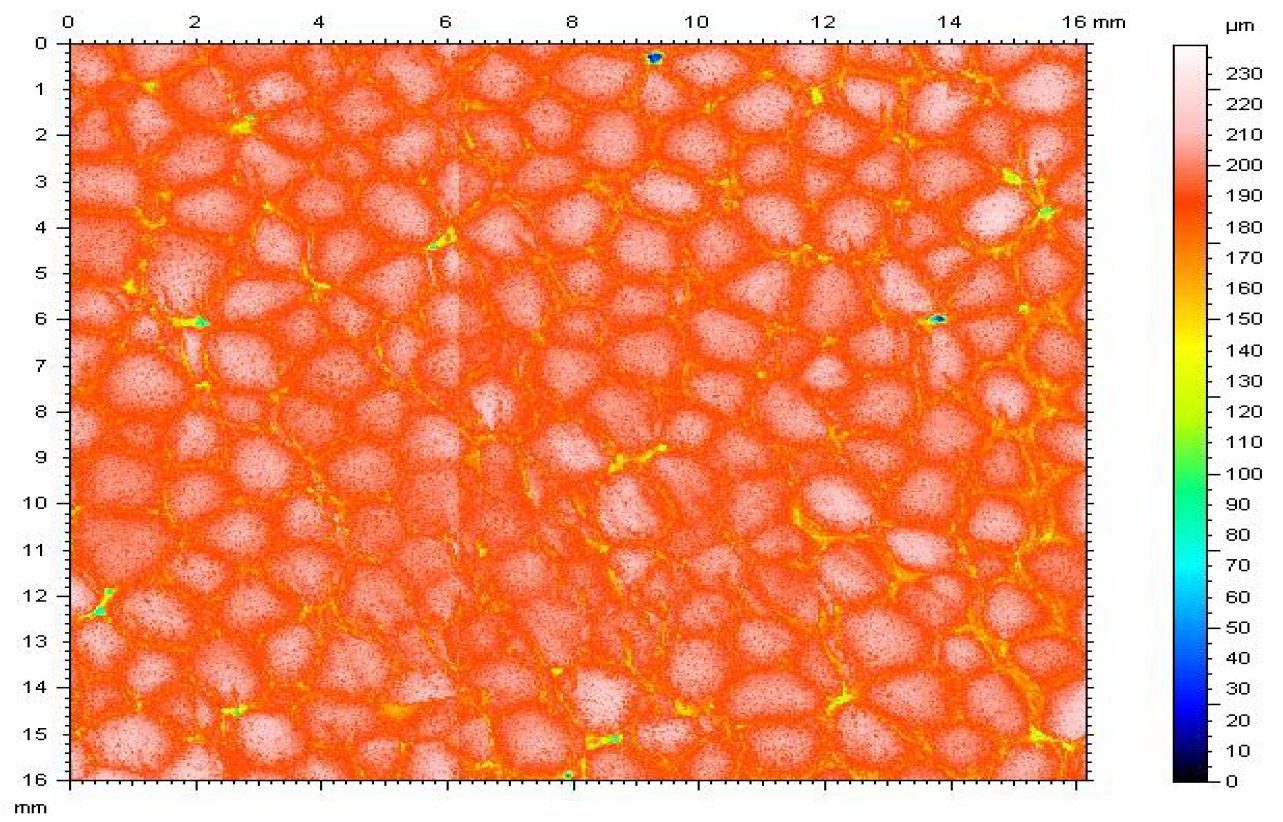
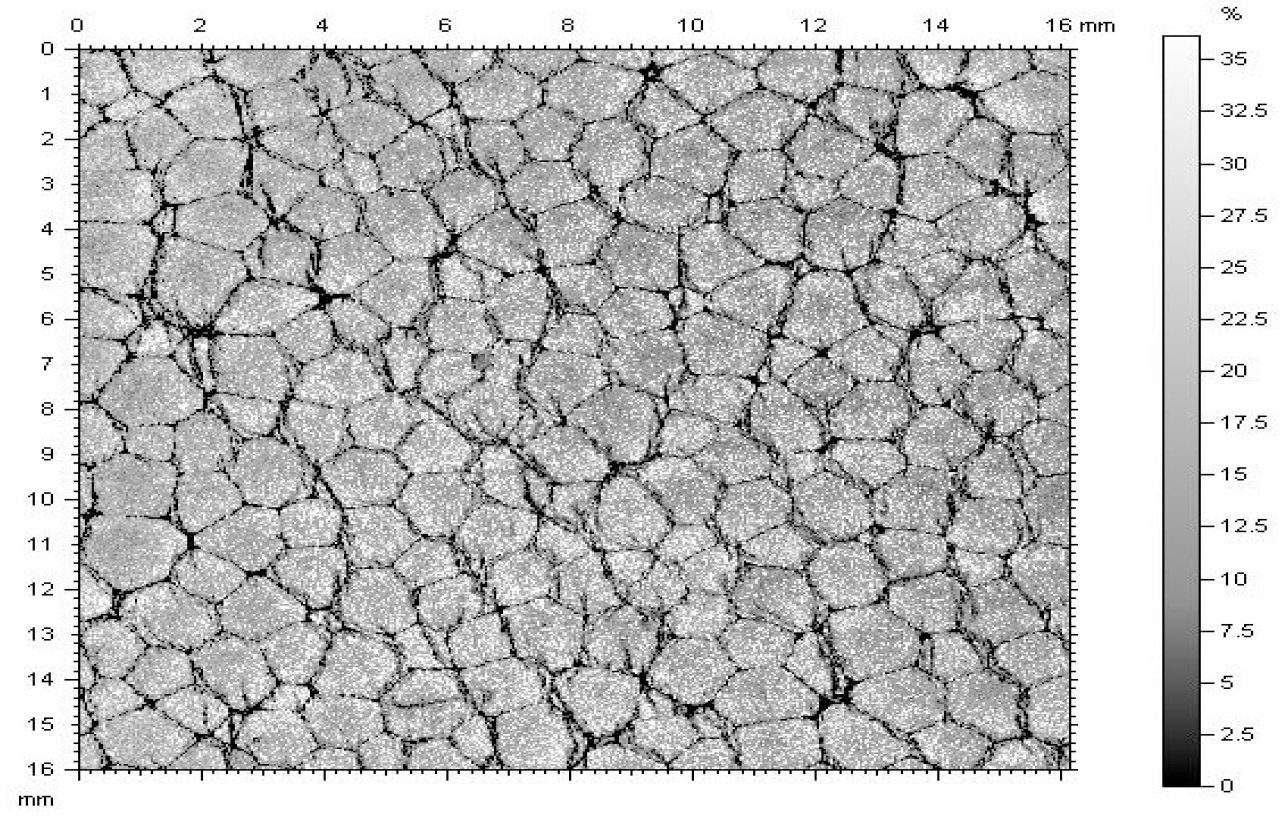
Bu uygulamada straforun yüzey alanını ölçmek için Nanovea ST400 Profilometre kullanılmıştır. Sınırlar, NANOVEA ST400 kullanılarak eş zamanlı olarak elde edilen topografya ile birlikte yansıyan bir yoğunluk dosyası birleştirilerek oluşturulmuştur. Bu veriler daha sonra her bir strafor "tanesinin" farklı şekil ve boyut bilgilerini hesaplamak için kullanılmıştır.

NANOVEA

ST400

BULGULAR VE TARTIŞMA: 2B Yüzey Sınır Ölçümü

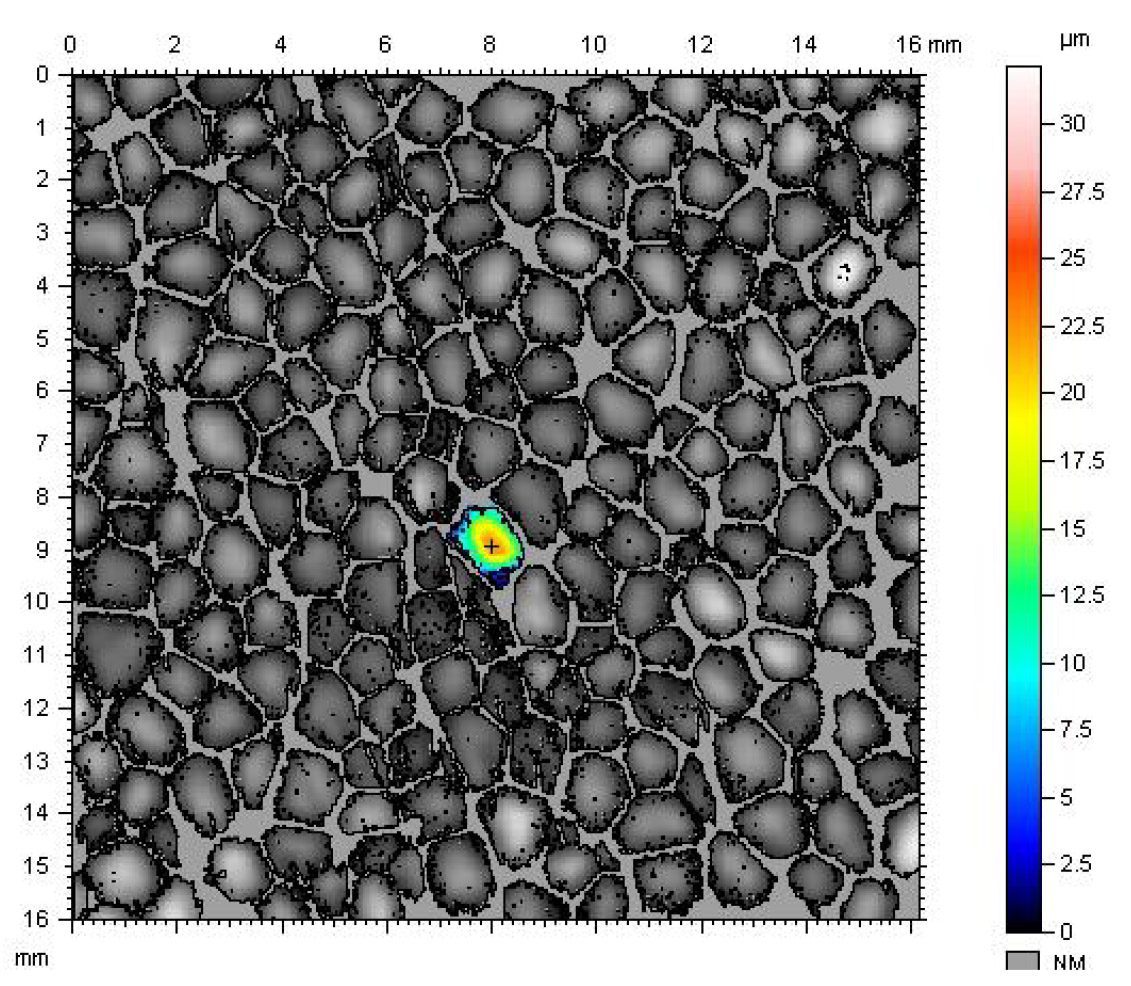
Tane sınırlarını net bir şekilde tanımlamak için yansıyan yoğunluk görüntüsü (sağ altta) ile maskelenmiş topografi görüntüsü (sol altta). 565µm çapın altındaki tüm taneler filtre uygulanarak göz ardı edilmiştir.

Toplam tahıl sayısı: 167
Tahıllar tarafından işgal edilen toplam projeksiyon alanı: 166,917 mm² (64,5962 %)
Sınırlar tarafından işgal edilen toplam öngörülen alan: (35.4038 %)
Tane yoğunluğu: 0,646285 tane / mm2

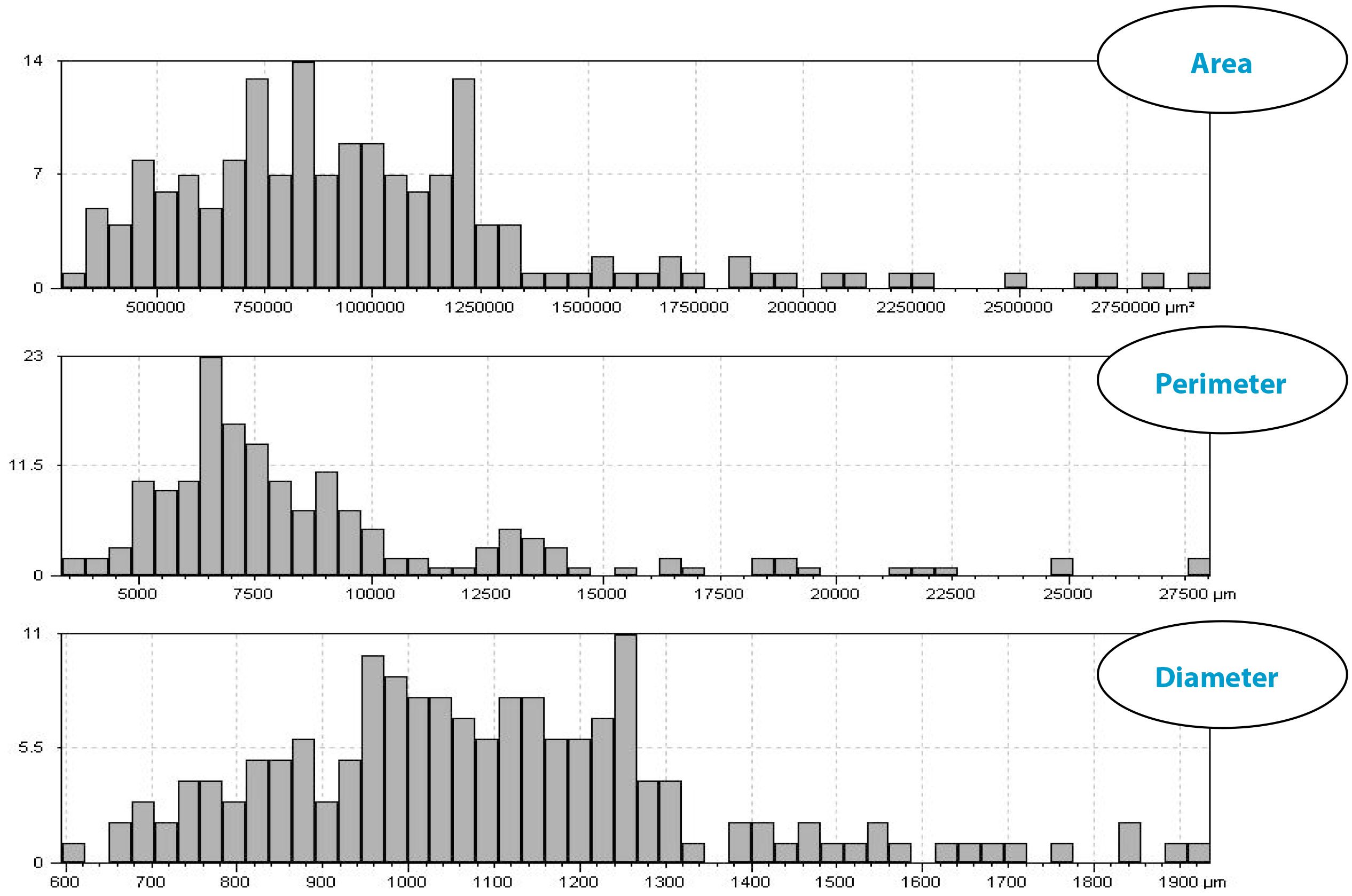
Alan = 0,999500 mm² +/- 0,491846 mm²
Çevre = 9114,15 µm +/- 4570,38 µm
Eşdeğer çap = 1098,61 µm +/- 256,235 µm
Ortalama çap = 945.373 µm +/- 248.344 µm
Min çap = 675.898 µm +/- 246.850 µm
Maksimum çap = 1312,43 µm +/- 295,258 µm

BULGULAR VE TARTIŞMA: 3D Yüzey Sınır Ölçümü

Elde edilen 3D topografi verileri kullanılarak her bir tanenin hacmi, yüksekliği, tepe noktası, en-boy oranı ve genel şekil bilgileri analiz edilebilmektedir. Kaplanan toplam 3D alan: 2.525mm3

SONUÇ

Bu uygulamada, NANOVEA 3D Temassız Profilometrenin strafor yüzeyini nasıl hassas bir şekilde karakterize edebileceğini gösterdik. İstatistiksel bilgiler, ilgilenilen yüzeyin tamamında veya ister tepe ister çukur olsun, tek tek taneler üzerinde elde edilebilir. Bu örnekte, kullanıcı tarafından tanımlanan boyuttan daha büyük tüm taneler alan, çevre, çap ve yüksekliği göstermek için kullanılmıştır. Burada gösterilen özellikler, biyo medikalden mikro işleme uygulamalarına ve diğer birçok uygulamaya kadar doğal ve önceden imal edilmiş yüzeylerin araştırılması ve kalite kontrolü için kritik öneme sahip olabilir. 

NANOVEA ile Profilometre Kullanarak Kontur Ölçümü

Lastik Diş Derinliği ve Kauçuk Yüzey Pürüzlülüğü Ölçümü | 3D Optik Profiler

LASTİK DIŞ YÜZEY DERİNLİĞİ VE LASTİK YÜZEY PÜRÜZLÜĞÜ ÖLÇÜMÜ 3D Optik Profiler kullanarak

Birden fazla otomobil lastiği sırt desenini gösteren lastik sırt derinliği ölçüm referansı

Tarafından hazırlanmıştır

ANDREA HERRMANN

Lastik diş derinliği, tüketici güvenliği için genellikle el tipi ölçüm cihazlarıyla ölçülürken, endüstriyel Ar-Ge ve lastik üreticileri daha gelişmiş yöntemlere ihtiyaç duyar. Bu uygulama notu, 3D optik profilometrenin yüksek hassasiyetli çalışmalar için nasıl hassas lastik diş derinliği ölçümü, kontur haritalama ve kauçuk yüzey pürüzlülük analizi sağladığını göstermektedir.

GİRİŞ

Tüm malzemeler gibi, kauçuğun sürtünme katsayısı da kısmen yüzey pürüzlülüğü ile ilgilidir. Araç lastiklerinde, hem diş derinliği hem de yüzey pürüzlülüğü çekiş, frenleme ve aşınma performansını doğrudan etkiler. Bu çalışmada, kauçuk yüzey ve dişlerin pürüzlülüğü ve boyutları, 3D temassız profilometri kullanılarak analiz edilmiştir.
Lastik diş derinliği ve kauçuk yüzey pürüzlülüğü ölçümü için kullanılan lastik numunesi

ÖRNEK

LASTİK DİŞ DERİNLİĞİ ÖLÇÜMÜ İÇİN 3D TEMASSUZ PROFİLOMETRİNİN ÖNEMİ

Dokunma probları veya interferometri gibi diğer tekniklerin aksine, NANOVEA’nın 3D Temassız Optik Profil Ölçüm Cihazları neredeyse her yüzeyi ölçmek için eksenel kromatizmi kullanın.

Profiler sisteminin açık aşaması, çok çeşitli numune boyutlarına izin verir ve numune hazırlığı gerektirmez. Tek bir tarama ile kullanıcılar, numunenin yansıtıcılığı veya emiciliğinden hiçbir etkilenmeden hem genel lastik diş derinliğini hem de mikro düzeyde yüzey pürüzlülüğünü yakalayabilirler. Ayrıca, bu profilerler, sonuçların yazılımla manipülasyonuna gerek kalmadan yüksek yüzey açılarını ölçme konusunda gelişmiş yeteneklere sahiptir.

Bu çok yönlülük, NANOVEA profilleyicileri hem lastik sırt aşınma testi hem de gelişmiş kauçuk malzeme araştırmaları için ideal hale getirir.

ÖLÇÜM HEDEFI

Bu uygulamada, biz NANOVEA ST400, lastik diş derinliğini, kontur geometrisini ve kauçuk yüzey pürüzlülüğünü ölçen 3D Temassız Optik Profiler. Bu çalışma için, lastik yüzeyinin tamamını temsil edecek kadar büyük bir örnek yüzey alanı rastgele seçildi. Kauçuğun özelliklerini nicelendirmek için, NANOVEA Ultra 3D analiz yazılımını kullanarak oluk boyutlarını, diş derinliğini, yüzey pürüzlülüğünü ve gelişmiş alan ile öngörülen alanı ölçtük.

NANOVEA ST400 Standart
Optik 3D Profilometre

ANALİZ: LASTİK DİŞİ
Lastik sırtlarının 3D Görünümü ve Yanlış Renk Görünümü, 3D yüzey tasarımlarının haritalandırılmasının değerini göstermektedir. Bu, mühendislere lastik sırt derinliğinin homojenliğini, oluk tasarımını ve aşınmayı farklı açılardan değerlendirmek için basit bir araç sunmaktadır. Gelişmiş Kontur Analizi ve Basamak Yüksekliği Analizi, örnek şekillerin ve tasarımların hassas boyutlarını ölçmek için son derece güçlü araçlardır.
Lastik diş derinliği ve oluk geometrisinin yanlış renkli 3D optik profilometrisi
Lastik diş derinliği ölçümünün 3D profilometre yüzey görünümü

GELİŞMİŞ KONTUR ANALİZİ

3D profilometri kullanarak lastik sırt oluklarının gelişmiş kontur analizi

BASAMAK YÜKSEKLİĞİ ANALİZİ

3D optik profilleme cihazı ile lastik diş derinliği ölçümü için basamak yüksekliği analizi
Lastik diş derinliği ölçümünü gösteren 3D profilometri adım yüksekliği profili
ANALİZ: KAUÇUK YÜZEY
Kauçuk yüzey, aşağıdaki şekillerde gösterildiği gibi yerleşik yazılım araçları kullanılarak çeşitli şekillerde ölçülebilir. Yüzey pürüzlülüğünün 2,688 μm olduğu ve gelişmiş alan ile yansıtılan alanın sırasıyla 9,410 mm² ve 8,997 mm² olduğu gözlemlenebilir. Bu sonuçlar, kauçuk yüzey pürüzlülüğünün çekiş ve performansı nasıl etkilediğini gösterir ve farklı kauçuk formülasyonları veya değişen yüzey aşınma seviyeleri arasında karşılaştırmalar yapılmasına olanak tanır.
3D optik profilometre ile kauçuk yüzey pürüzlülüğü analizi
ISO 25178 Lastik Kauçuk Yüzeyinin Yükseklik Parametreleri
Kauçuk yüzey pürüzlülüğü ve gelişmiş alanın 3D optik profilometri görünümü
Lastik Kauçuk Yüzey Profili Parametreleri

SONUÇ

Bu uygulamada, NANOVEA 3D Temassız Optik Profiler'ın lastik diş derinliğini, kontur boyutlarını ve kauçuk yüzey pürüzlülüğünü nasıl hassas bir şekilde karakterize edebildiğini gösterdik. Veriler, 2,69 µm'lik bir yüzey pürüzlülüğü ve 9 mm²'lik bir yansıtma alanına sahip 9,41 mm²'lik bir gelişmiş alan göstermektedir. Kauçuk dişlerin çeşitli boyutları ve yarıçapları da ölçülmüştür. Bu bilgiler, lastik üreticileri, otomotiv araştırmacıları ve malzeme mühendisleri tarafından lastik sırt tasarımlarını, kauçuk formülasyonlarını veya farklı aşınma derecelerine sahip lastikleri karşılaştırmak için kullanılabilir. Burada gösterilen veriler, Ultra 3D analiz yazılımında bulunan hesaplamaların sadece bir kısmını temsil etmektedir.
İşlenmiş Parçalar Kalite Kontrol

İşlenmiş Parçaların Kontrolü

İŞLENMİŞ PARÇALAR

3D profilometri kullanarak CAD modelinden denetim

Yazar:

Duanjie Li, PhD

Tarafından revize edildi

Jocelyn Esparza

Profilometre ile İşlenmiş Parçaların Kontrolü

GİRİŞ

Karmaşık geometriler oluşturabilen hassas işlemeye olan talep, bir dizi sektörde artış göstermektedir. Havacılık, tıp ve otomobilden teknoloji dişlilerine, makinelere ve müzik aletlerine kadar, sürekli yenilik ve evrim, beklentileri ve doğruluk standartlarını yeni zirvelere taşıyor. Sonuç olarak, ürünlerin en yüksek kalitede olmasını sağlamak için titiz denetim tekniklerine ve araçlarına olan talebin arttığını görüyoruz.

Parça Denetimi için 3D Temassız Profilometrinin Önemi

İşlenmiş parçaların özelliklerini CAD modelleriyle karşılaştırmak, toleransları ve üretim standartlarına uygunluğu doğrulamak için gereklidir. Parçaların aşınması ve yıpranması değiştirilmelerini gerektirebileceğinden, servis süresi boyunca denetim de çok önemlidir. Gerekli spesifikasyonlardan herhangi bir sapmanın zamanında tespit edilmesi, maliyetli onarımların, üretimin durmasının ve itibarın zedelenmesinin önlenmesine yardımcı olacaktır.

NANOVEA, dokunmalı prob tekniğinden farklı olarak Optik Profilciler Sıfır temasla 3 boyutlu yüzey taramaları gerçekleştirerek karmaşık şekillerin en yüksek doğrulukla hızlı, hassas ve tahribatsız ölçümlerine olanak tanır.

ÖLÇÜM HEDEFI

Bu uygulamada, boyut, yarıçap ve pürüzlülük açısından kapsamlı bir yüzey denetimi gerçekleştiren, yüksek hızlı sensöre sahip 3D Temassız Profilleyici NANOVEA HS2000'i sergiliyoruz. 

Hepsi 40 saniyenin altında.

NANOVEA

HS2000

CAD MODELİ

İşlenen parçanın boyutunun ve yüzey pürüzlülüğünün hassas bir şekilde ölçülmesi, istenen özellikleri, toleransları ve yüzey kalitesini karşıladığından emin olmak için kritik öneme sahiptir. İncelenecek parçanın 3D modeli ve mühendislik çizimi aşağıda sunulmuştur. 

YANLIŞ RENK GÖRÜNÜMÜ

CAD modelinin ve taranmış işlenmiş parça yüzeyinin yanlış renk görünümü ŞEKİL 3'te karşılaştırılmıştır. Numune yüzeyindeki yükseklik değişimi renkteki değişimle gözlemlenebilir.

İşlenmiş parçanın boyutsal toleransını daha fazla doğrulamak için ŞEKİL 2'de gösterildiği gibi 3D yüzey taramasından üç 2D profil çıkarılır.

PROFİLLER KARŞILAŞTIRMA & SONUÇLAR

Profil 1 ila 3, ŞEKİL 3 ila 5'te gösterilmektedir. Kantitatif tolerans denetimi, titiz üretim standartlarını korumak için ölçülen profil CAD modeli ile karşılaştırılarak gerçekleştirilir. Profil 1 ve Profil 2, kavisli işlenmiş parça üzerindeki farklı alanların yarıçapını ölçer. Profil 2'nin yükseklik değişimi 156 mm uzunlukta 30 µm'dir ve istenen ±125 µm tolerans gereksinimini karşılamaktadır. 

Analiz yazılımı, bir tolerans sınır değeri belirleyerek işlenen parçanın başarılı veya başarısız olduğunu otomatik olarak belirleyebilir.

Profilometre ile Makine Parçalarının Kontrolü

İşlenmiş parçanın yüzeyinin pürüzlülüğü ve homojenliği, kalite ve işlevselliğinin sağlanmasında önemli bir rol oynar. ŞEKİL 6, yüzey kalitesini ölçmek için kullanılan işlenmiş parçanın ana taramasından çıkarılan bir yüzey alanıdır. Ortalama yüzey pürüzlülüğü (Sa) 2,31 µm olarak hesaplanmıştır.

SONUÇ

Bu çalışmada, yüksek hızlı bir sensörle donatılmış NANOVEA HS2000 Temassız Profilleyicinin boyutlar ve pürüzlülük açısından nasıl kapsamlı bir yüzey denetimi gerçekleştirdiğini gösterdik. 

Yüksek çözünürlüklü taramalar, kullanıcıların işlenmiş parçaların ayrıntılı morfolojisini ve yüzey özelliklerini ölçmelerini ve bunları CAD modelleriyle nicel olarak karşılaştırmalarını sağlar. Cihaz ayrıca çizikler ve çatlaklar da dahil olmak üzere tüm kusurları tespit edebiliyor. 

Gelişmiş kontur analizi, yalnızca işlenmiş parçaların belirlenen spesifikasyonları karşılayıp karşılamadığını belirlemek için değil, aynı zamanda aşınmış bileşenlerin arıza mekanizmalarını değerlendirmek için de benzersiz bir araç olarak hizmet eder.

Burada gösterilen veriler, her NANOVEA Optik Profilleyici ile birlikte gelen gelişmiş analiz yazılımı ile mümkün olan hesaplamaların yalnızca bir kısmını temsil etmektedir.