AR
AR  EN
EN  ES
ES  DE
DE  FR
FR  IT
IT  ZH
ZH  JA
JA  PT
PT  TR
TR  KO
KO  PL
PL Surface Topology & Chemical Analysis Services
الخدمات والاستشارات المخبرية
NANOVEA provides surface topology and chemical analysis services to support detailed material characterization at the micro- and nanoscale. These services are used to quantify surface structure, composition, and physical behavior where accurate, independent analysis is required for research, validation, or quality control.
Our laboratory capabilities cover a broad range of surface and chemical analysis techniques, including infrared spectroscopy, chromatography, electron microscopy, atomic force microscopy, and X-ray diffraction. Methods are selected based on material type, resolution requirements, and the specific question being addressed.
By combining advanced analytical techniques with experienced interpretation, NANOVEA delivers consistent, traceable results aligned with scientific, industrial, and regulatory requirements.
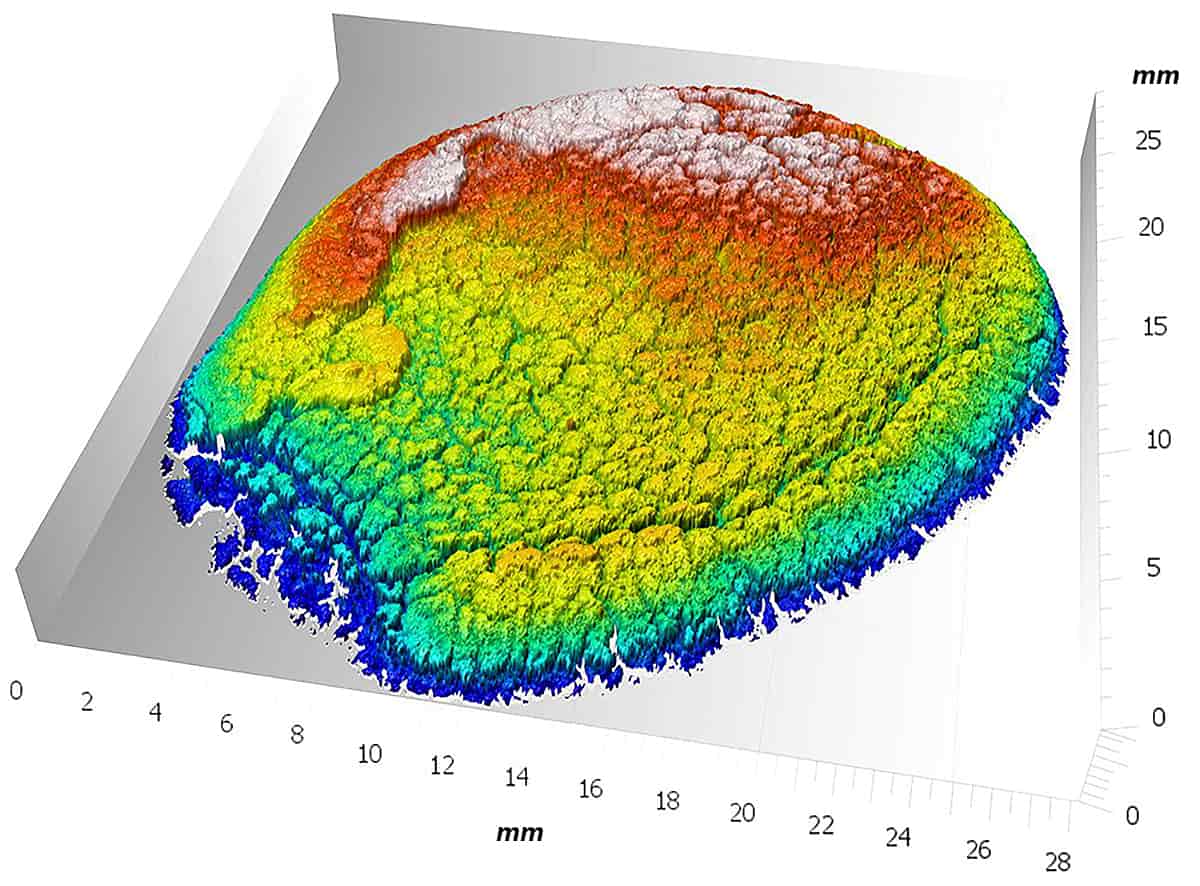
What These Services Are Used For
Surface Topology and Chemical Analysis services are used when material behavior cannot be fully understood through dimensional or mechanical testing alone. These services support investigations where surface composition, chemical interactions, contamination, coatings, or nano-scale features directly influence performance, reliability, or failure mechanisms.
Surface Topology & Chemical Analysis Capabilities
Surface morphology and nano-scale topology
Chemical composition and phase identification
Layer structure and coating characterization
Surface energy and interaction behavior
Contamination, residue, and defect analysis
Analytical Techniques Available
NANOVEA applies multiple complementary analytical techniques depending on material type, resolution requirements, and the questions being addressed. Techniques are selected based on the nature of the sample and the information required, rather than forcing a single method onto all analyses.
IR Spectroscopy (FTIR-ATR)
Known materials
FTIR-ATR analysis performed on samples and reference standards without pre-treatment. Used for functional group identification and material verification.
Unknown materials
FTIR-ATR analysis performed without pre-treatment to identify functional groups and characterize unknown material compositions.
Chromatography
GC-MS
Qualitative and semi-quantitative identification of organic components in oils and organic materials, including samples subjected to tribological testing.
LC-MS
Qualitative and semi-quantitative identification of organic components in oils and organic materials, including samples subjected to tribological testing.
Electron Microscopy
تيم
Localized microanalysis for high-resolution structural and compositional characterization at the micro- and nanoscale.
FE-SEM / EDS
Punctual microanalysis and elemental mapping for surface and near-surface compositional analysis.
Thermo-Gravimetric & Thermo-Volumetric Analysis
TGA
Mass variation analysis under controlled atmospheres (inert or oxidative) across defined temperature ranges.
DSC
Qualitative and semi-quantitative thermal analysis for phase transitions and material behavior under controlled heating conditions.
Atomic Force Microscopy (AFM)
High-resolution surface topology analysis with advanced 3D information at the micro- and sub-nanoscale.
X-Ray Diffraction (XRD)
Available XRD capabilities include:
X-ray diffraction on powder and bulk samples
X-ray diffraction data analysis
Quantitive definition of the crystal composition (Rietveld method)
Residual stress analysis
Standards, Methods & Reporting
Where applicable, analyses are performed in alignment with relevant ASTM and ISO standards or established scientific methodologies. Reports are structured to provide traceable data, method transparency, and clear interpretation suitable for internal review, regulatory documentation, or third-party validation.
How Projects Are Conducted
Projects typically begin with a discussion of the material, application context, and information required. Based on this input, appropriate analytical techniques are selected, samples are prepared as needed, and testing is performed. Results are delivered with documented methods and interpretation support.
Relationship to Other NANOVEA Lab Services
Surface Topology and Chemical Analysis services complement NANOVEA’s other laboratory services, including non-contact profilometry, nanoindentation and scratch testing، و friction and wear testing. These services are often combined within a single project to provide a complete understanding of material behavior across mechanical, topographical, and chemical dimensions.