La microindentación es una potente técnica analítica que se utiliza con frecuencia en la ciencia y la ingeniería de materiales para cuantificar las propiedades mecánicas de una gran variedad de materiales. Se trata de un método de medición no destructivo, que consiste en utilizar una sonda afilada y puntiaguda para hacer una hendidura en la superficie de una muestra de material, controlando cuidadosamente la fuerza aplicada. A continuación, se mide la indentación resultante para evaluar la dureza, el módulo elástico y otras propiedades mecánicas del material. Esta técnica ha permitido a los científicos comprender mejor el comportamiento mecánico de una amplia variedad de materiales, desde metales y cerámicas hasta polímeros y compuestos. Tanto si está estudiando la microestructura de los materiales como si está desarrollando nuevos materiales con propiedades específicas, la microindentación es una herramienta valiosa que puede ayudarle a obtener información sobre el comportamiento mecánico de un material.
Limitaciones de las pruebas de indentación tradicionales
Las pruebas de indentación se utilizan habitualmente para evaluar las propiedades de los materiales, pero los métodos tradicionales tienen sus limitaciones. Uno de los principales inconvenientes es que estas pruebas a menudo no pueden captar con precisión las deformaciones a microescala y pueden verse influidas por la rugosidad de la superficie y otras irregularidades superficiales. Aquí es donde las pruebas de microindentación ofrecen una solución más avanzada. Mediante el uso de un indentador mucho más pequeño y un equipo especializado, los investigadores pueden analizar regiones microscópicas de un material con mayor precisión. Además, la microindentación permite una mayor flexibilidad a la hora de probar diferentes tipos de muestras, como películas delgadas o materiales con geometrías superficiales complejas. Si bien las pruebas tradicionales siguen desempeñando un papel importante en la caracterización de los materiales, la microindentación es cada vez más popular para realizar análisis precisos y eficientes.
Ventajas de los ensayos de microindentación
La microindentación es un valioso método analítico que permite a los investigadores medir las propiedades mecánicas de los materiales con un alto grado de precisión. Al aplicar una fuerza pequeña y controlada a la superficie de un material y medir la profundidad de la indentación resultante, los científicos pueden obtener información sobre la dureza, el módulo de elasticidad, la resistencia a la fractura, el límite elástico y la fatiga de un material. Una de sus ventajas significativas es la capacidad de probar materiales en diferentes condiciones ambientales, como alta o baja temperatura, inmersión en líquido o exposición a humedad/vacío. Otra ventaja clave de la microindentación es su versatilidad: se puede utilizar para analizar una amplia gama de materiales, desde metales y cerámicas hasta polímeros y tejidos biológicos. Además, el ensayo de microindentación es no destructivo, lo que significa que se puede realizar en muestras pequeñas o delicadas sin causar daños. Estas ventajas convierten a la microindentación en una herramienta esencial para los investigadores de numerosos campos científicos, desde la ciencia y la ingeniería de materiales hasta la biomedicina y otros campos. En el campo de la ciencia de los materiales, el ensayo de microindentación es un proceso crucial que proporciona información valiosa sobre las propiedades mecánicas de los materiales.
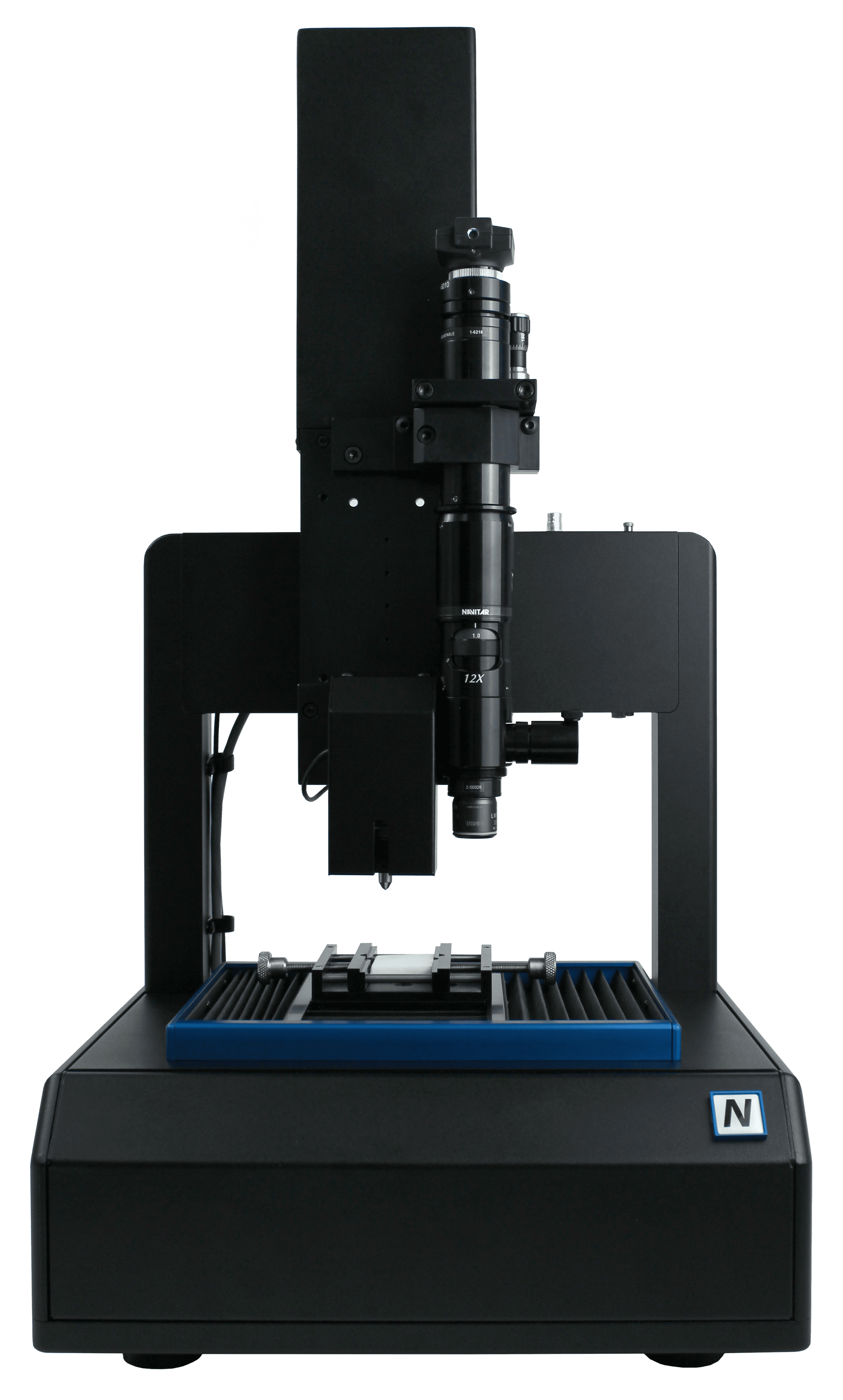
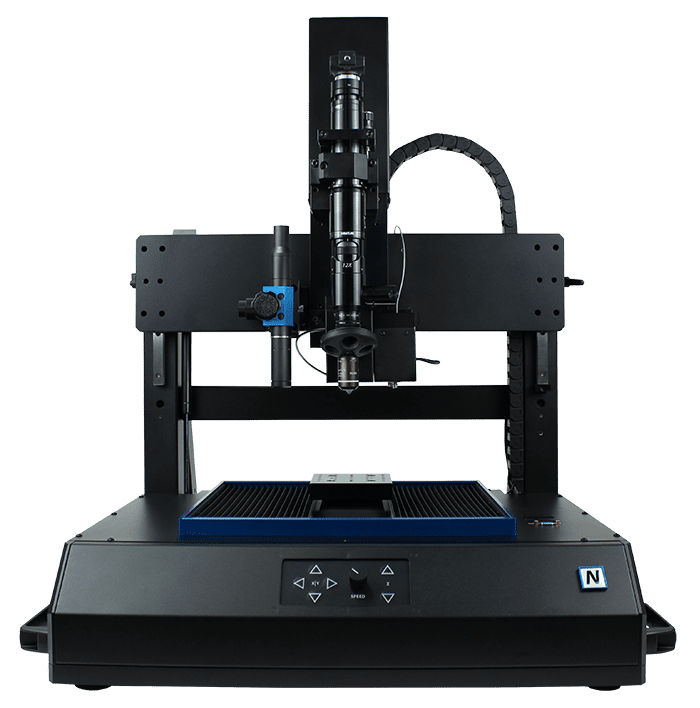
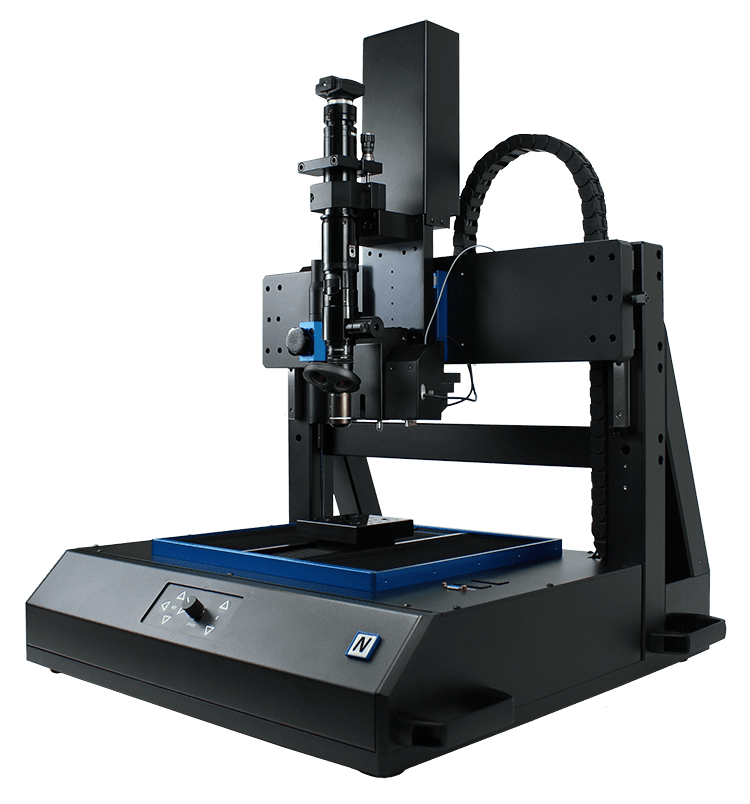
DESCUBRA LAS PRUEBAS DE MICROINDENTACIÓN CON LOS ENSAYADORES MECÁNICOS DE NANOVEA
AVANZADO
Compacto
MODULAR
PLATAFORMA GRANDE
Características del software de microindentación NANOVEA
Recetas
Exportar datos sin procesar e imágenes
Visualización en tiempo real
Informes automáticos
Soporte multilingüe
Compare curvas y resultados en muestras iguales o múltiples
Automatización avanzada de microindentación NANOVEA
FastMap: Mapeo de dureza y módulo de elasticidad (3 segundos por indentación)
Herramienta de selección de mapas Broadview: Cartografía avanzada en imágenes unidas
Prueba automatizada de múltiples muestras (admite variaciones de altura de hasta 50 mm).
Navegación Plus: imágenes de navegación de superficie fáciles de usar
Enfoque rápido, detección automática de superficies y análisis automático
Herramientas de calibración fácil y directa para carga y profundidad
Función de área de sangría única (Patente europea n.º 3076153)
Control de calidad cuantificable para penetrador (Patente europea n.º 3076153)
Asistente (patente en trámite): generador automático de parámetros de prueba.
Recetas guardables de todos los macros programados
Normas
Nanovea realiza pruebas de rayado de conformidad con las normas establecidas, lo que garantiza resultados precisos y confiables para evaluar las propiedades mecánicas de los materiales, al tiempo que ofrece soluciones de prueba personalizadas diseñadas para aplicaciones únicas.
ASTM E384: Método de prueba estándar para la dureza por microindentación de materiales.
ASTM G171: Método de prueba estándar para determinar la dureza al rayado de materiales utilizando una punta de diamante.
ASTM E2546: Práctica estándar para ensayos de indentación instrumentados.
ASTM B933: Método de prueba estándar para la dureza por microindentación de materiales de pulvimetalurgia (PM).
ASTM D4065: Práctica estándar para plásticos: Propiedades mecánicas dinámicas: Determinación e informe de procedimientos.
ISO 14577 – Materiales metálicos. Ensayo de indentación instrumentado para determinar la dureza y los parámetros de los materiales.
DIN 50359: Ensayo universal de dureza de materiales metálicos. Calibración de bloques de referencia.
Simulación de condiciones reales
Alta y baja temperatura, líquido, humedad y vacío
TEMPERATURA ALTA
TEMPERATURA BAJA
LÍQUIDO
HUMEDAD
VACÍO
Al someter los materiales a condiciones ambientales simuladas, podemos comprender mejor cómo se comportarán en aplicaciones reales, lo que nos ayuda a diseñar productos más duraderos y confiables. Ya sea para la industria aeroespacial, automotriz u otras, las pruebas de microindentación son un componente esencial para garantizar que los materiales puedan soportar las exigencias de su uso previsto. En general, no se puede subestimar la importancia de las pruebas de microindentación en condiciones ambientales, ya que desempeñan un papel fundamental en la investigación en ciencia de los materiales.
Técnicas de medición y análisis en microindentación
La microindentación es una técnica ampliamente utilizada en ingeniería de materiales para medir propiedades mecánicas como la dureza, el módulo de elasticidad y la resistencia a la fractura a escala microscópica. Existen varias técnicas y equipos avanzados disponibles para la medición y el análisis de datos de microindentación con alta precisión y exactitud. Algunas de las técnicas más populares son las curvas de carga-desplazamiento, la microscopía óptica, el análisis de elementos finitos y los algoritmos de aprendizaje automático. Estas técnicas proporcionan información sobre el comportamiento de deformación de los materiales y la física subyacente del proceso de microindentación. Además, los datos generados por estas técnicas pueden utilizarse para estudiar las relaciones entre la estructura y las propiedades de los materiales y ayudar al desarrollo de nuevos materiales con propiedades mecánicas personalizadas. En general, las técnicas de medición y análisis en microindentación tienen importantes implicaciones en diversos campos industriales y académicos.
Dureza y módulo de elasticidad
En los ensayos de microindentación, la dureza y el módulo de elasticidad son dos propiedades fundamentales que se miden con precisión presionando un penetrador afilado sobre la superficie de un material. La dureza se deriva de la resistencia del material a la deformación permanente bajo la carga del penetrador y es un indicador importante de la capacidad del material para resistir el desgaste. El módulo de elasticidad, por otro lado, mide cuánto se deforma un material bajo carga y cómo recupera su forma original cuando se retira la carga. Comprender estos dos parámetros puede proporcionar información valiosa sobre el comportamiento mecánico y el rendimiento de un material a escala microscópica, lo cual es esencial para muchos campos, desde la ciencia de los materiales hasta la ingeniería.
Resistencia a la fractura
La resistencia a la fractura es una medida de la resistencia de un material frente a la propagación de grietas y es una propiedad fundamental de la degradación de los materiales, especialmente en aplicaciones en las que se producen cargas en un amplio rango. Las mediciones de la resistencia a la fractura basadas en microindentación son especialmente útiles para evaluar la resistencia de materiales frágiles, como la cerámica y los compuestos, que son propensos a fallar bajo tensión. La medición de la resistencia a la fractura obtenida mediante ensayos de microindentación es un factor crítico que contribuye a la eficiencia y seguridad de los productos en diversas aplicaciones, incluyendo los campos de la electrónica, la aeronáutica, la energía y la biomedicina.
Límite elástico y fatiga
El límite elástico y la fatiga son dos propiedades críticas de los materiales que pueden evaluarse mediante técnicas de microindentación. El límite elástico es el nivel de tensión al que un material comienza a deformarse plásticamente, provocando cambios permanentes en su estructura. La fatiga, por otro lado, se refiere al debilitamiento de un material con el tiempo debido a ciclos repetitivos de carga y descarga. Las pruebas de microindentación también se pueden utilizar para medir la resistencia a la fatiga de los materiales, lo que las convierte en una herramienta valiosa para predecir la longevidad de las estructuras en diversos entornos.
Fluencia y relajación
La fluencia se refiere a la deformación dependiente del tiempo de un material bajo una carga o tensión constante, mientras que la relajación es la disminución dependiente del tiempo de la tensión o carga necesaria para mantener un nivel determinado de deformación. Estos fenómenos están influenciados por varios factores, como la temperatura, la velocidad de deformación y las características microestructurales del material. Comprender el comportamiento de la fluencia y la relajación es esencial para predecir la durabilidad y fiabilidad de los materiales utilizados en industrias como la automotriz, la aeroespacial y la de dispositivos médicos.
Medición de tensión y deformación
La tensión y la deformación se refieren a la cantidad de deformación que sufre un material bajo diferentes cargas, y la medición de estas variables es crucial para el diseño de materiales que soporten la tensión mecánica. Mediante el análisis de la fuerza necesaria para crear una profundidad de indentación específica, es posible determinar una amplia gama de propiedades mecánicas del material. Las pruebas de microindentación son especialmente útiles para materiales que son demasiado pequeños o delgados para ser probados con los métodos mecánicos tradicionales. Hoy en día, esta técnica se utiliza ampliamente en campos como la ciencia de los materiales, la biomecánica y la microelectrónica para comprender mejor el comportamiento de los materiales a escala microscópica.
Tipos de penetradores
Las pruebas de microindentación son una herramienta útil para los investigadores que desean medir las propiedades mecánicas de materiales pequeños. Mediante el uso de diferentes tipos de penetradores, los científicos pueden determinar con precisión la dureza y otras propiedades de los materiales. Los penetradores Vickers y Berkovich se utilizan comúnmente para medir la dureza y el módulo de elasticidad en diversos materiales duros y blandos. Los penetradores Vickers son más resistentes a cargas más altas, mientras que los penetradores Berkovich ofrecen mayor sensibilidad para medir recubrimientos más delgados. Los indentadores de esquina cúbica son útiles para medir la resistencia a la fractura con fuerzas más bajas, mientras que los indentadores cónico-esféricos se utilizan para metales y plásticos más blandos. El indentador Knoop alargado es útil para medir las diferencias direccionales en la dureza de los materiales con fibras. Los indentadores planos son ideales para triturar partículas pequeñas o medir el límite elástico en diversos materiales. Los indentadores especiales de cuchilla de diamante son útiles para probar la falla en piezas cilíndricas como la fibra óptica. Cada tipo de penetrador tiene características únicas, y los investigadores deben elegir el más adecuado para su aplicación específica a fin de obtener datos precisos y exactos. Las pruebas de microindentación son un método eficaz que puede proporcionar datos analíticos valiosos para fines de investigación, lo que permite mediciones más precisas de las propiedades mecánicas de los materiales.
Conclusión
La microindentación es una técnica potente y versátil que permite medir diversas propiedades de los materiales, como la dureza, el módulo de elasticidad, la resistencia a la fractura y el límite elástico. Sin embargo, la precisión de los resultados de la microindentación depende en gran medida de la selección del equipo de prueba, las técnicas de medición y los métodos de análisis adecuados para obtener resultados confiables. En general, la microindentación tiene importantes aplicaciones en ingeniería y ciencia de los materiales que contribuyen a nuestra comprensión del comportamiento mecánico de los materiales. Si está interesado en obtener más información sobre cómo se puede utilizar esta técnica para sus necesidades de aplicación específicas, póngase en contacto con nuestro equipo hoy mismo para hablar con un representante experto. Nuestro personal experimentado podrá responder a todas sus preguntas y comentar las opciones de productos específicas para sus necesidades. ¡No espere más, póngase en contacto con nosotros ahora mismo!
Este sitio web utiliza cookies para mejorar la experiencia del usuario. Al utilizar nuestro sitio web usted acepta todas las cookies de acuerdo con nuestra Política de Cookies. Seguir leyendo




 EN
EN  ES
ES
 DE
DE
 FR
FR
 IT
IT
 ZH
ZH
 JA
JA
 PT
PT
 TR
TR
 KO
KO
 PL
PL
 AR
AR